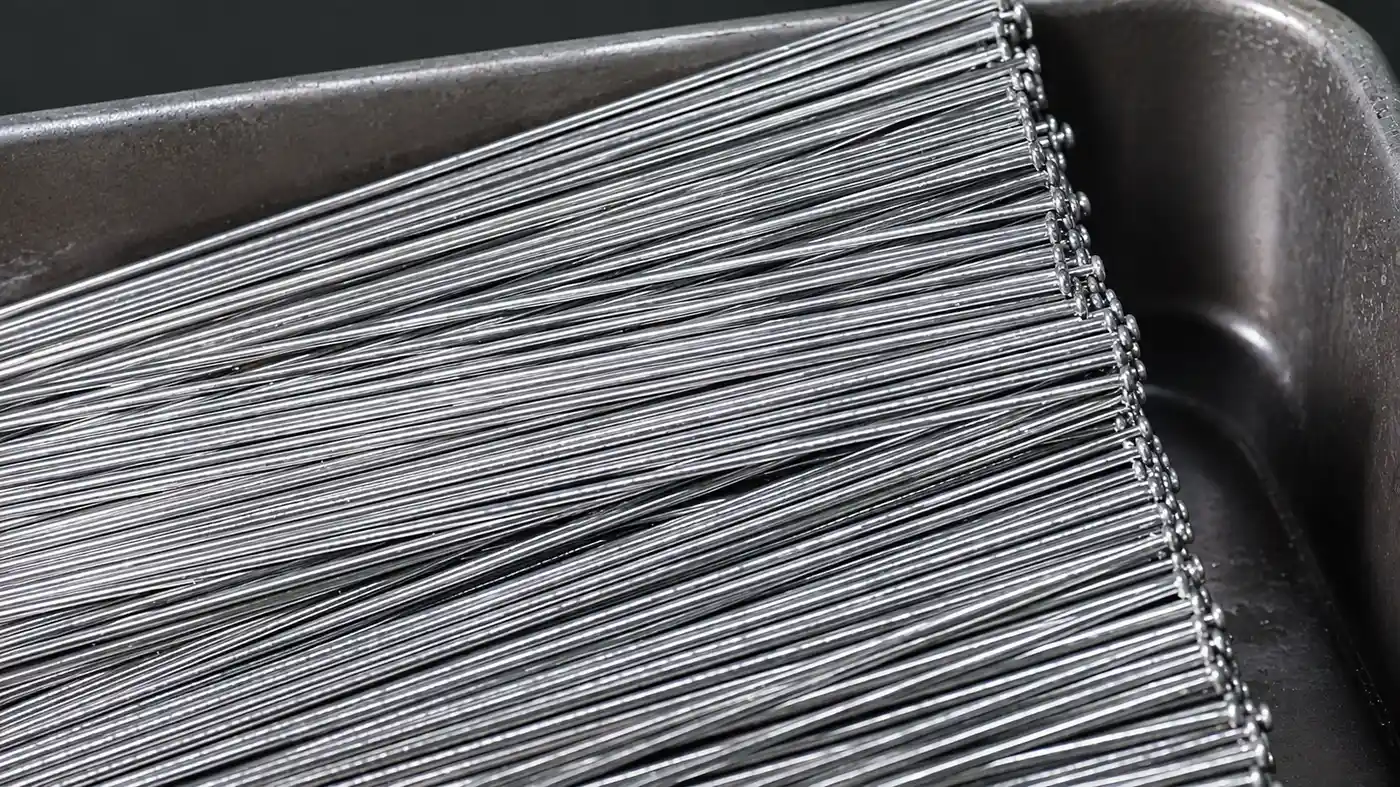
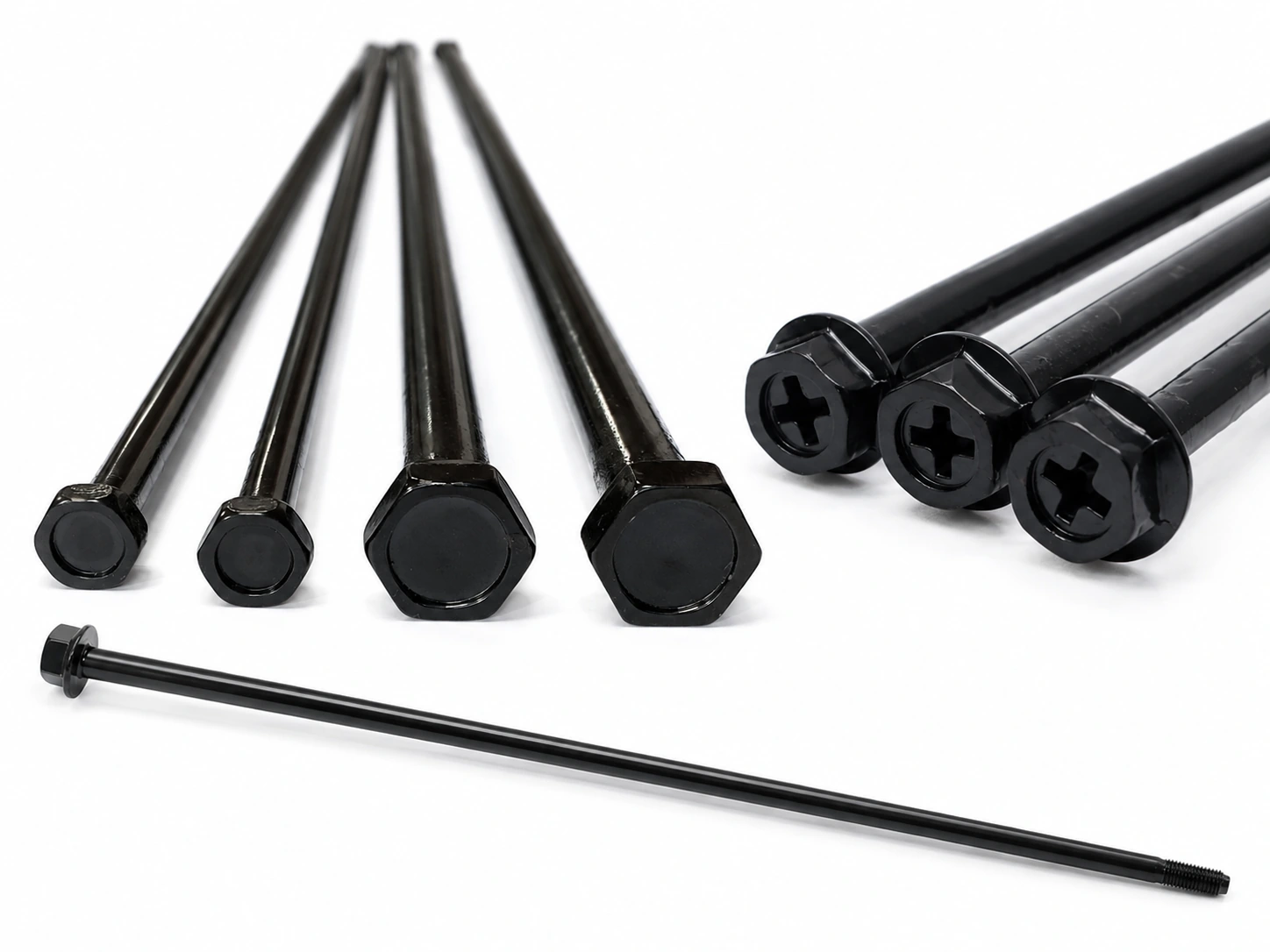
A long machine screw is a machine-threaded fastener whose length is large relative to its diameter or the space it must reach. There is no fixed length at which every screw becomes “long.” A 100 mm screw may be ordinary in one assembly and difficult to manufacture or install in another. Diameter, unsupported length, head geometry, and thread position matter more than a single millimeter cutoff.
For a metal assembly, a long screw may pass through a deep housing, clamp a wide stack of parts, or reach a recessed tapped hole. It still needs the correct machine thread, a head that seats properly, and a length that creates the intended engagement without bottoming or interfering with nearby components.
Which Dimensions Define a Long Machine Screw?
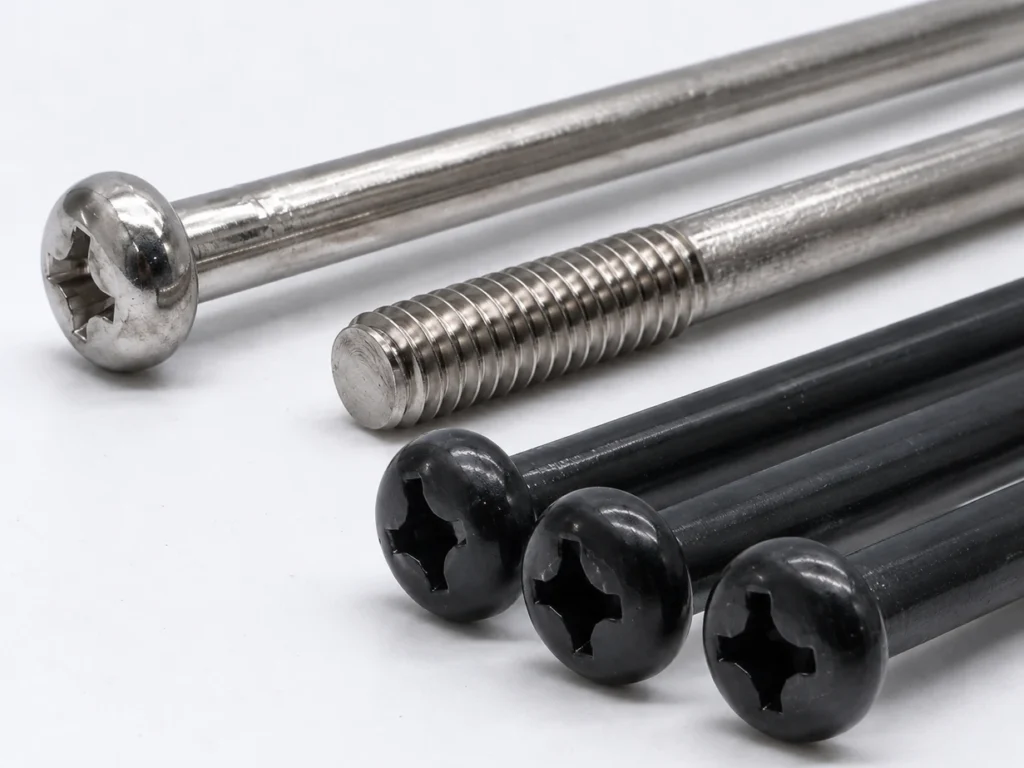
Overall length is only the starting point. A drawing should show the length datum, head and drive, nominal diameter and pitch, straightness requirement, unthreaded shank, thread start, threaded length, and tip form. For most protruding heads, length is measured from beneath the head; a countersunk head commonly uses the top of the head as the reference. The approved drawing or product standard controls the final measurement.
The length-to-diameter ratio tells an engineer how slender the part is. A thin, long screw is more likely to need support during forming, transport, and installation than a thick screw of the same length. A long unthreaded shank can span the assembly while a shorter thread at the end engages a nut or tapped component. Fully threaded, partially threaded, and stepped designs therefore solve different problems.
Threaded rod is not an automatic replacement for a long screw. If the joint needs a formed head, controlled bearing face, drive recess, precision shoulder, or defined tip, those features belong in the screw specification.
How Long Can a Machine Screw Be?
At Shi Shi Tong, we evaluate custom long machine screws from M1.4 to M12, with lengths up to 2,000 mm. The workable combination depends on diameter, material, head shape, thread coverage, straightness, tolerance, and production quantity. The 2,000 mm figure describes the upper end of our review range; a specific design needs a drawing-based feasibility check.
For a small-diameter part, the main challenge may be keeping the shaft straight. For a thicker part, head forming, material condition, or the length of rolled thread may control the process. The required length of full, usable thread is separate from the screw’s total length. Thread engagement must suit the mating material and joint load; extending the thread along the entire shank rarely solves an engagement problem by itself.
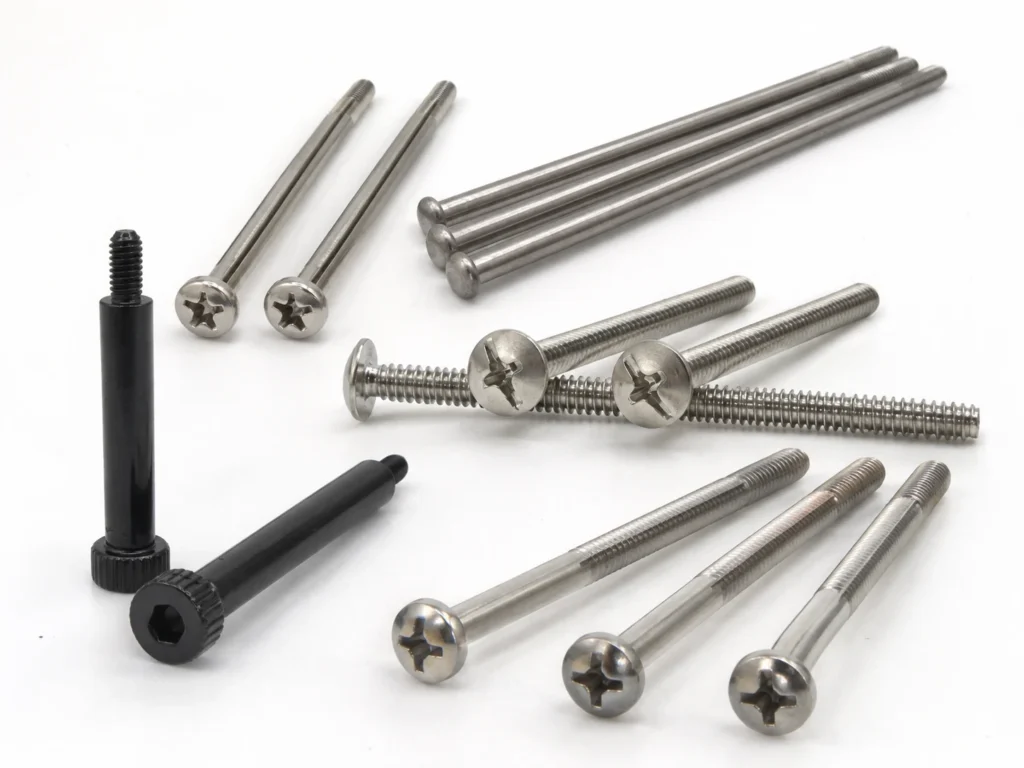
Common Long Screw Configurations
| Configuration | Where it helps | Drawing details to define |
|---|---|---|
| Long plain shank with an end thread | Reaching a distant nut or tapped hole | Shank diameter, straightness, thread start, engagement length |
| Partially threaded screw | Keeping thread out of the clamped or locating zone | Grip length, thread runout, head seat |
| Fully threaded screw | Providing adjustment along the shaft | Thread length, pitch, fit, assembly clearance |
| Stepped or shoulder screw | Locating a moving or precision component | Shoulder dimensions, transitions, concentricity |
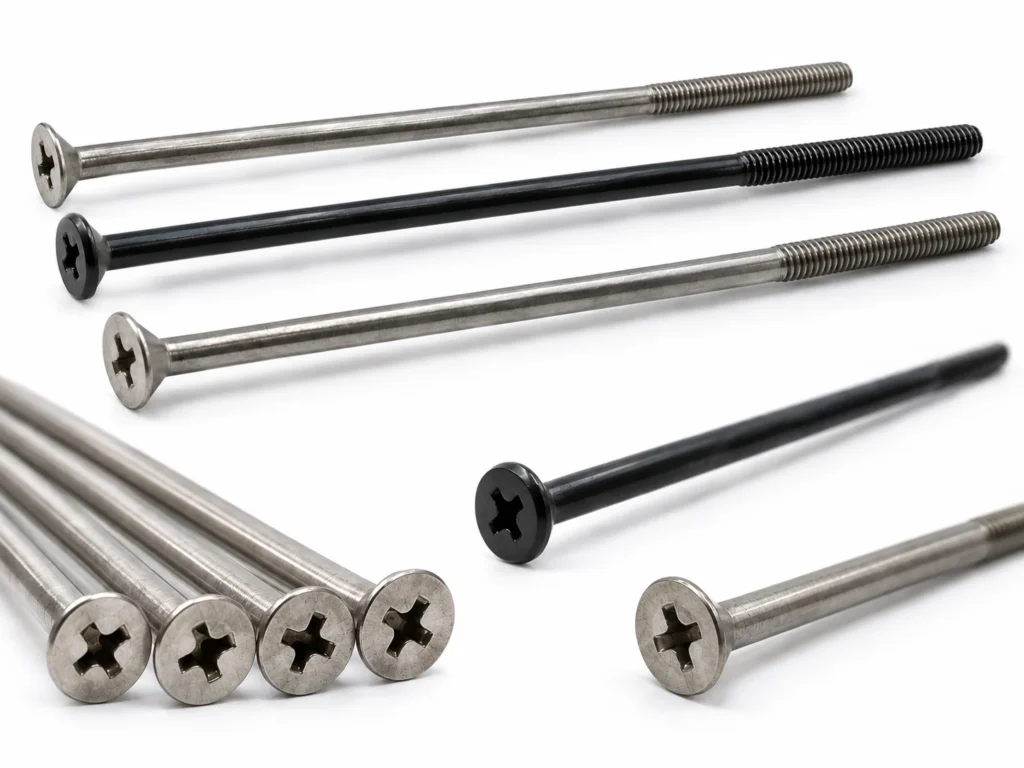
| Extra-long countersunk screw | Seating flush across a deep component stack | Head angle, countersink fit, overall length datum |
The head and drive should match tool access and the tightening method. A recessed socket, pan head, external hex, or special head can all be considered, but each changes how the screw is made and assembled. Our long screw range shows the design directions we can review.
What Should You Send for a Custom Long Screw?
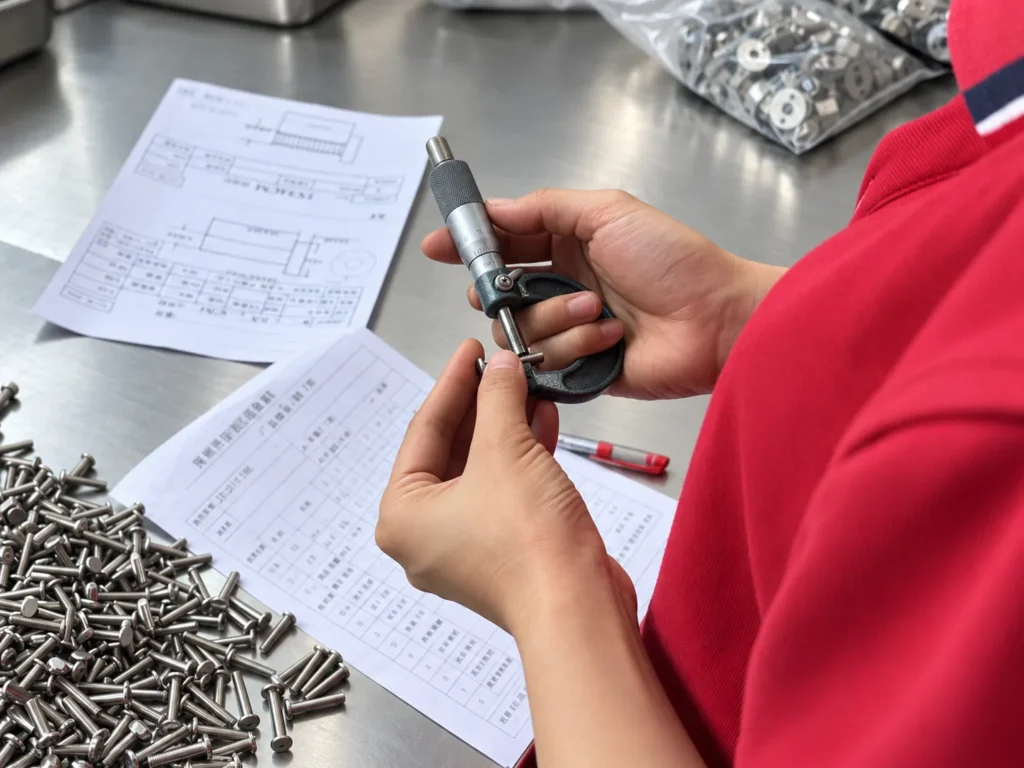
Send the screw drawing or a sample together with a section view of the assembly. Identify the mating thread, diameter and pitch, length datum, threaded and unthreaded zones, material, finish, critical tolerances, expected quantity, and how the part will be installed. If straightness or runout is important, state the measurement method and acceptance limit on the drawing.
We can then review the manufacturing route, sample requirements, and inspection plan for your custom long machine screw. Send your drawing to discuss the length and geometry your assembly requires.