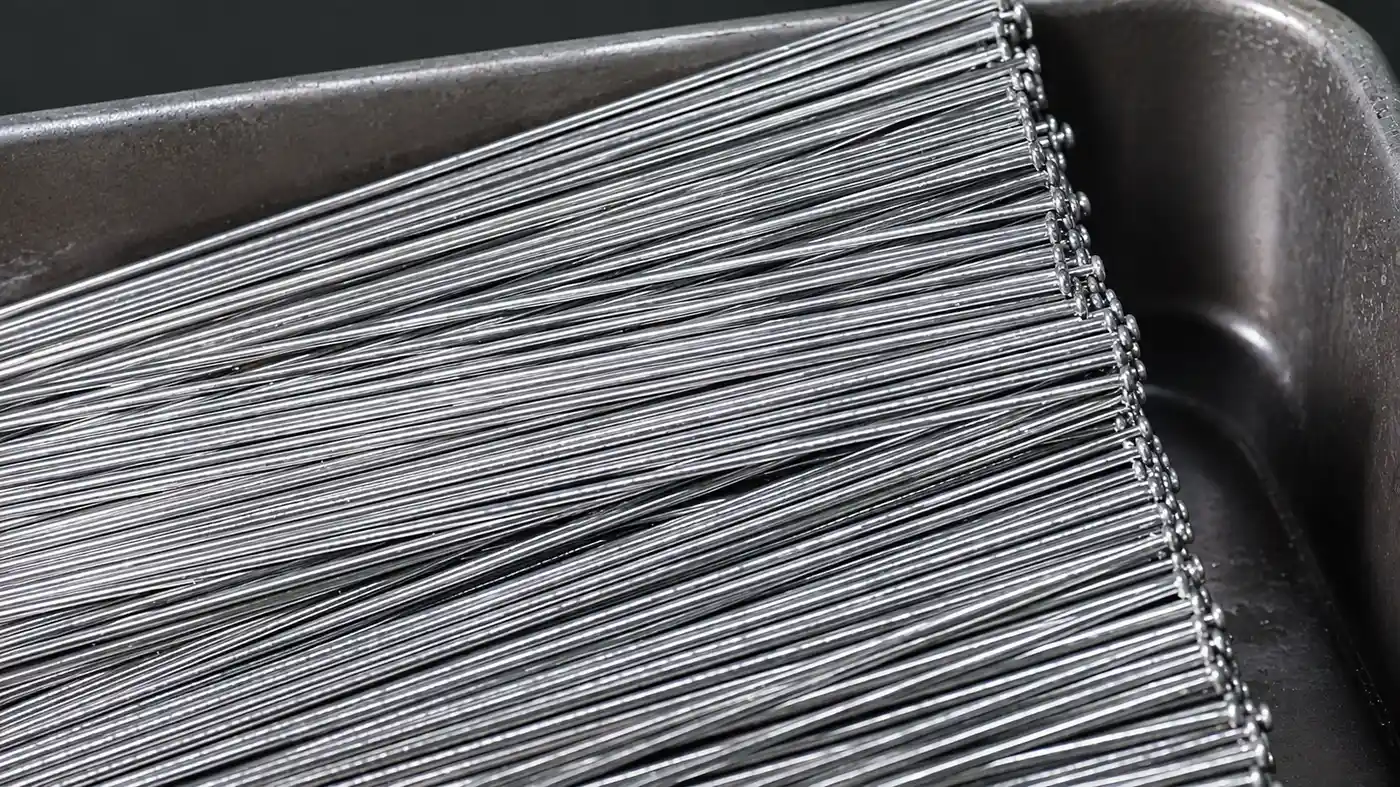

Custom SEMS Screws Manufacturer
Shi Shi Tong manufactures custom screw-and-washer assemblies for equipment, housings and terminal connections. Choose a single flat washer, a flat-and-spring washer combination or a formed square washer, with screw geometry and finished condition reviewed for your assembly.
- Three washer assembly configurations
- Coordinated screw and washer dimensions
- Material and finish reviewed for the complete assembly
Choose Your SEMS Washer Assembly
SEMS screws are supplied with one or more pre-assembled washers retained on the screw, allowing the components to be handled as one assembly. Start with the washer arrangement, then match the head, drive and thread to the joint.
These configurations are available for custom manufacturing to an agreed drawing.
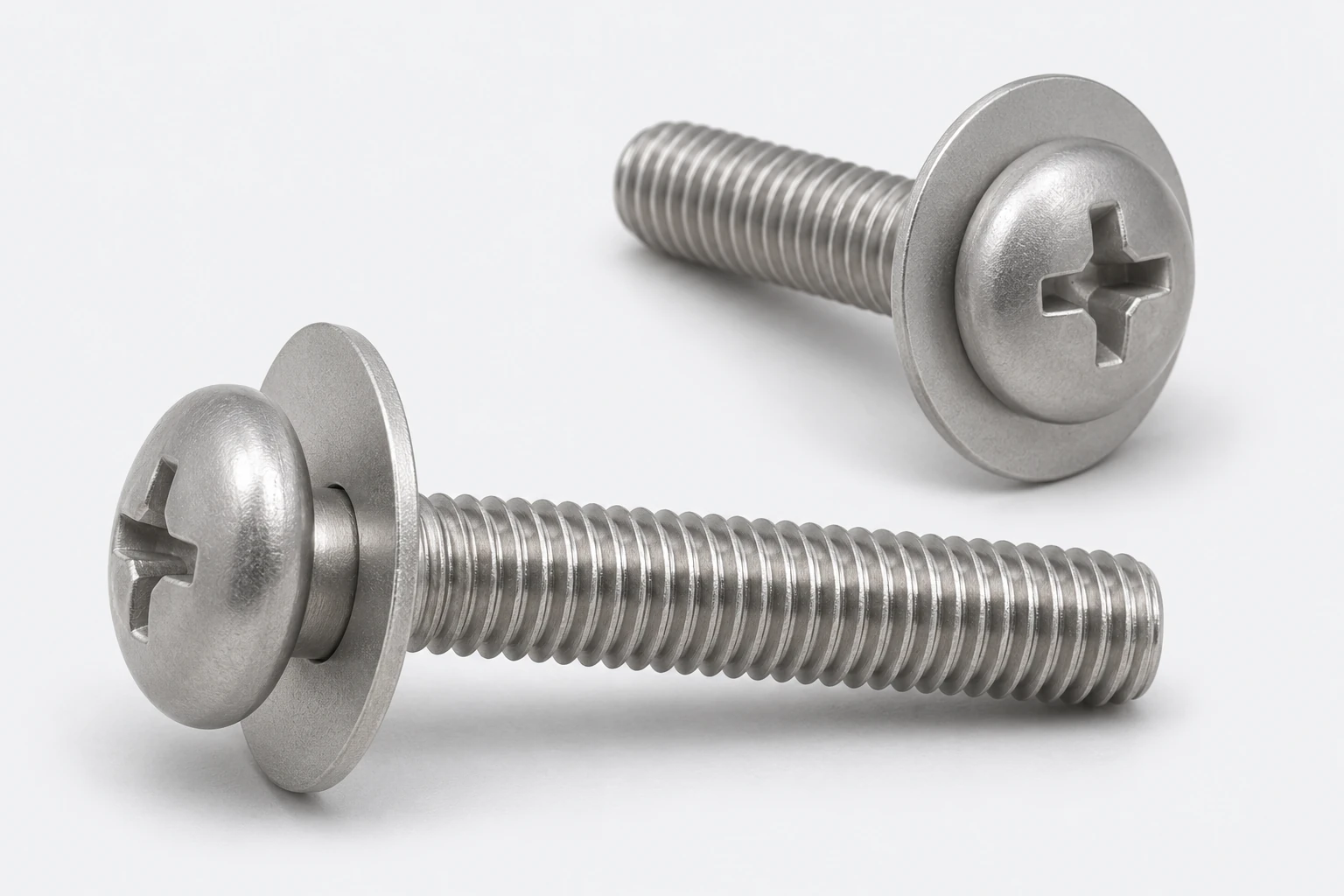
Single Flat-Washer SEMS Screws
A single round flat washer provides a separate bearing surface beneath the screw head. Match its outside diameter and thickness to the hole, supporting surface and surrounding space.
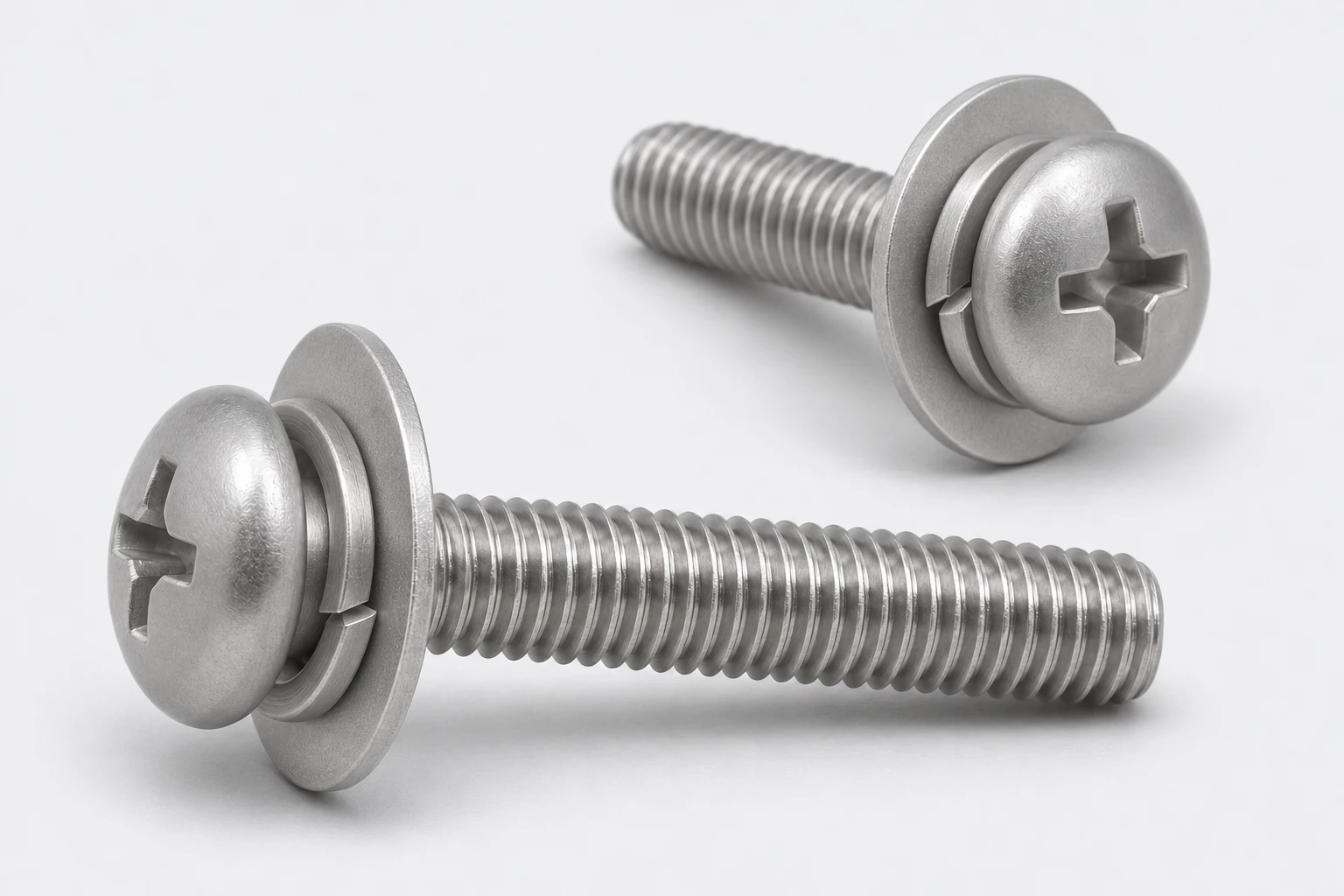
Double-Washer SEMS Screws
A flat washer and a split spring washer are assembled beneath the screw head. In the configuration shown, the spring washer sits next to the head and the flat washer faces the joint.
The complete washer stack must be considered together with screw length and thread engagement.

Square-Washer SEMS Screws
A formed square washer or pressure plate is assembled beneath the screw head. Its outline and bearing profile must fit the mating seat or terminal connection, including clearance for the corners and any movement required during tightening.
Specify the Complete Screw-and-Washer Assembly
A thread size and screw length do not fully define a SEMS assembly. Washer dimensions, the under-head transition and the position of complete threads also determine whether the joint can seat and clamp correctly.

- Under-head length L
- Screw head
- Washer stack
- Under-head transition
- Complete thread
- Screw tip
Illustrative geometry. Dimensions and measurement references follow the approved drawing.
For the non-countersunk assemblies shown, screw length is measured from the underside of the head to the tip. The washer stack occupies part of this under-head space, so screw length is not the same as usable projection or thread engagement.
| Feature | Available configuration or selection point | Why it matters |
|---|---|---|
| Washer arrangement | Single round flat washer, flat plus split spring washer, or formed square washer | Establishes the bearing interface and assembly stack |
| Head and drive | Examples include button and socket cap heads with hex socket drives, pan heads with Phillips, combination or six-lobe drives, and external hex heads | Determines head clearance and tool access |
| Thread | Diameter, pitch or TPI, tolerance and complete-thread length defined on the drawing | Must match the receiving thread and required engagement |
| Screw length | Under-head length and its measurement reference defined on the drawing | Nominal length alone does not show installed reach |
| Under-head geometry | Retaining section, plain shank and thread transition reviewed together | Affects washer retention, seating and thin-joint compatibility |
| Round washer dimensions | Outside diameter, bore and thickness | Controls hole coverage, fit and surrounding clearance |
| Square washer dimensions | Width, length, bore, formed profile and corner envelope | Must fit the mating seat without interference |
| Washer stack | Component order and height in the specified measurement condition | Affects grip space, thread engagement and tip clearance |
| Material and finish | Screw and each washer specified separately | Avoids assumptions about grade, hardness or coating compatibility |
| Assembly acceptance | Retention and permitted washer movement defined for the application | Different assemblies may require different movement and retention criteria |
Materials and Finishes for Both Components
| Material direction | Selection considerations |
|---|---|
| Carbon steel | Review the required mechanical condition, screw and washer hardness, and a finish suitable for the exposure and assembly requirements |
| Stainless steel | Specify the grade of the screw and each washer separately, then assess corrosion exposure, mating materials and assembly conditions |
Select the screw and each washer as separate parts of the specification. A stainless steel screw does not establish the washer grade. Coating type and thickness can affect dimensions, thread fit and assembly friction.
Make the Washer Stack Fit the Joint


Check seating, thread engagement and bottom clearance in the installed condition.
Fewer Loose Components to Handle
Separate screws and washers require individual handling and the correct assembly order. A pre-assembled SEMS configuration keeps the selected washer arrangement with the screw during handling, reducing separate washer placement at the workstation.
Check Thin Joints Before Choosing the Length
An under-head plain section or incomplete thread can prevent a thin joint from clamping correctly. Check where complete threads begin, whether the washer stack seats against the joint, and whether the screw reaches the required engagement without bottoming.
Allow Space for the Washer Outline
A round washer may interfere with nearby walls or components. A square washer also needs clearance for its corners and formed profile. Match the complete assembly envelope to the seat and surrounding parts throughout tightening.
One Drawing for the Complete Assembly
Coordinate the screw geometry and washer arrangement in one controlled specification. Head clearance, drive access, retaining geometry, washer profile and complete-thread position can then be reviewed together.
The finished condition also matters. Material, hardness, surface treatment and any secondary operations need to remain compatible with the assembled components.
Sample review provides a reference for the agreed dimensions and assembly requirements before production. The approved drawing and acceptance criteria keep later inspection focused on the same configuration.
Drawing Review
Review geometry, mating parts, materials and critical assembly conditions
Route Planning
Select the applicable forming, thread-processing, secondary machining and finishing route
Sample Review
Assess the sample against the agreed drawing and assembly criteria
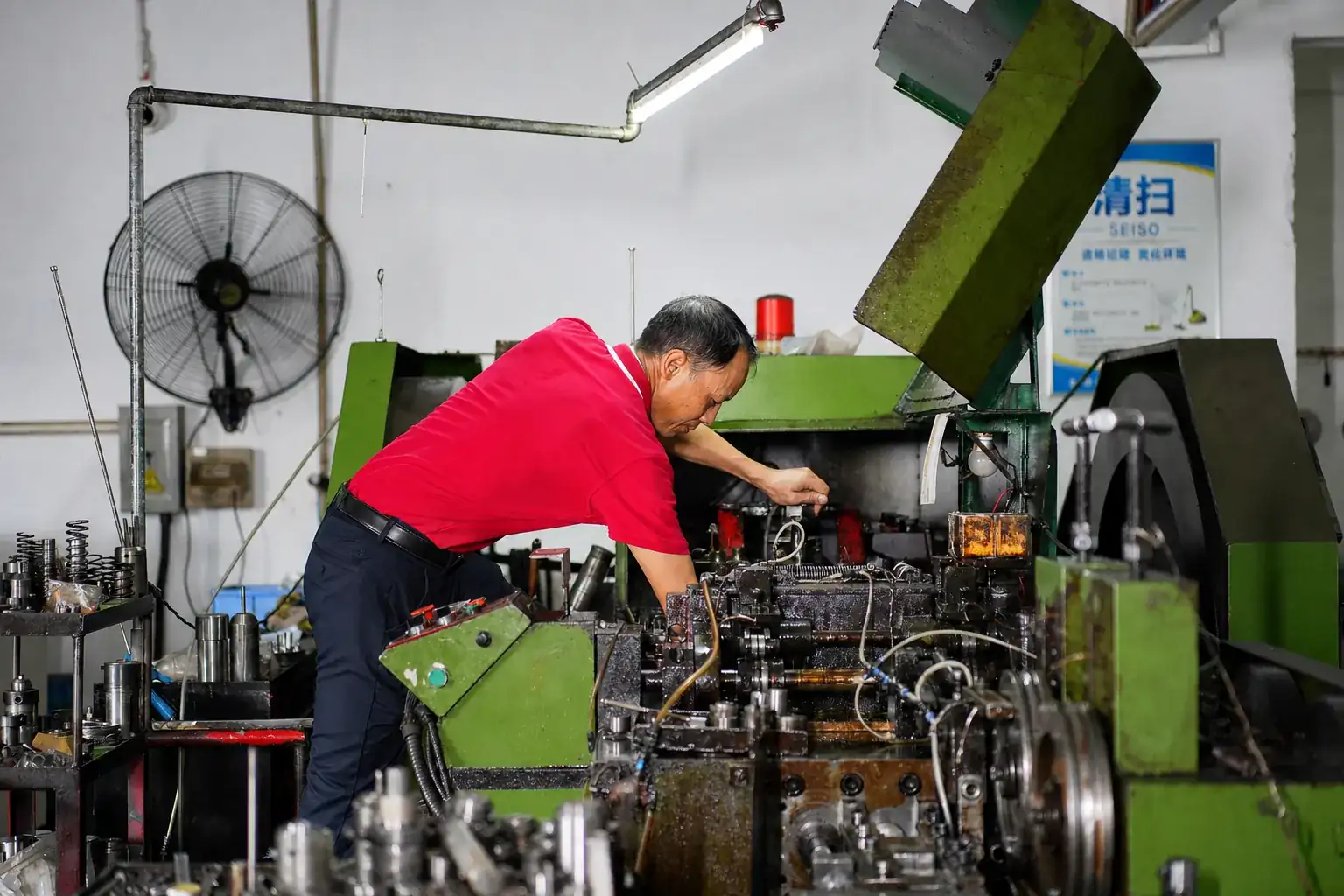
Production Inspection
Manufacture and inspect to the approved requirements
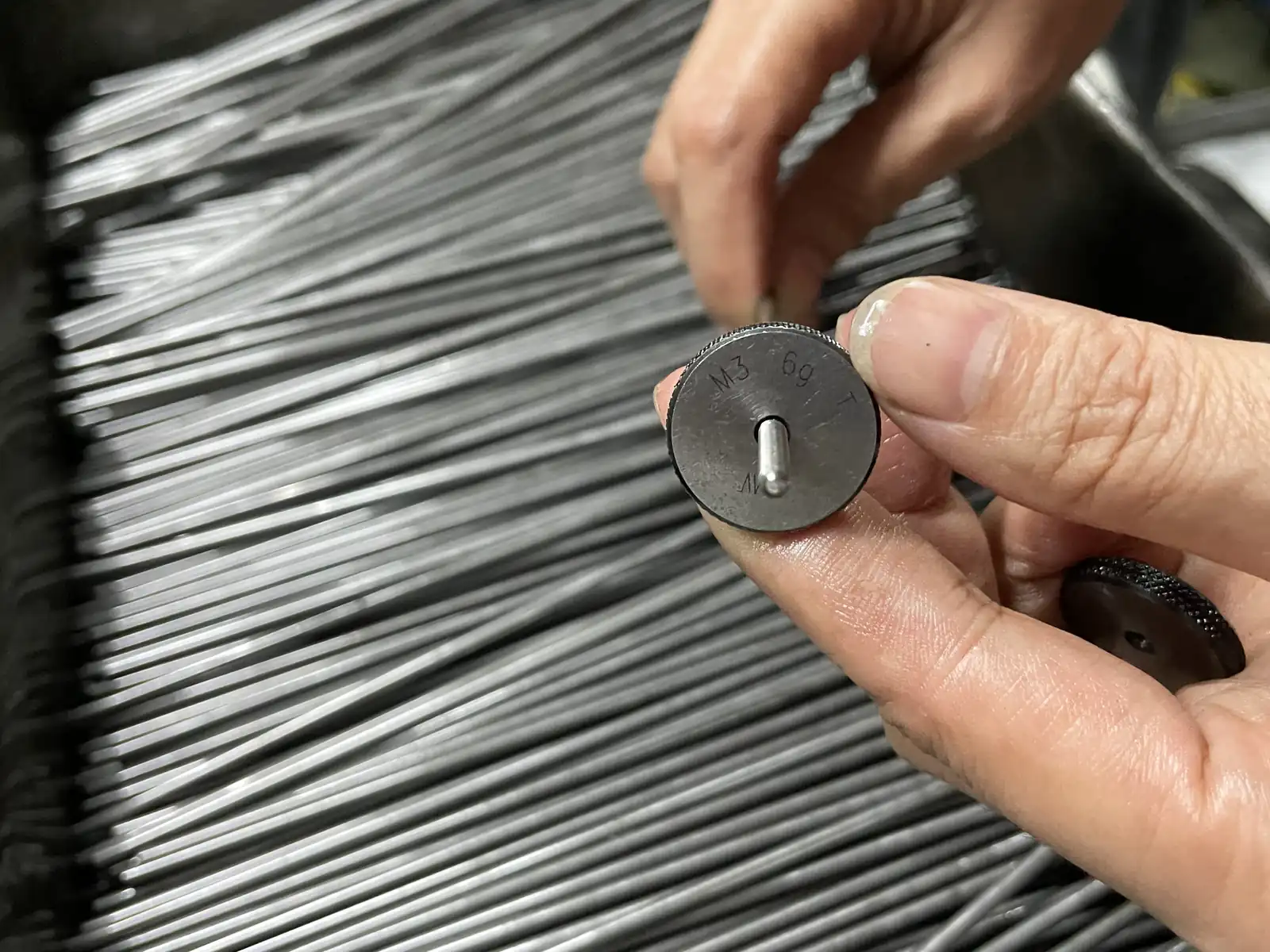
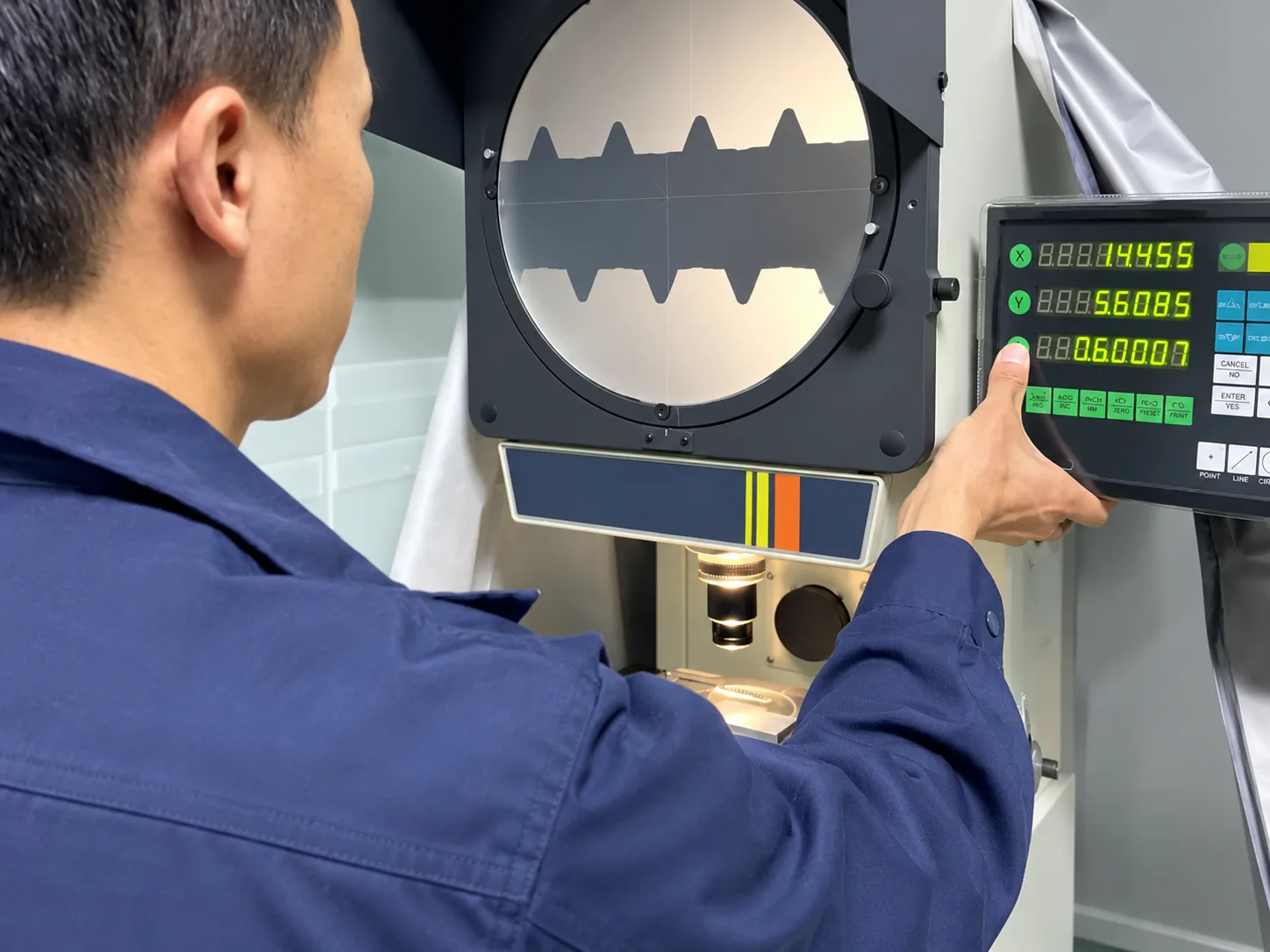
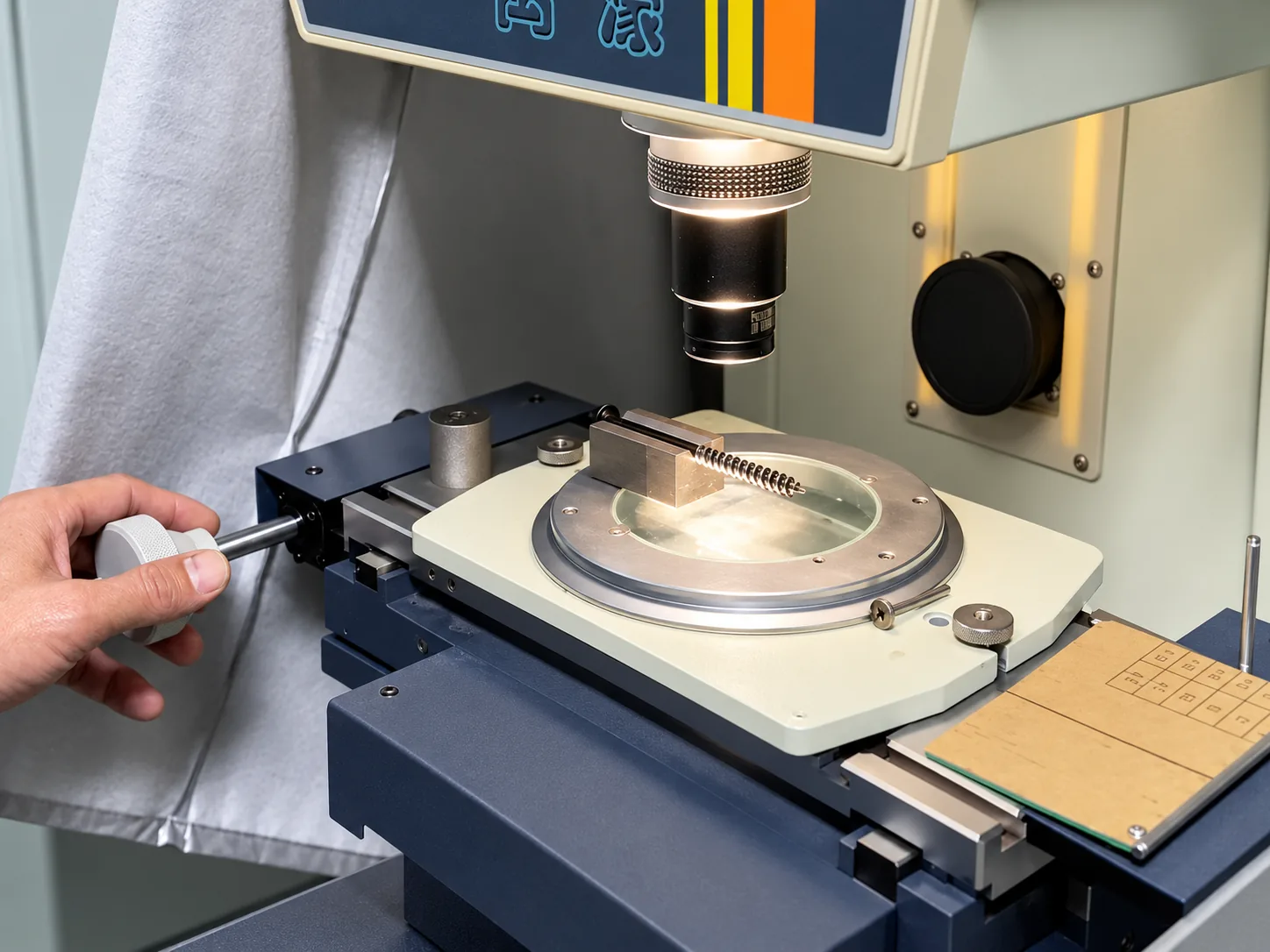
| Inspection area | Project-specific planning |
|---|---|
| Screw geometry | Critical head, shank and length dimensions, including the position of complete threads |
| Washer geometry | Individual washer dimensions, formed profile and specified stack arrangement |
| Delivered thread condition | Thread fit and gauge requirements after the applicable finishing operations |
| Retention and movement | Agreed acceptance criteria and assessment method for the assembled washers |
| Material and surface condition | Specified component materials, relevant documentation and finish requirements |
| Additional testing | Hardness, torque or corrosion testing where specified and applicable |
Inspection methods, sampling and documentation are agreed for the part. Washer retention, permitted rotation and repeated-use requirements are application-specific criteria.
SEMS Screw Selection and Ordering Guide
What should I check when replacing a screw and separate washers?
Match the complete installed arrangement, including washer dimensions, material, screw length and thread engagement. The same nominal thread and length may produce a different fit when the retaining section or washer stack changes.
| Construction | Main distinction |
|---|---|
| SEMS screw | One or more washers are pre-assembled and retained on the screw |
| Screw with loose washers | Washers are selected and positioned separately during assembly |
| Integral flange screw | The enlarged bearing face is part of the head rather than a separate washer |
| Captive panel screw | A retaining interface keeps the screw attached to the panel after the receiving thread is released |
A retained washer does not, by itself, keep the whole screw attached to a panel. For removable covers that require screw retention during servicing, review the panel-retaining arrangement separately.
Explore captive panel screwsHow do I select SEMS screws for electronics assembly?
Check the screw, washer and surrounding components as one installed assembly. Start with the mechanical seat and receiving thread, then review the space occupied by the head, washer and tool.
- Check round washer diameter or the full corner envelope of a square washer.
- Allow clearance from adjacent components and conductors throughout the permitted washer movement.
- Verify joint thickness, complete-thread engagement and blind-hole clearance.
- Match the drive to the assembly tool and the approved tightening procedure.
For the square-washer configurations shown here, the formed profile must match the mating seat or terminal connection. Electrical ratings, continuity and insulation depend on the complete connection and require their own validation.
Will SEMS screws prevent loosening under vibration?
The SEMS construction alone does not establish resistance to joint loosening. It retains the selected washers on the screw for assembly and handling.
Vibration performance depends on the joint design, preload, clamped materials, friction, service loads and temperature. A flat-and-split-spring washer combination should not be treated as a universal locking solution.
Where vibration resistance is critical, select a suitable joint-locking strategy and verify it under representative service conditions. Washer retention and resistance to screw loosening are separate acceptance questions.
Which materials and finishes suit outdoor exposure?
Select the screw and every washer for the actual environment. Consider moisture, chlorides, temperature, mating metals and the possibility of water remaining beneath the washer.
Carbon steel requires a finish appropriate to the exposure and assembly requirements. Stainless steel needs a suitable grade and surface condition; it can still experience localized corrosion in aggressive environments.
For coated assemblies, review coverage, thickness and dimensional effects on all components. A laboratory corrosion result applies to its stated method and conditions and should not be converted directly into a guaranteed outdoor service life.
How should I compare manufacturers and bulk quotations?
Compare quotations against the same drawing revision and complete assembly specification. Matching only the thread size and nominal length can hide differences in washer geometry, materials, finish and acceptance requirements.
Check these items together:
- Screw head, drive, thread and under-head geometry
- Washer quantity, order, dimensions and component materials
- Finished condition and agreed retention or movement requirements
- Inspection scope, sample approval and required documentation
- Tooling, sample, production and packaging costs on the same basis
Shi Shi Tong reviews custom SEMS projects through drawing assessment and quotation. Minimum quantity, sample arrangements and production timing are agreed for the selected configuration, material, tooling and order quantity.
Request a Quote for Custom SEMS Screws
Share your drawing or sample reference to review the screw and washer arrangement together. Include the required quantity, component materials, finish and any critical assembly or inspection requirements.
If the washer configuration is still being selected, describe the mating seat, joint thickness and available installation space.