| Diameter and length |
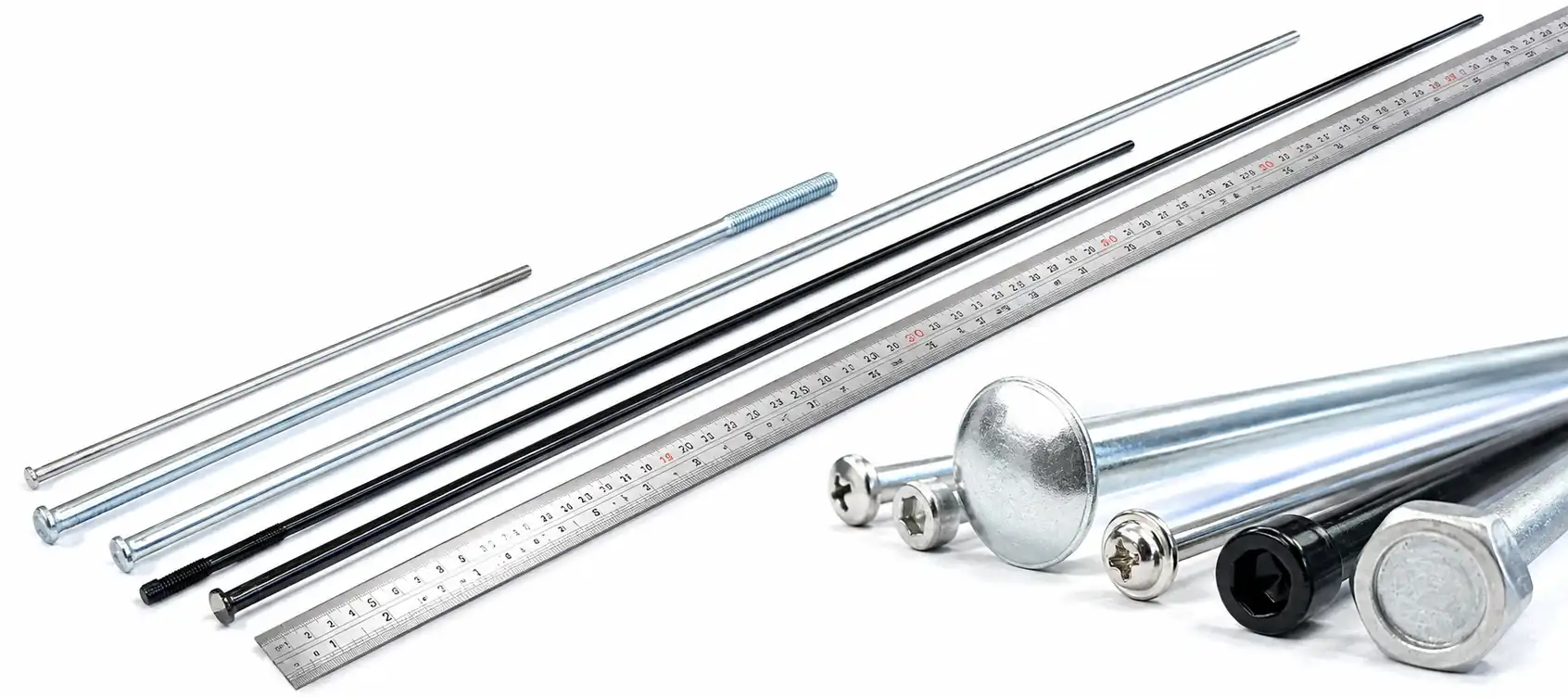
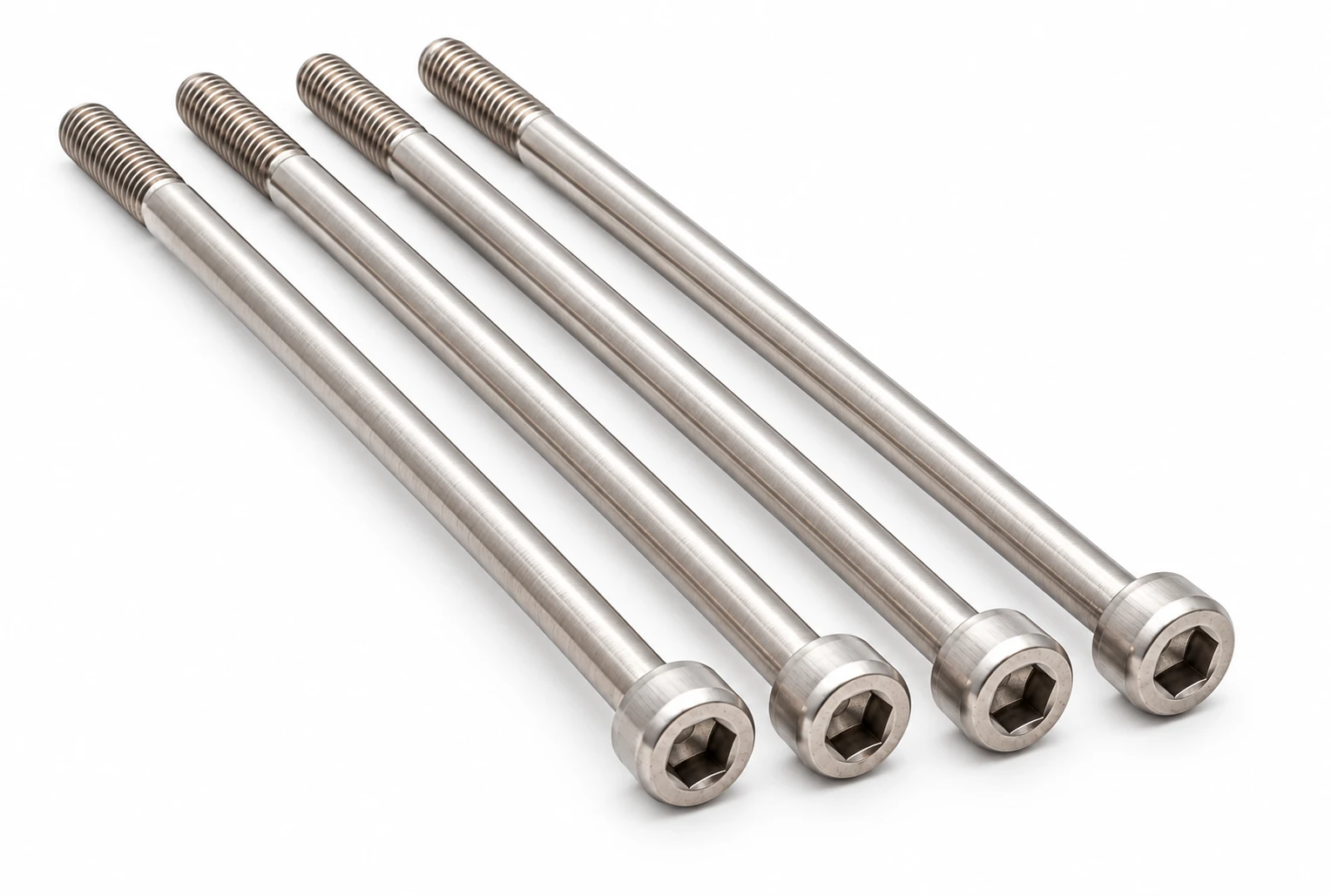
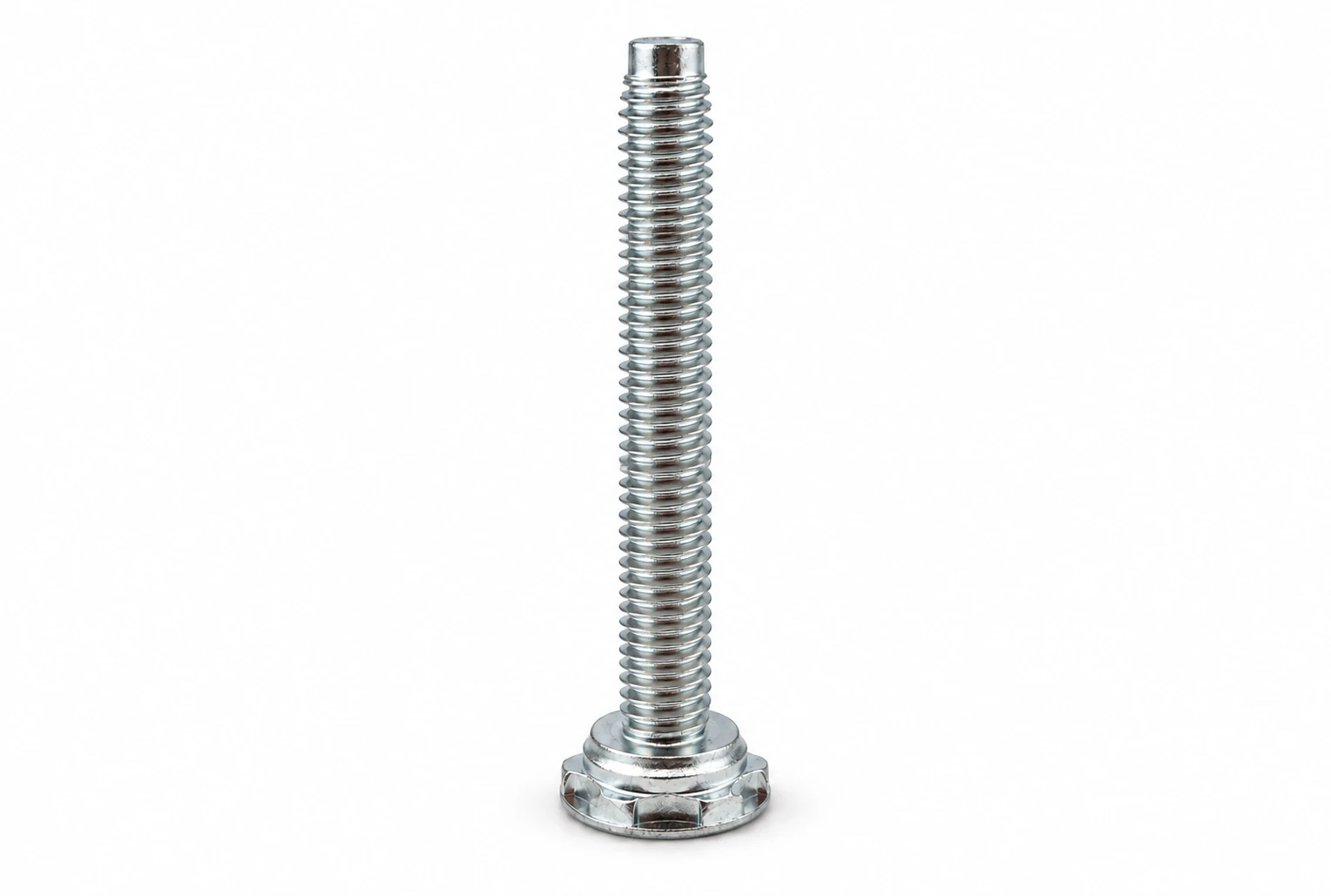
M1.4–M12, with lengths evaluated up to 2000 mm. |
The feasible combination depends on diameter, length-to-diameter ratio, geometry, material, strength, tolerance and process route. |
| Thread system |
Metric or inch machine threads; selected drawing-defined long self-tapping projects may be evaluated. |
State the applicable thread standard or full profile, mating material and starting-hole condition. Self-drilling and TEK screws are outside this page's scope. |
| Thread and point style |
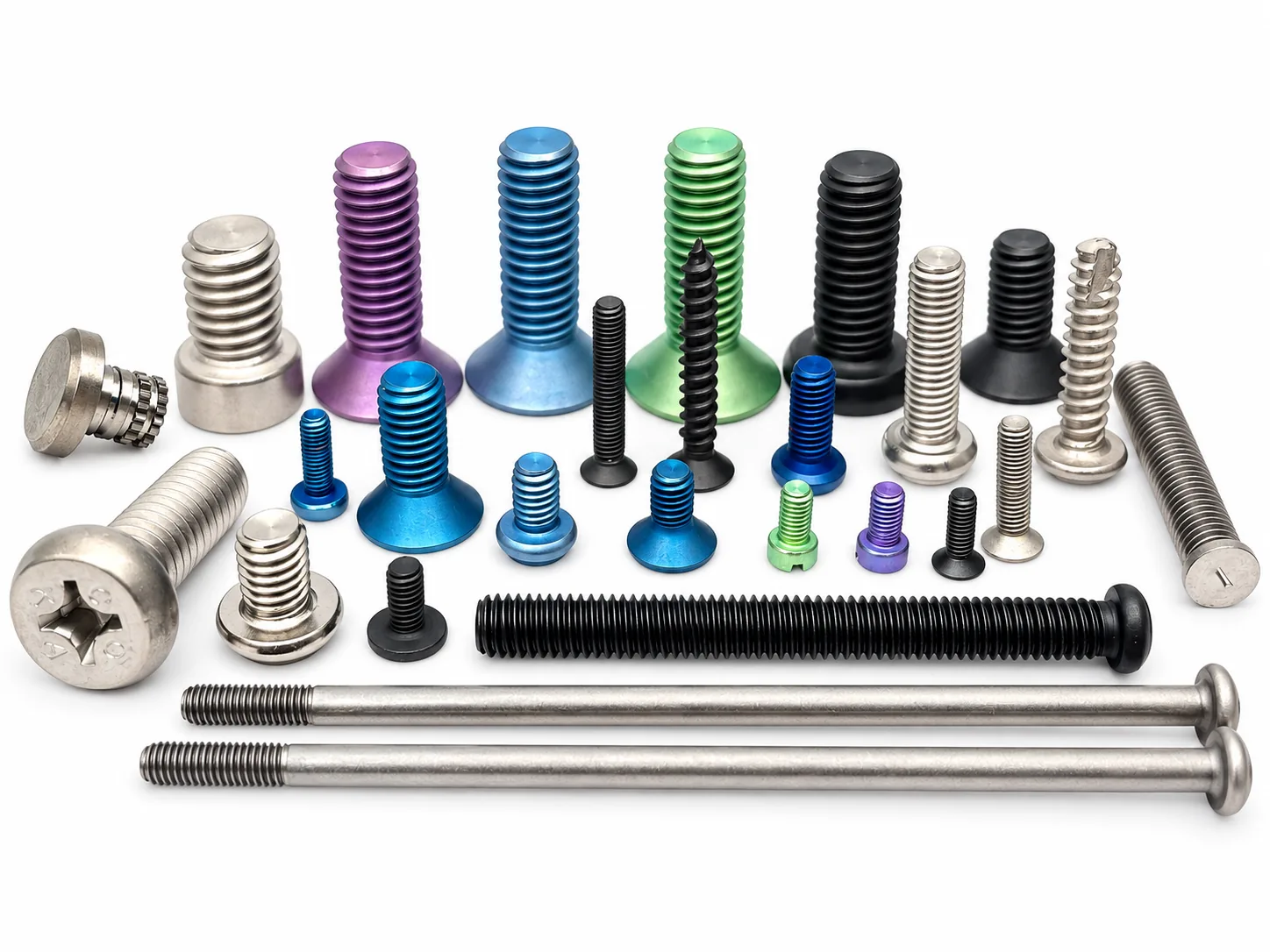
Full thread, partial thread, project-specific thread zones, machine-thread pointed ends, reduced or tapered ends, and selected self-tapping tip concepts reviewed from drawings. |
Define effective thread length, point geometry, mating engagement and the dimensional reference on the drawing. |
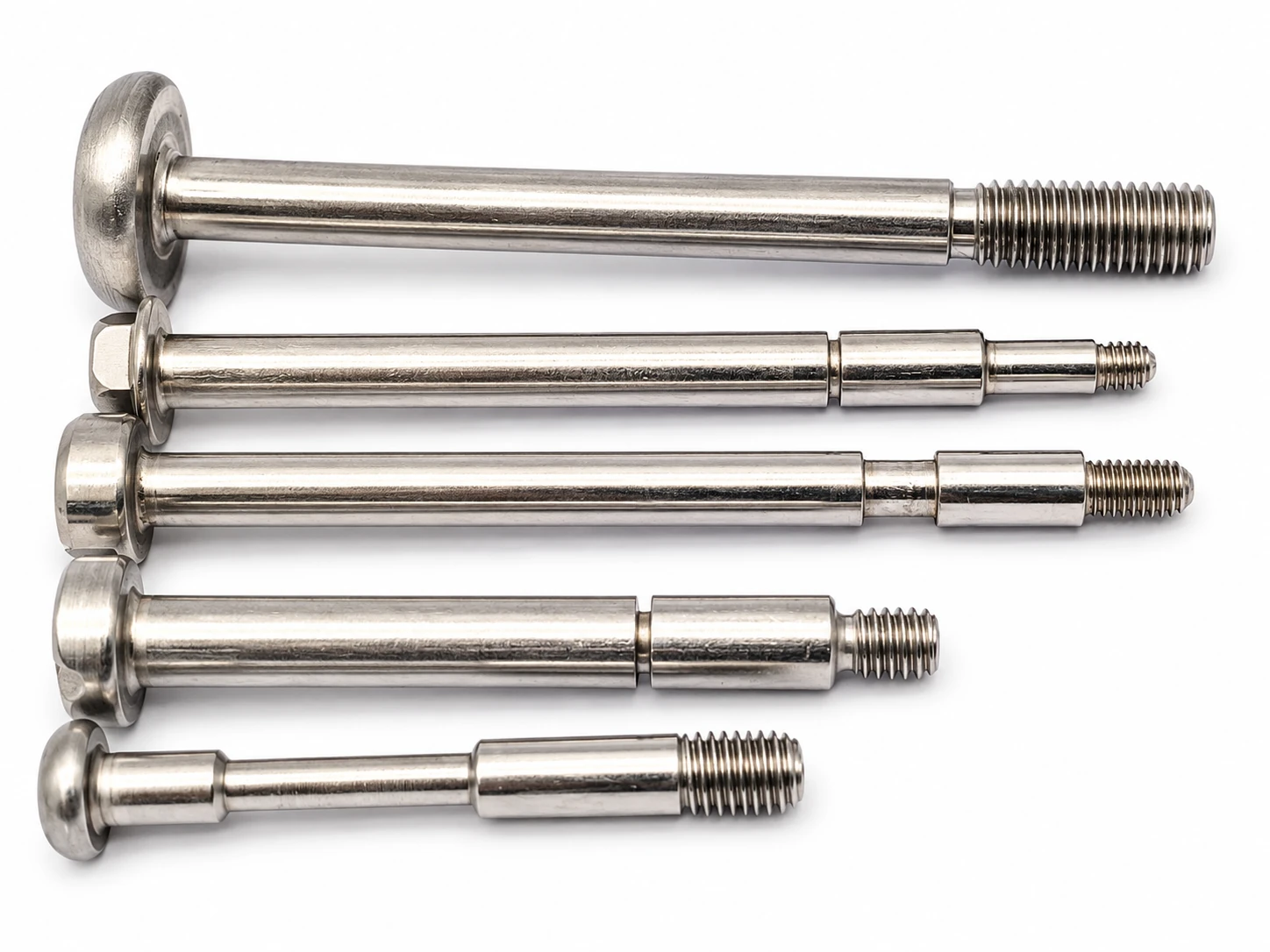
| Shank geometry |
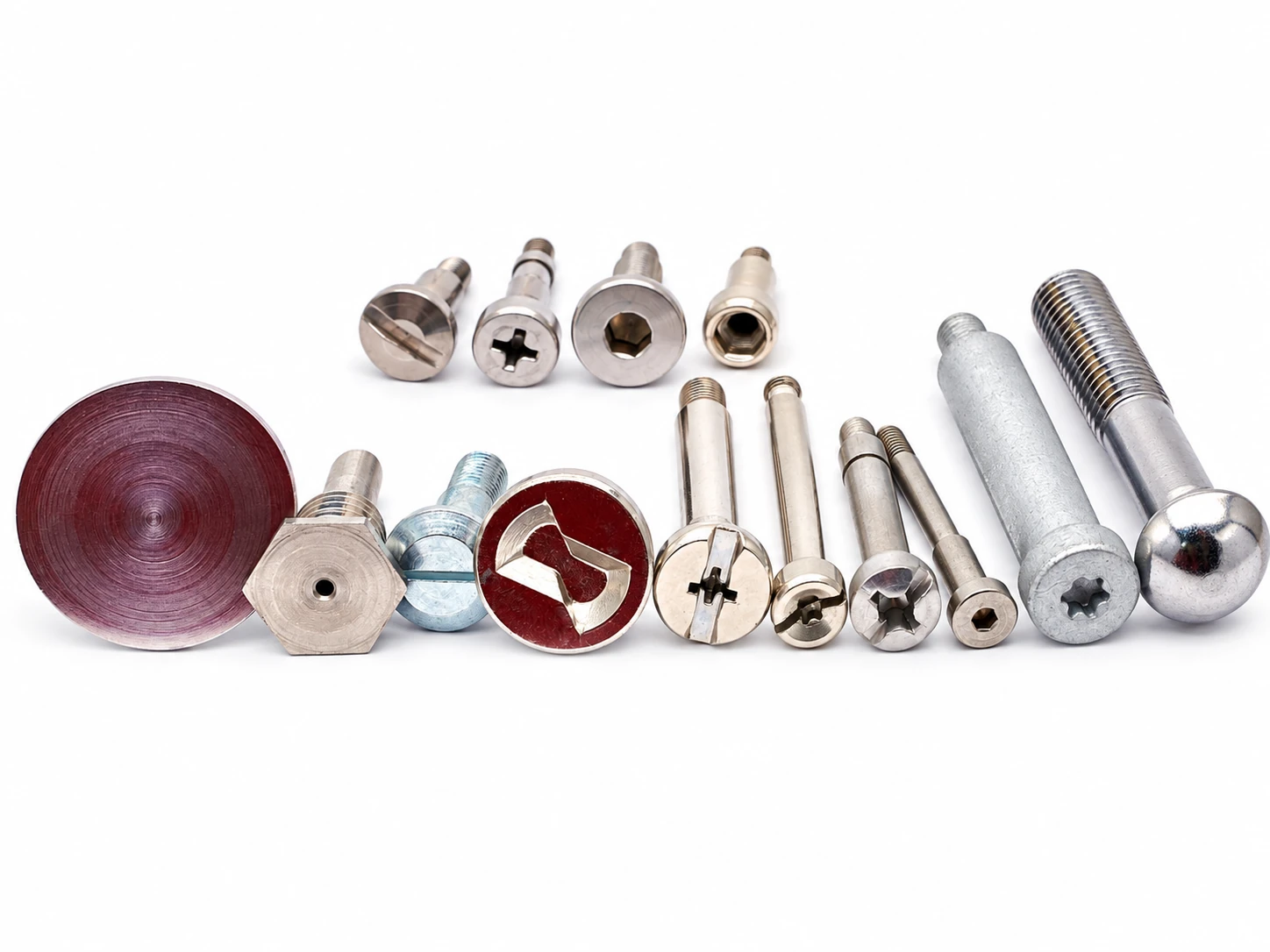
Straight shank, long unthreaded shank, shoulder and stepped-diameter concepts. |
State each diameter, transition, functional length and datum; do not describe a shoulder or step only through a product photo. |
| Head style |
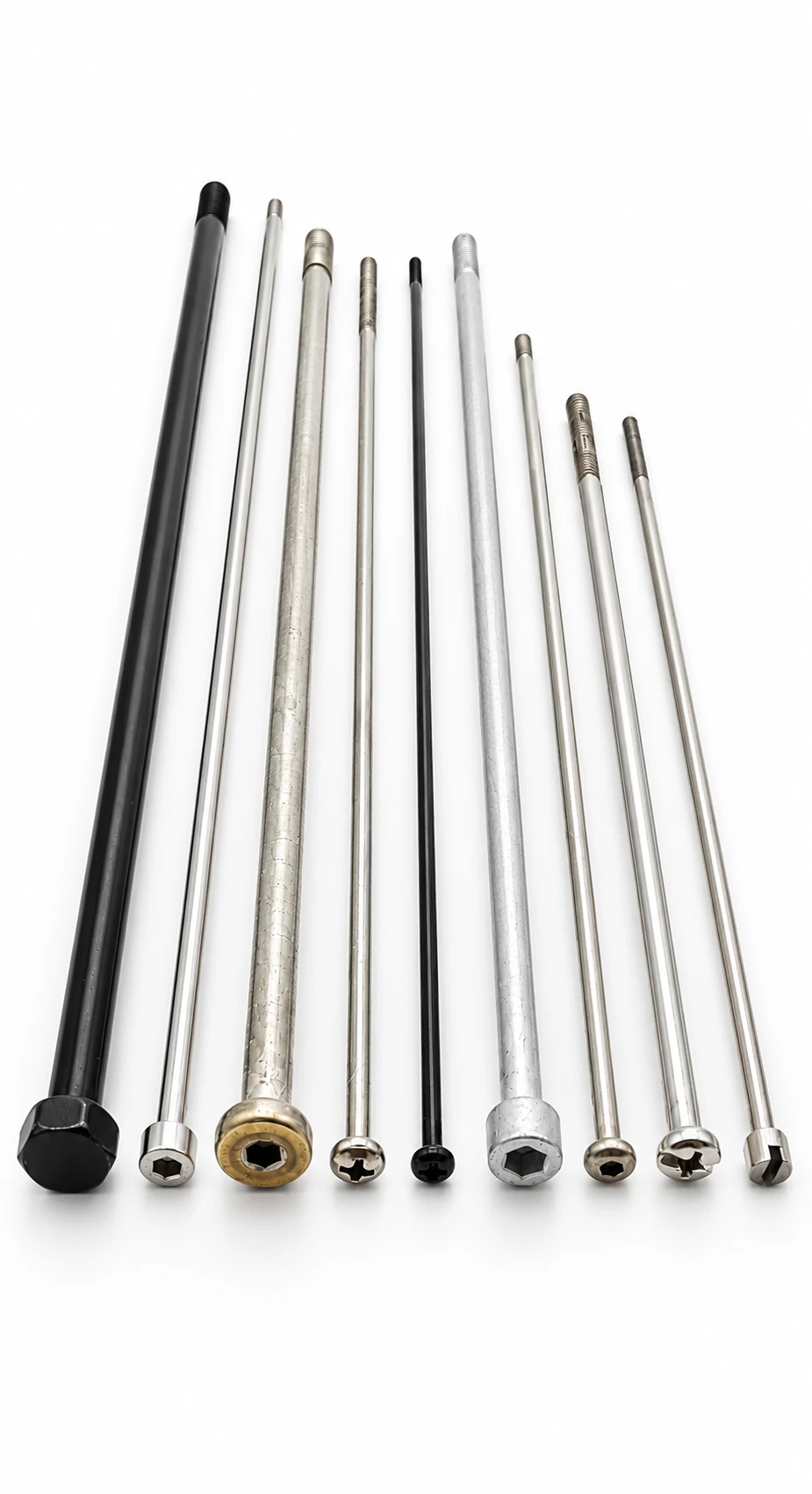
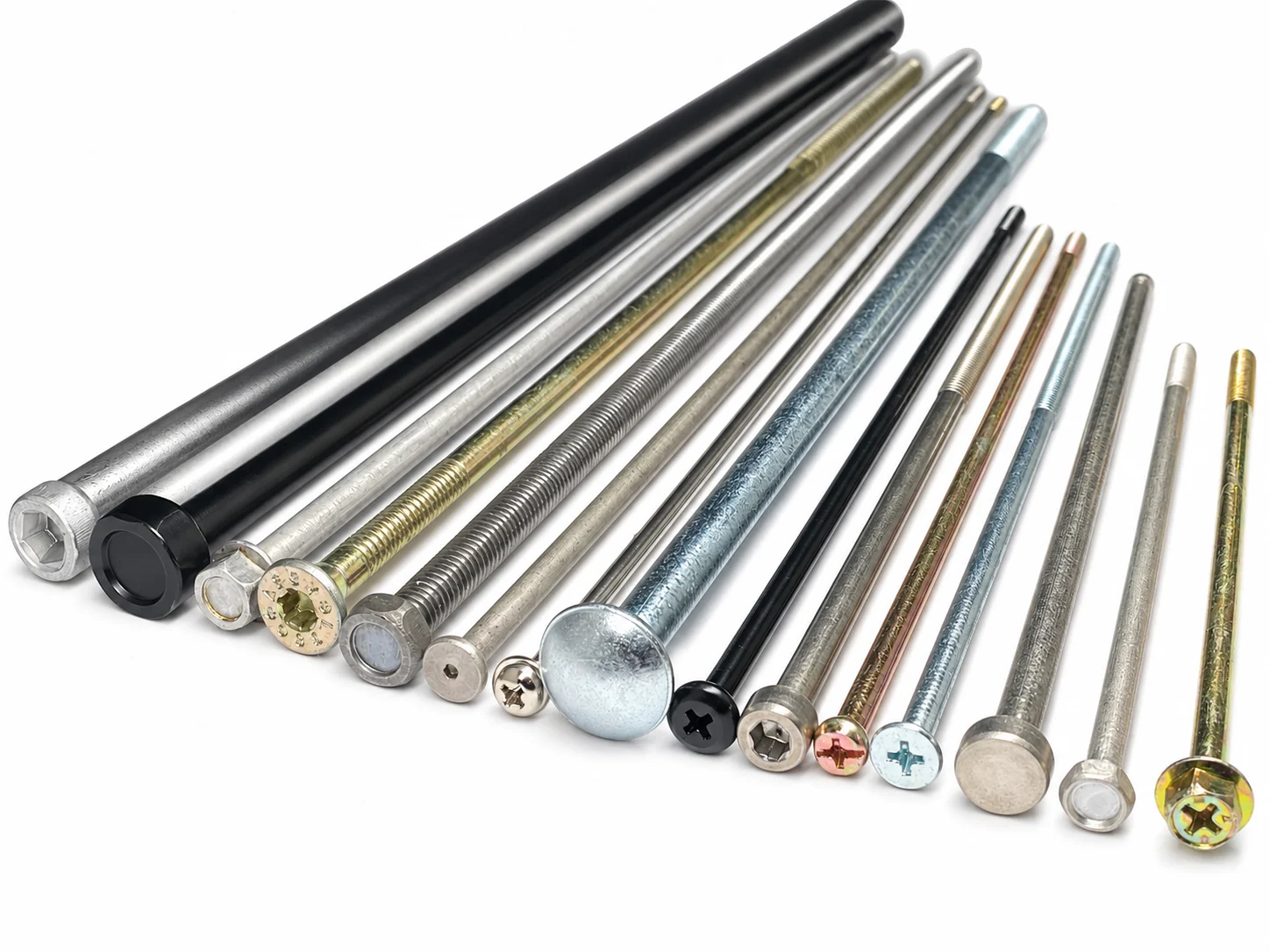
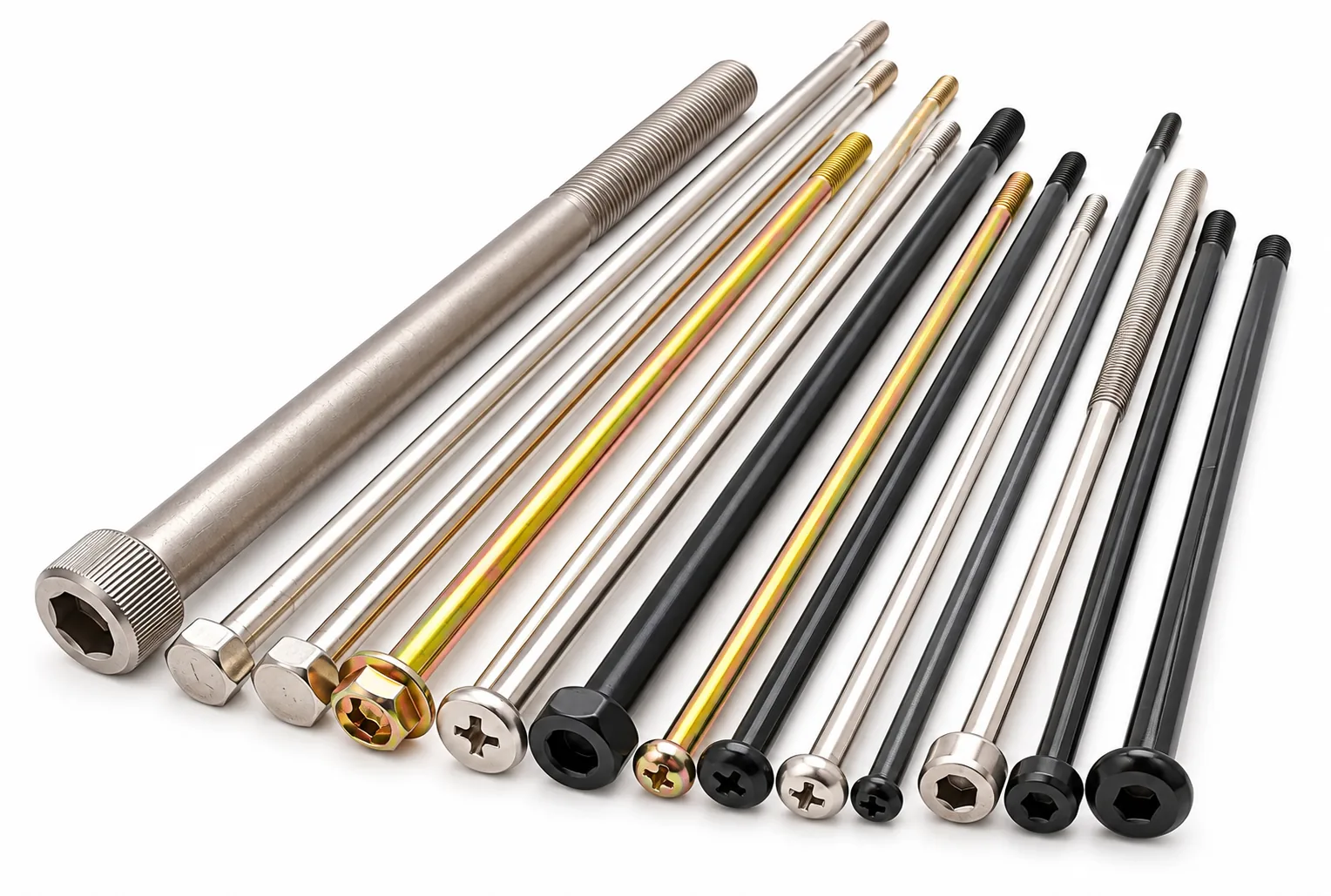
Socket cap, pan, truss, flat or countersunk, washer-style, external hex and drawing-specific heads. |
Head height, diameter, bearing face and forming volume must be reviewed together. |
| Drive style |
Phillips, slotted, combination, hex socket and selected security-drive concepts. |
Tool access, torque transfer, recess depth, proprietary rights and matching tools must be confirmed. |
| Cold-headed external hex |
Recessed external-hex and cold-headed flat-face external-hex concepts can be evaluated for designs that do not use trimmed hex flats. |
Across-flats dimension, head height, bearing face, corner form and appearance acceptance must be defined by the drawing and approved sample. |
| Material |
Carbon and alloy steel, stainless steel, titanium, copper and copper alloys, brass, or aluminum. |
Confirm exact grade and condition. Not every material is feasible at every diameter, length, head volume or forming route. |
| Strength and hardness |
Project-specific strength class, hardness, heat treatment and mechanical verification. |
High-strength and 12.9 requests require the applicable standard, material, geometry, coating and test requirements; the grade is not assumed across the range. |
| Surface and function |
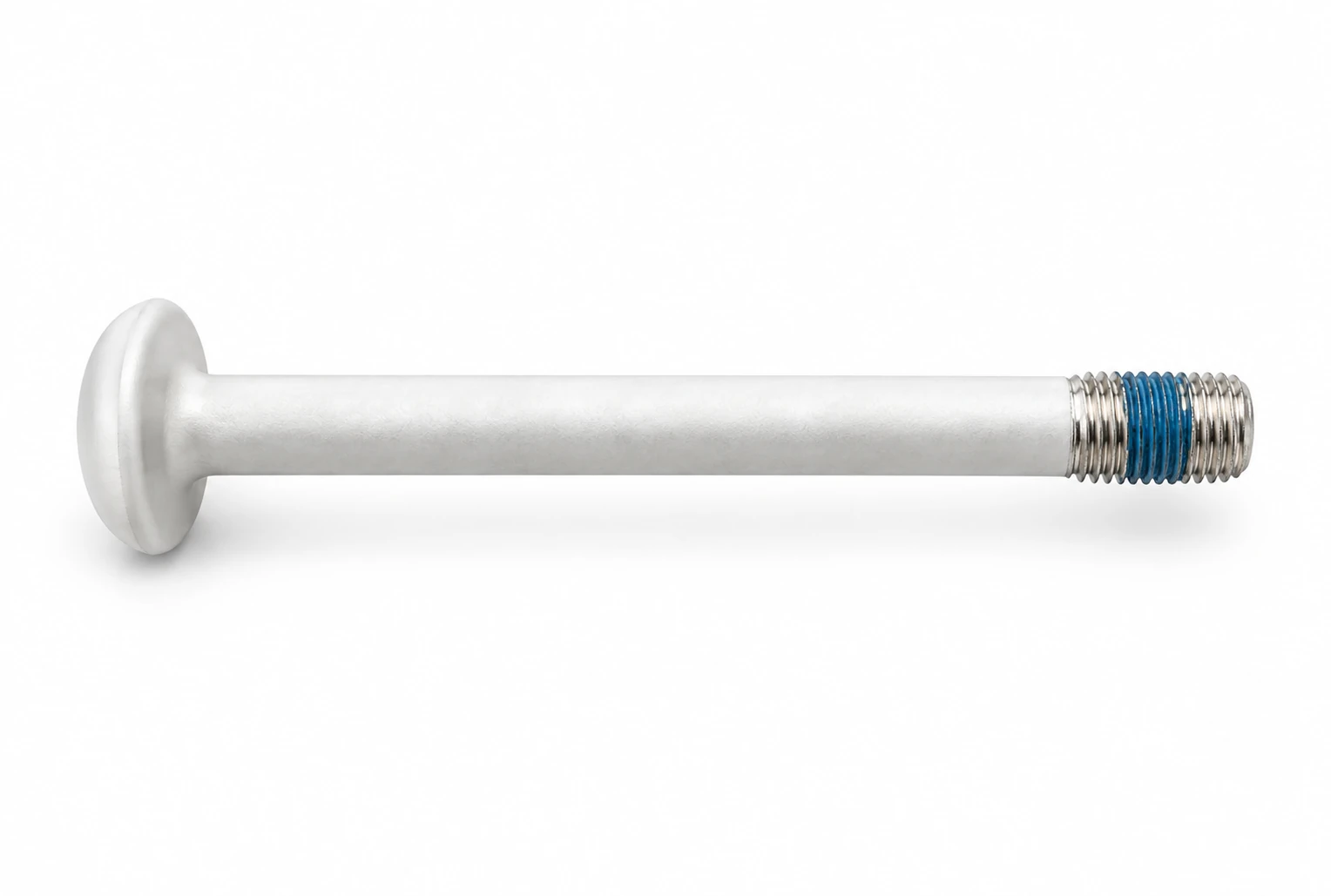
Project-specific finish, passivation, anodizing, thread locking, nylon patch and security features. |
Base material, coating thickness, thread fit, corrosion target, test method and high-strength embrittlement controls must be reviewed together. |
| Inspection and documents |
Dimensional, thread, geometry, hardness, torque, material and project-specific inspection options. |
Agree datums, gauges, sampling, records and traceability requirements before production. |
| Packaging |
Neutral cartons, pallets or custom wooden cases can be evaluated with project-specific labels and export documents. |
Long parts may require protection against bending, scratching, movement and mixed-part packing; the final pack is confirmed by part length and shipment needs. |