Titanium Shoulder Screws Manufacturer for Custom Mechanical Assemblies
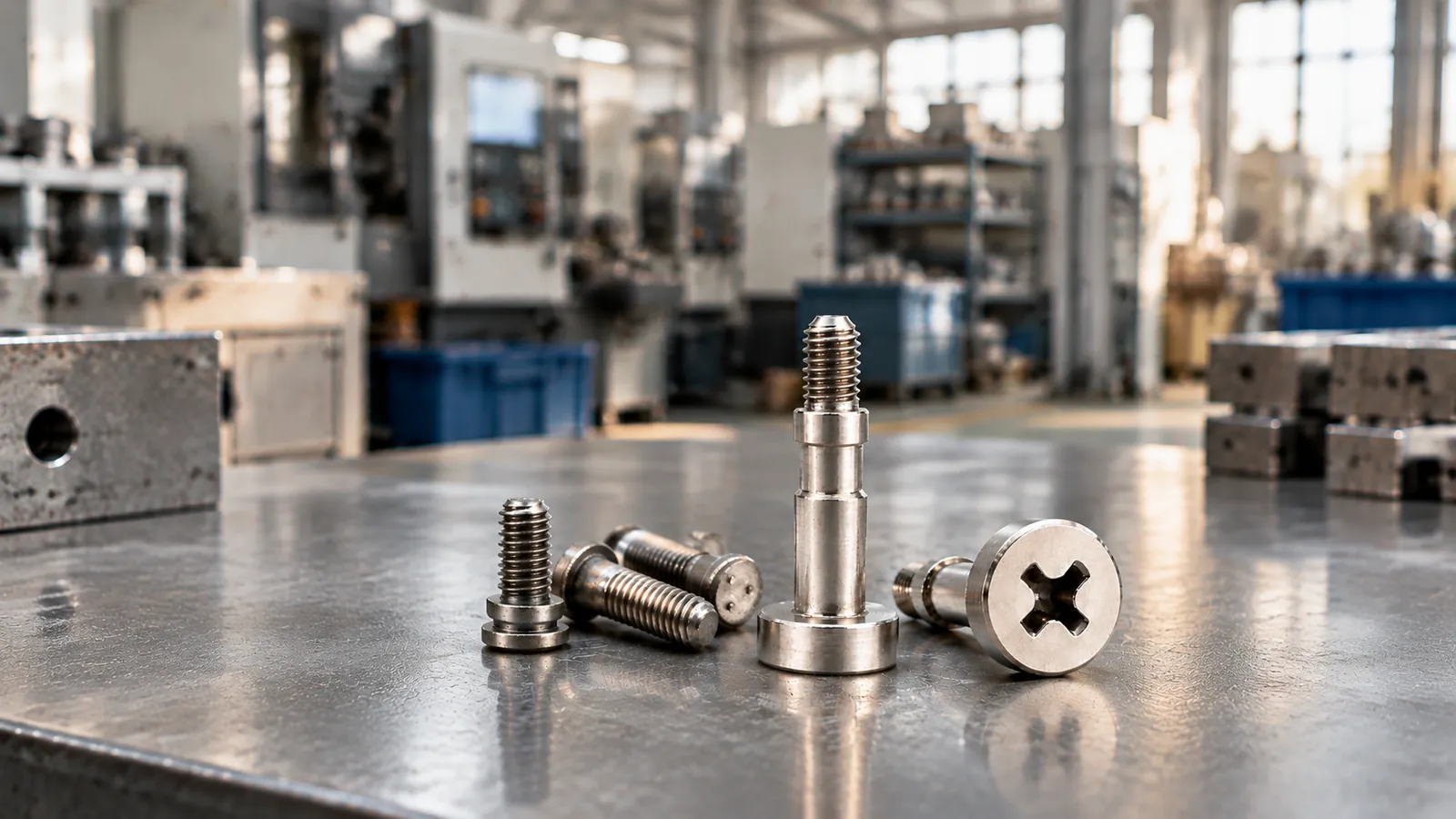
Shi Shi Tong manufactures made-to-drawing titanium shoulder screws for assemblies that need a controlled locating, spacing or guiding surface as well as a threaded connection. We review the shoulder, mating bore, titanium grade and inspection requirements as one part specification.
Titanium Shoulder Screw Configurations
A shoulder screw uses an unthreaded section to locate, space or guide a mating component, while its threaded end secures the assembly. We manufacture single-shoulder and custom multi-step designs to customer drawings. Specify the titanium grade, required fit and thread dimensions for review.

Single-Shoulder Titanium Screws
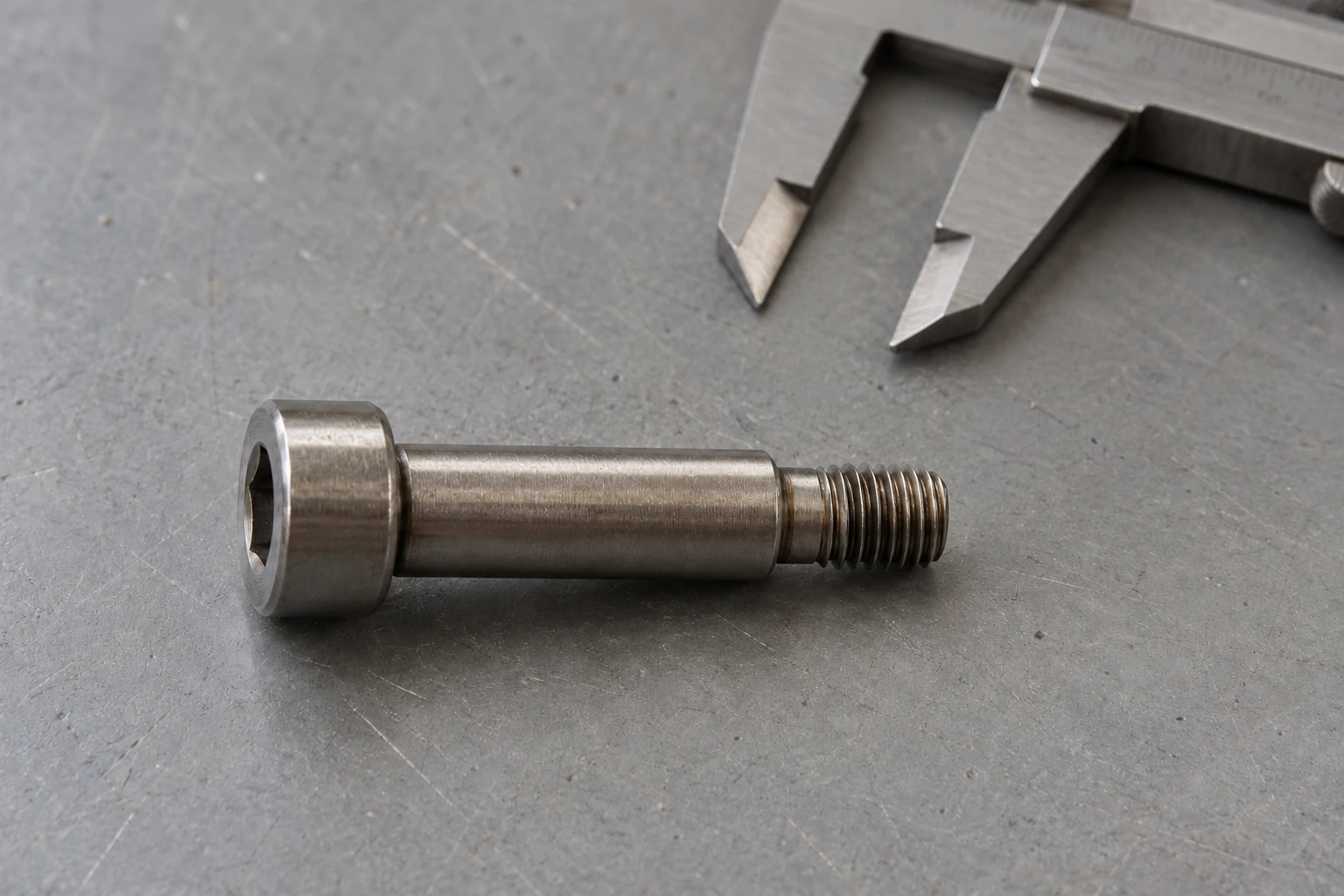
One defined shoulder diameter provides a locating, spacing or pivot surface. The shoulder diameter and length, head style and threaded end can be made to suit your assembly.
- One working shoulder diameter
- Defined fit and axial clearance
- Custom head and thread options
Custom Multi-Step Titanium Shoulder Screws
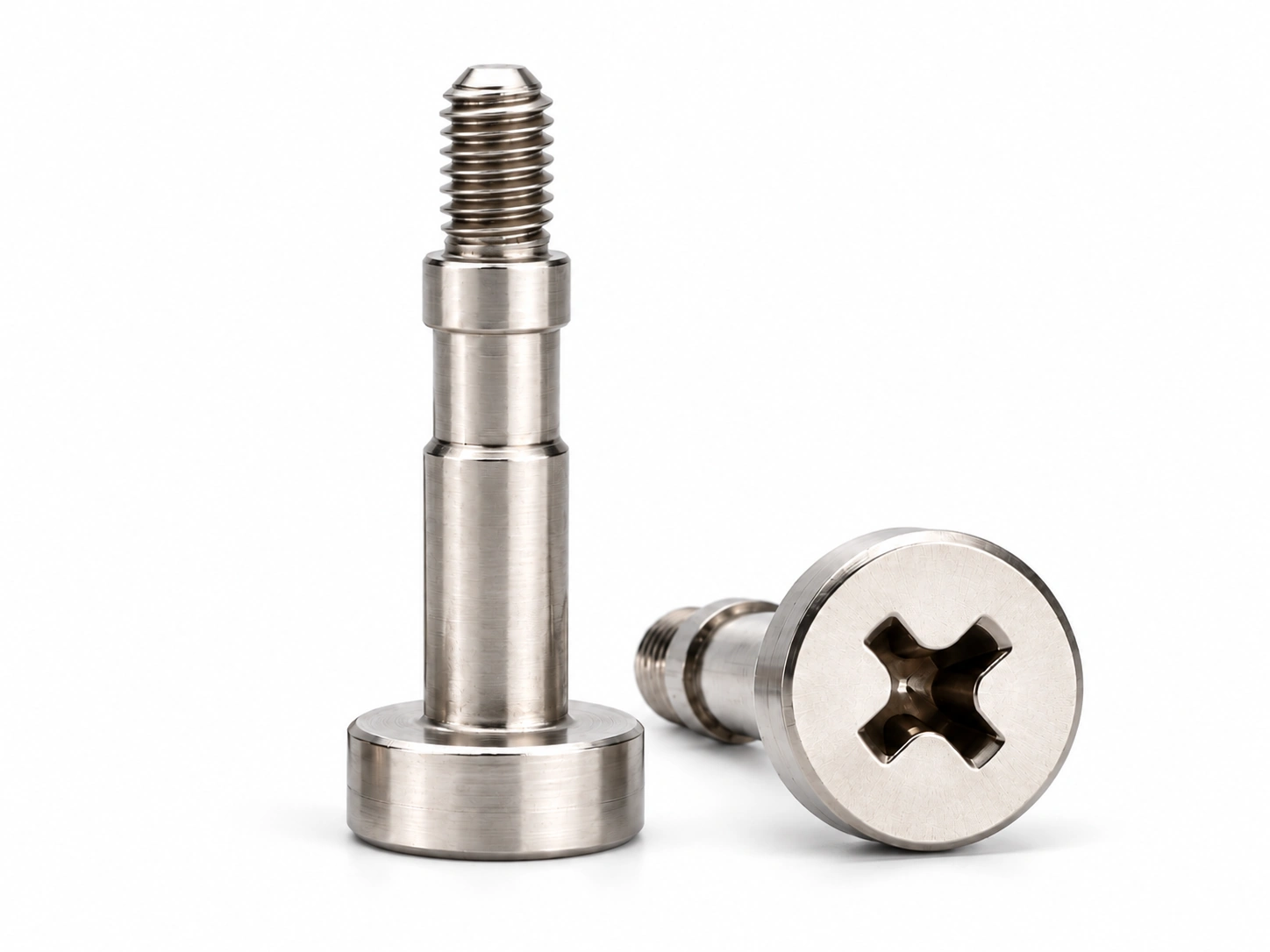
For assemblies that need more than one locating diameter, we can manufacture a multi-step titanium shoulder screw to your drawing. Specify each step’s diameter and length, the transitions between steps, alignment requirements and thread dimensions.
- Two or more locating diameters
- Positioning at multiple levels
- Step-to-step alignment
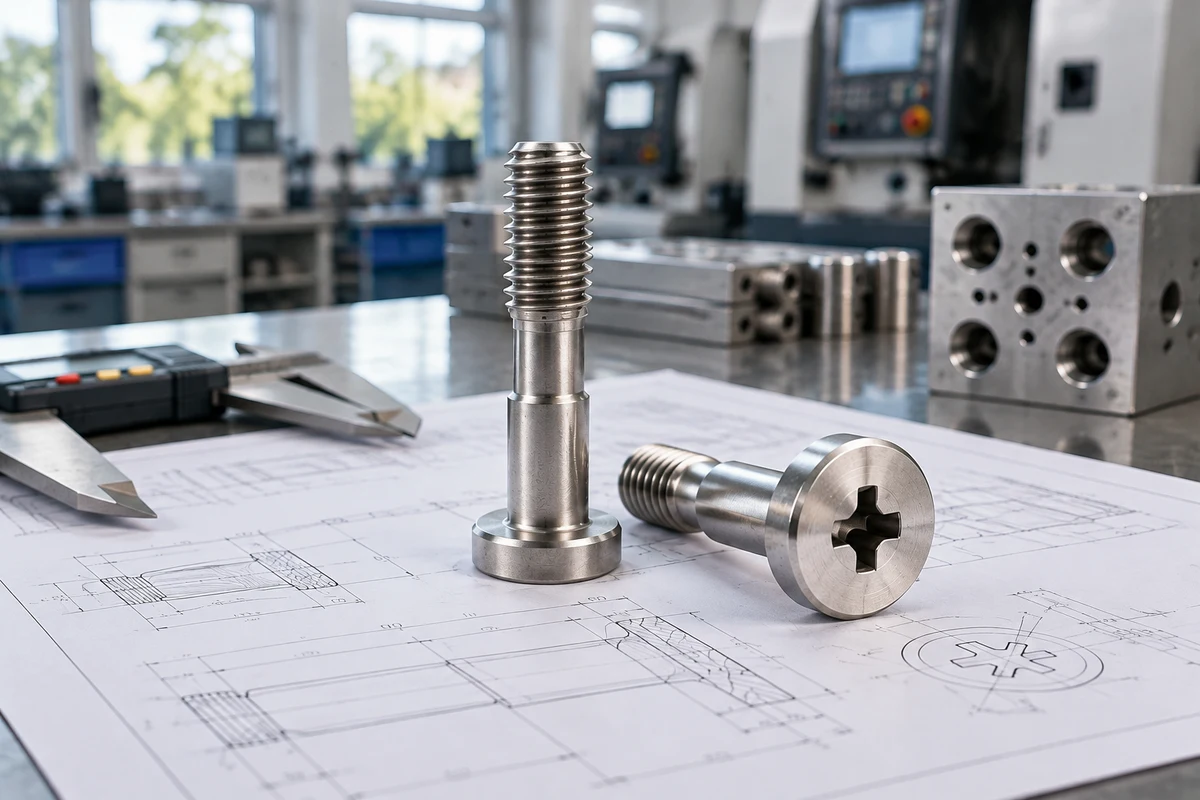
Specify the Working Geometry Before the Nominal Size
A thread designation alone does not identify a shoulder screw. The drawing must separate the dimensions that control the assembly from those that secure the fastener.
| Specification | Why it matters | Drawing review |
|---|---|---|
| Shoulder diameter | Determines the fit with a bore, bushing or moving component | Nominal size, tolerance, mating-bore size and intended clearance |
| Shoulder length | Sets spacing, retained stack height or available movement | Start and end points, seating face and axial clearance |
| Each additional step | Locates components at different levels | Diameter, length, datum and transition of every step |
| Thread | Anchors the screw to the fixed component | Diameter, pitch, effective length, mating material and thread fit |
| Head and drive | Affect installation access and tool engagement | Head envelope, drive geometry and surrounding clearance |
| Transitions and surface | Can affect seating, fit and movement | Fillet, undercut, burr condition and finished surface requirement |
| Inspection | Confirms the features that control function | Critical dimensions, measurement datum and acceptance method |
Note: Shi Shi Tong’s titanium screw family has an M1.6–M12 manufacturing-diameter reference. The feasible combination of grade, shoulder geometry, overall length, thread and tolerance is reviewed for each drawing; this reference is not a stocked size chart for every configuration.
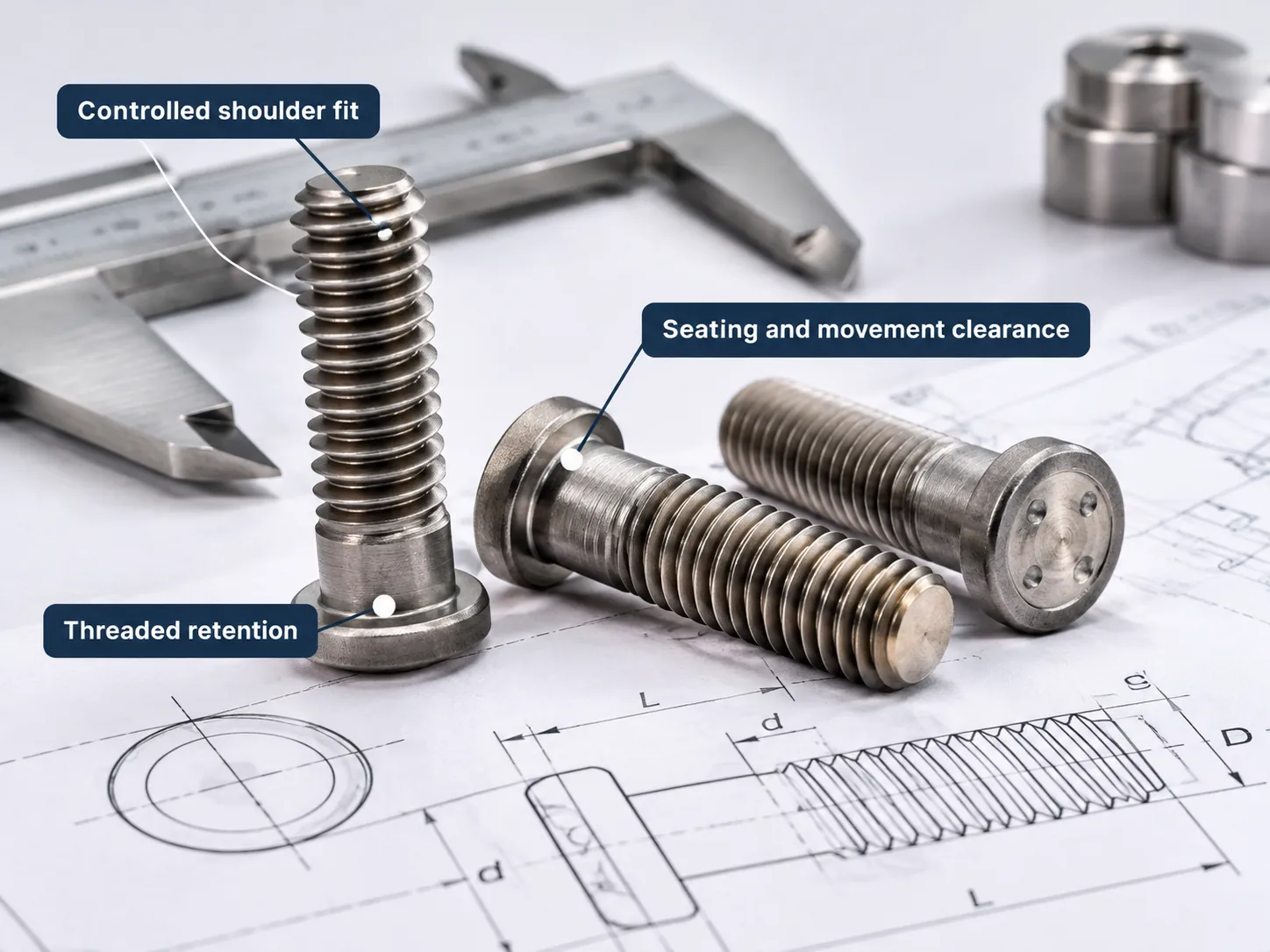
Design Insight: The Shoulder Controls the Fit
The threaded end provides retention, but it does not define the working fit. In a locating joint, the shoulder diameter must be assessed with the mating bore. In a moving joint, the shoulder length, component stack and seating faces determine whether tightening leaves the intended freedom of movement.
A nominally correct screw can still bind if the shoulder is too short for the stack or a transition radius contacts the mating part. It can develop unwanted play if the shoulder and bore tolerances are considered separately. For multi-step designs, the relationship between steps matters as much as each individual diameter.
Choose the Titanium Grade for the Whole Joint
Titanium is not a single interchangeable specification. The selected grade affects the strength requirement, manufacturing route, surface condition and behavior of the assembled joint.
Commercially Pure
Commercially pure titanium direction where the project prioritizes material compatibility and formability.
Exact standard, material condition, load and process feasibility.
Industrial Standard
Commercially pure titanium direction often considered for corrosion-exposed industrial parts.
Medium, temperature, mating metals and required finished-part properties.
Titanium Alloy
Titanium-alloy direction when the design calls for higher mechanical-property targets.
Exact condition, critical section, machining or forming route and verification.
Do not substitute one grade for another solely because both are called titanium. The drawing, material specification and assembled operating conditions determine the selection.
Explore custom titanium screwsTitanium or Stainless Steel for a Shoulder Screw?
The better material depends on the duty of the complete joint, not the screw material in isolation.
Replacing a stainless-steel shoulder screw with titanium without changing the drawing still requires a review of load, stiffness, thread engagement, mating material and installation method. A material change does not automatically preserve the original joint performance.
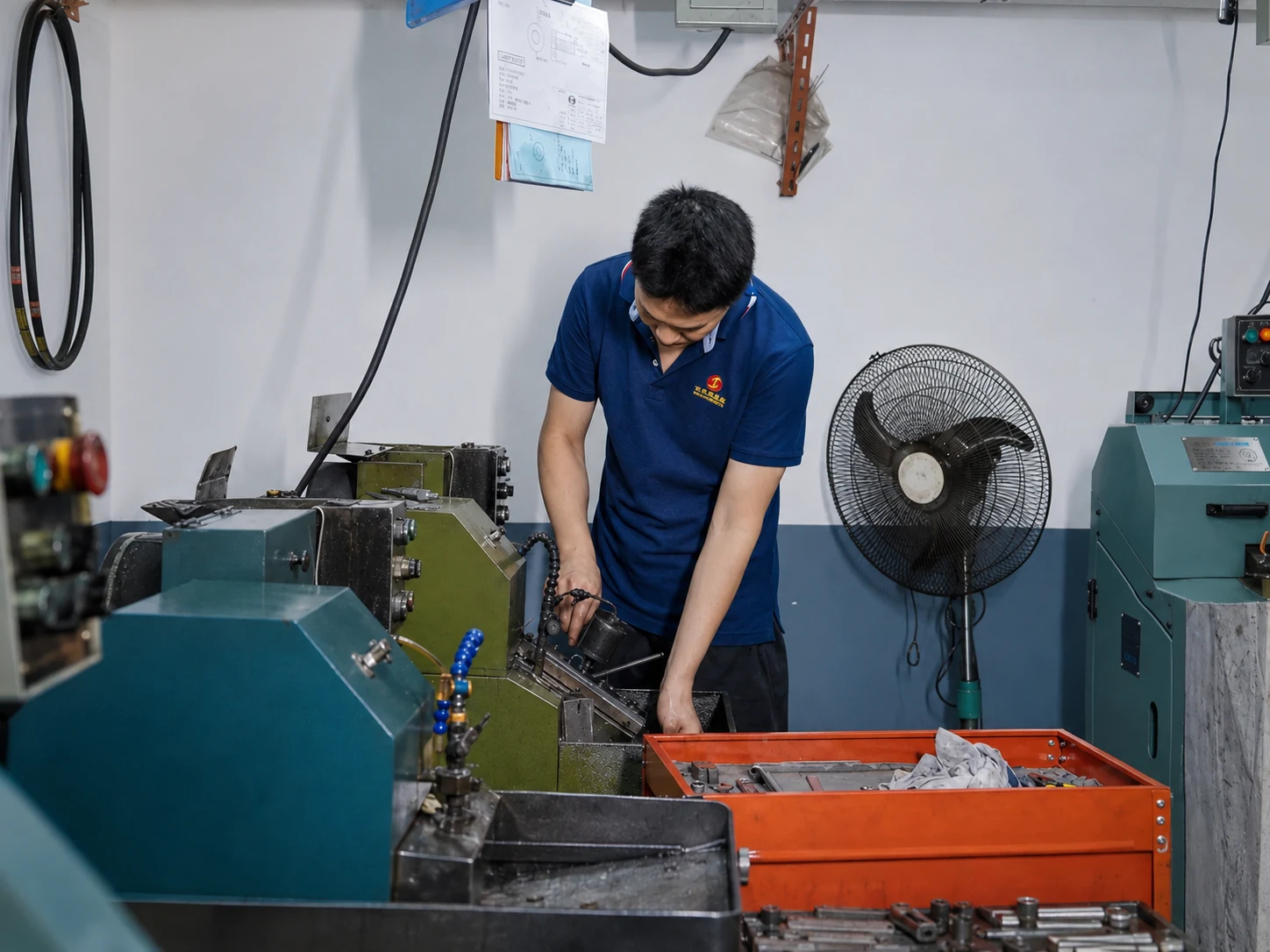
Where Shoulder Screw Fit Problems Begin
The part binds after tightening
A short working shoulder, insufficient axial clearance or an interfering fillet can clamp a component that should move. Review the complete component stack and the seated position, not only the screw’s overall length.
The pivot has play or loses alignment
A nominal shoulder diameter is not a fit specification. Combine the shoulder tolerance with the mating-bore tolerance, step alignment and the movement required in service.
The thread or working surface is damaged in assembly
Titanium threaded pairs can be sensitive to friction and adhesion. Mating material, surface condition, lubrication, installation method and any repeated assembly requirement should be evaluated together. A dimensional pass alone does not establish dynamic wear behavior.
A Manufacturing Route Chosen for the Shoulder Geometry
Shi Shi Tong reviews the drawing, material condition, functional dimensions and expected quantity before selecting a process route. A simple shoulder and a multi-step part may require different approaches.
Drawing and fit review
Identify the working shoulder, mating bore, thread, seating faces, transitions and dimensions that need inspection.
Forming or turning assessment
Suitable geometry may allow a formed blank followed by local turning of a controlled shoulder. A fully turned route is another option when appropriate. Material use, tool access and deflection are part of the comparison.
Thread and surface planning
Thread processing and any surface treatment are evaluated against the actual grade, short-thread geometry and final mating fit.
Part and assembly validation
Check the shoulder and thread against the approved drawing. Where the shoulder rotates or slides, confirm the working clearance and behavior.
Where a Titanium Shoulder Design May Fit

Precision industrial mechanisms
A controlled shoulder can locate a lever, guide or retained moving component. Define the bore fit, movement range, load path and access for installation.

Corrosion-exposed equipment
Titanium may be considered where the material must be assessed against process media or wet service. The grade, crevice geometry, mating metals and maintenance conditions still need review.
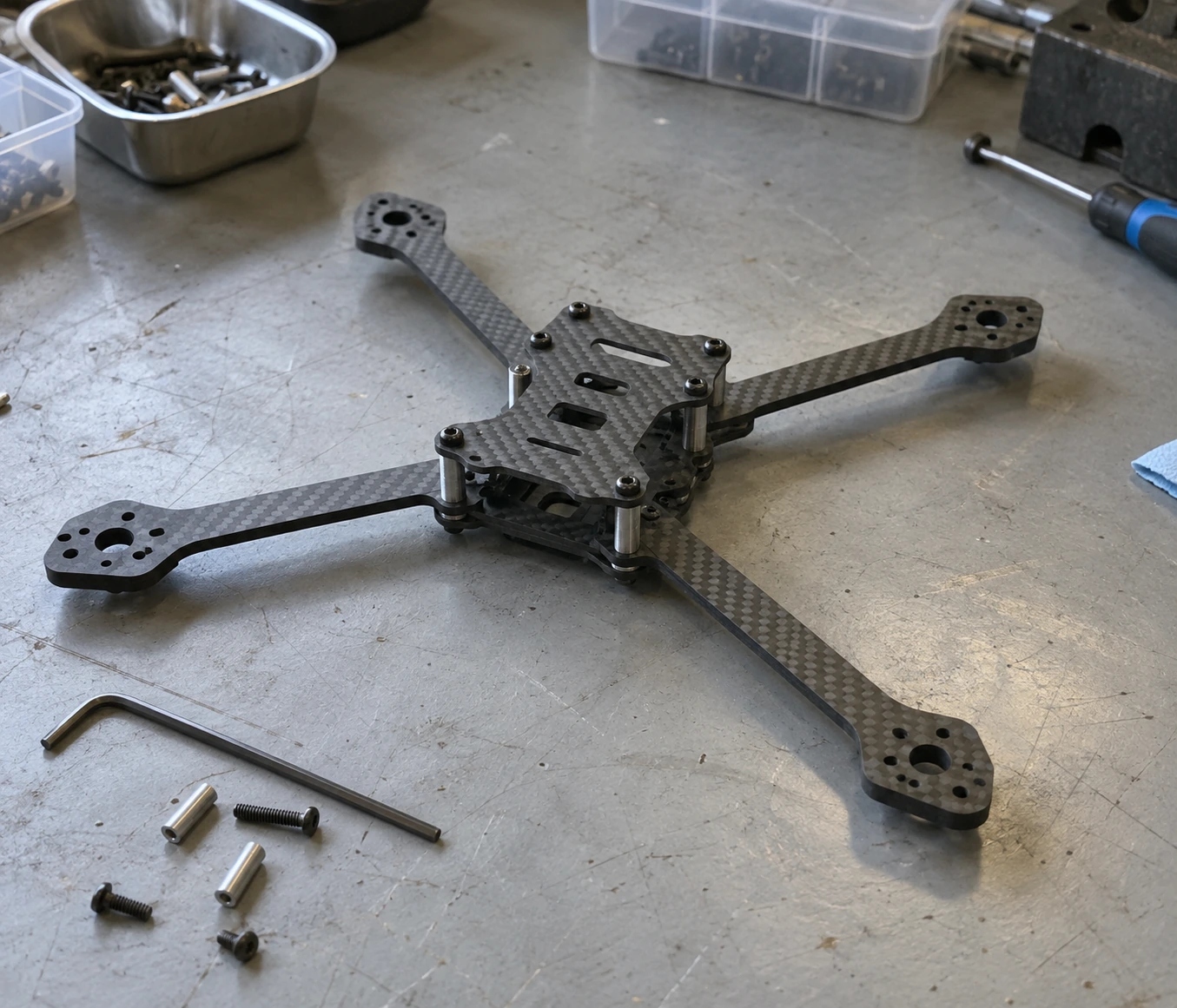
Weight-conscious assemblies
A titanium fastener can reduce the mass of the fastener itself compared with a same-geometry steel part. Confirm that the selected grade and joint design also meet the mechanical duty.
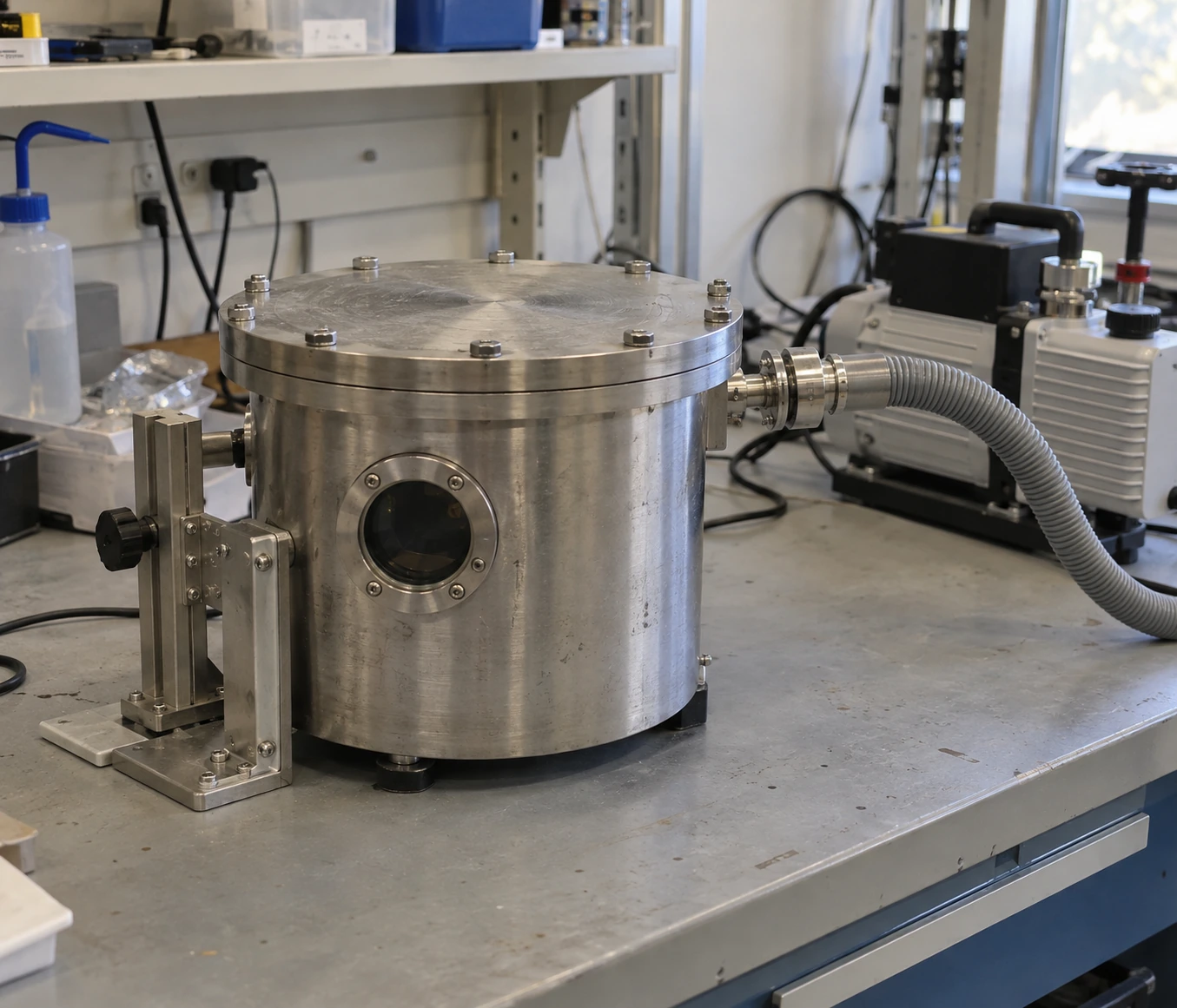
Vacuum-related equipment
A shoulder can provide mechanical positioning in equipment used around vacuum systems. Cleanliness, venting and outgassing requirements are separate specifications and must be verified.
Assembly Impact: What a Defined Shoulder Changes
The value of a custom shoulder screw comes from controlling the interface it serves—not from changing the material name on an existing part.
One part can serve more than one function
In a suitable design, the threaded end retains the fastener while a controlled shoulder locates or spaces another component. A multi-step shank may replace separate locating or spacer features when the full tolerance stack supports it.
The drawing becomes easier to evaluate
Separate shoulder, thread and transition requirements let manufacturing and inspection focus on the dimensions that determine assembly behavior.
Material choice becomes testable
When grade, mating materials and service conditions are specified together, a titanium option can be evaluated against the actual load, corrosion exposure and movement requirement instead of an assumed material advantage.
Manufacturing and Inspection in Shenzhen
Shi Shi Tong has screw-manufacturing roots dating to 1998. For a made-to-drawing titanium shoulder screw, the review connects material, process feasibility and the features that determine assembly fit.
| Feature to verify | Relevant inspection direction |
|---|---|
| Shoulder and step dimensions | Measure the specified diameters and working lengths against the drawing |
| Threaded section | Check pitch, effective length and thread fit using the agreed method |
| Relative geometry | Check the specified relationship between the shoulder, steps and threaded axis |
| Mating function | Review the part with the intended bore or assembly where fit or movement is critical |
Material records and inspection documents are defined for the actual project and agreed acceptance scope. A certificate for a material or process does not replace checking the finished shoulder screw’s working features.
See our quality-control approach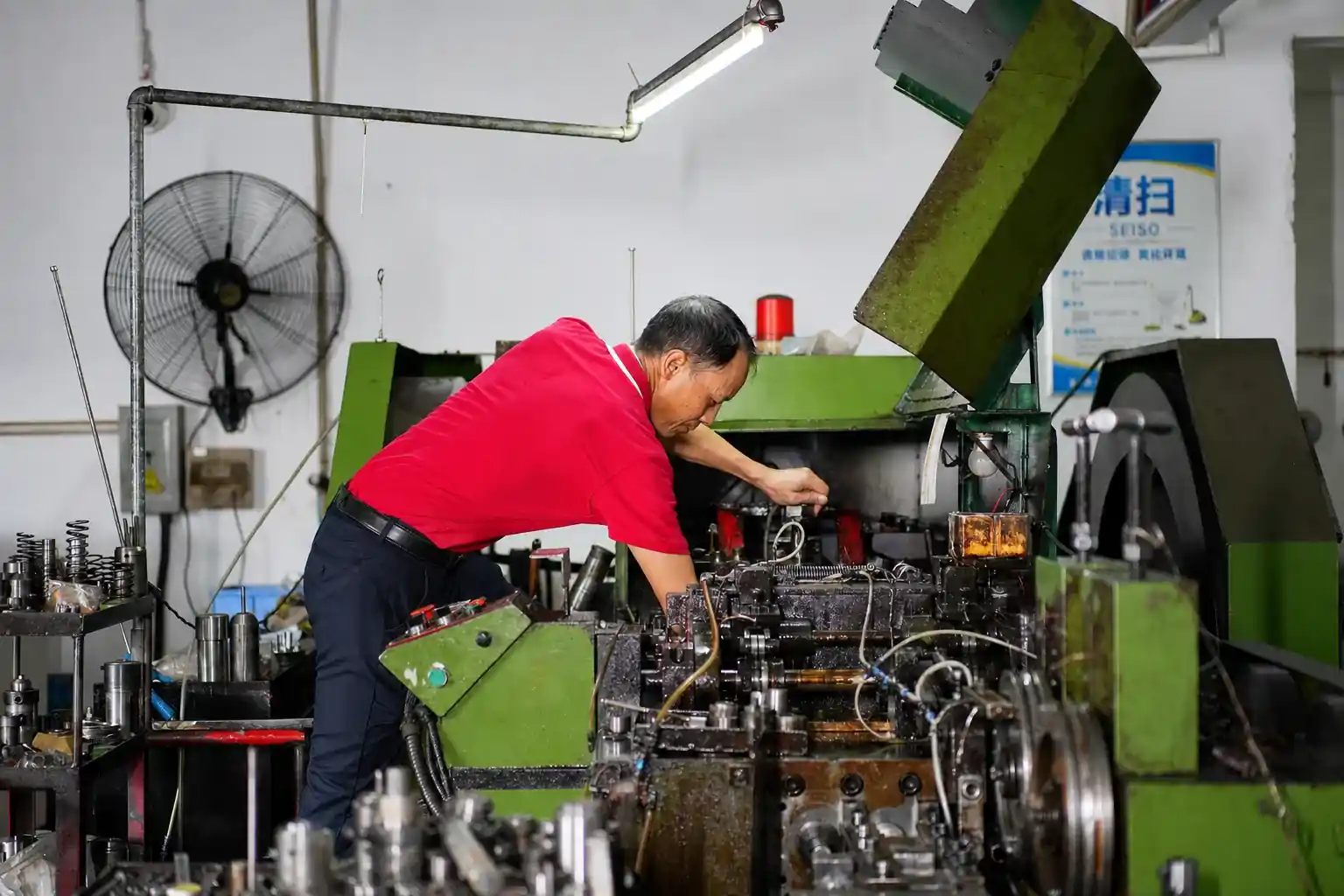

Titanium Shoulder Screw Selection and Sourcing Guide
What does M3 tell me about a titanium shoulder screw?
M3 identifies the nominal metric thread size; it does not define the shoulder diameter, shoulder length, head or working fit. For an M3 design, specify the thread pitch and engagement separately from the shoulder and mating bore. The exact combination of titanium grade, geometry and tolerance still needs a drawing review. An M3 inquiry is not a claim that every M3 shoulder configuration is stocked or manufacturable.
How should I size a shoulder for a rotating or sliding part?
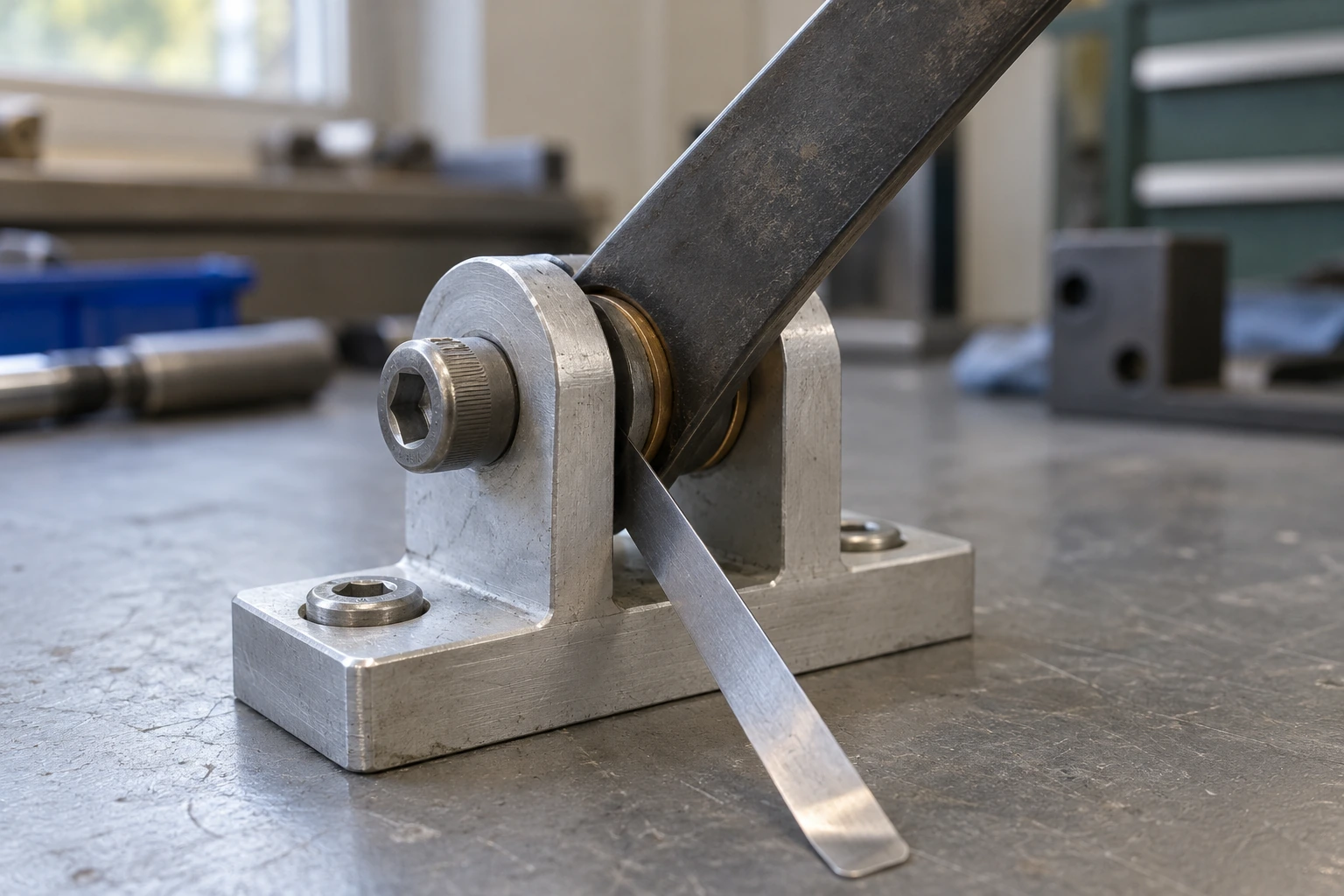
Start with the mating component and its bore, then define the movement required after the screw is fully seated. Compare the complete component stack with the working shoulder length, and specify the intended radial and axial clearance. Check transition radii, surface condition and the materials in contact. For a moving joint, evaluate friction, wear and actual assembly behavior as well as static dimensions.
Can I specify a socket-head titanium shoulder screw?
A socket-head configuration can be evaluated as part of a made-to-drawing design. The head diameter and height, drive size and depth, tool access, shoulder geometry and required tightening method must work together. Shi Shi Tong reviews the requested head and drive against the selected titanium grade and manufacturing route; this is a custom-design discussion, not a statement of catalog stock.

How do I compare titanium shoulder screw manufacturers?
Ask how each supplier defines the grade and material condition, controls the functional shoulder dimensions, evaluates the mating fit and checks the thread and relative geometry. For a custom part, the proposed route, inspection method and drawing revision matter more than an unsupported “top-rated” label. Shi Shi Tong’s review begins with the drawing and intended assembly, then identifies the manufacturing and inspection points relevant to that configuration.
- • Material definition
- • Functional dimension control
- • Mating fit evaluation
- • Inspection methodology
Can I order a small quantity instead of choosing a catalog screw?
A catalog distributor may be the simpler route when an existing size meets the full specification. For a custom shoulder screw, quantity feasibility depends on the grade, geometry, tooling or setup, inspection requirements and production plan. Shi Shi Tong evaluates these conditions per inquiry rather than publishing a universal minimum order or presenting itself as a US stock retailer.
Request a Titanium Shoulder Screw Manufacturing Review
Tell us what the shoulder must locate, support or allow to move. The most useful starting details are the shoulder and thread dimensions, selected titanium grade, mating-bore information, critical tolerances, estimated quantity and operating conditions. We can review the geometry, manufacturing route and inspection scope before preparing a project quotation.
Explore Related Fasteners