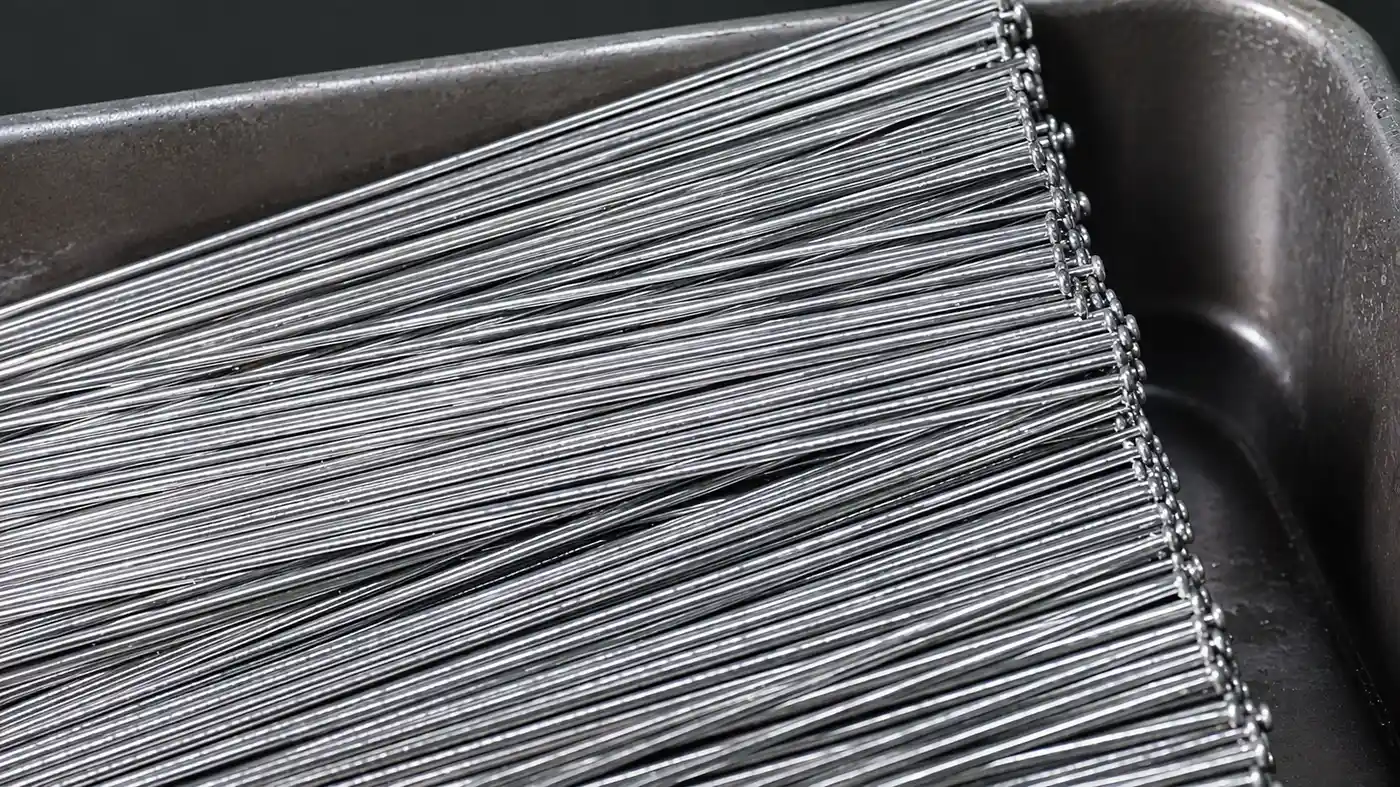

Captive Screws Manufacturer for Custom Panel Designs
Shi Shi Tong manufactures custom captive screws to drawing, with screw manufacturing experience dating to 1998. We review head, shank, groove and thread geometry for removable panels, covers and equipment enclosures.
Explore reduced-shank, grooved, knurled-head and spring-loaded configurations, with the manufacturing and assembly supply scope defined for your project.
What Is a Captive Screw?
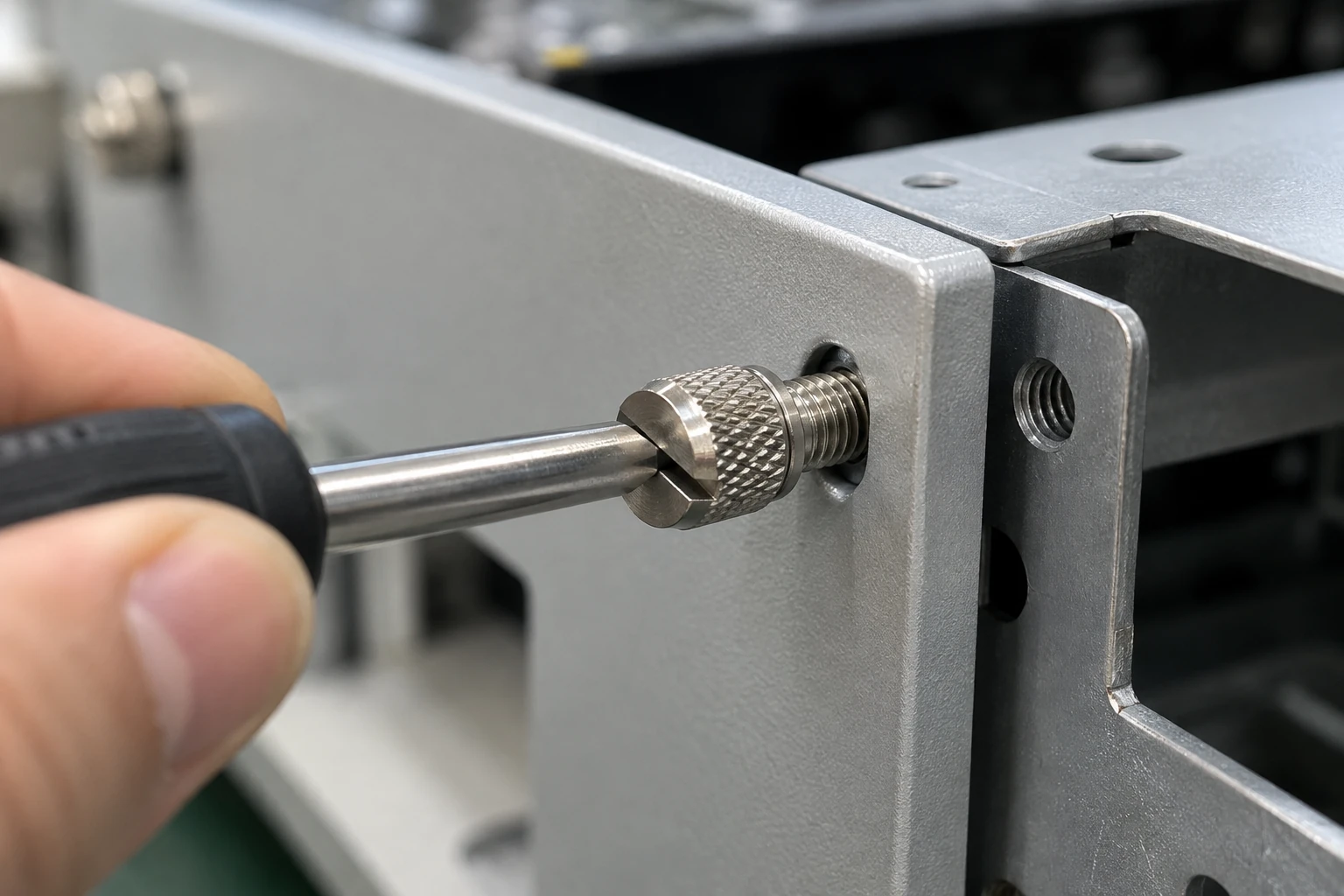
A captive screw stays attached to a panel or component after it is loosened from the receiving thread. A compatible retaining interface allows the screw to move far enough to release the joint while keeping it with the removable part.
The receiving thread provides fastening; the panel interface provides retention. A reduced shank, retaining groove or mounting assembly must work with the mating components to perform these separate functions.

Illustrative retention principle. Final geometry follows the assembly drawing.
Types of Captive Screws We Manufacture
We manufacture custom captive screws to agreed drawings. The options below represent common design approaches, while features such as reduced shanks, knurled heads, grooves, springs and retaining interfaces can be combined to suit the application. Each project is reviewed for manufacturing feasibility, assembly requirements and supply scope.

Reduced-Shank Captive Screws
A plain section smaller than the threaded end provides clearance within a compatible retaining interface. Its diameter and length govern movement after release. A reduced shank alone does not retain the screw in an ordinary clearance hole.
Key choices: reduced-shank diameter and free travel.
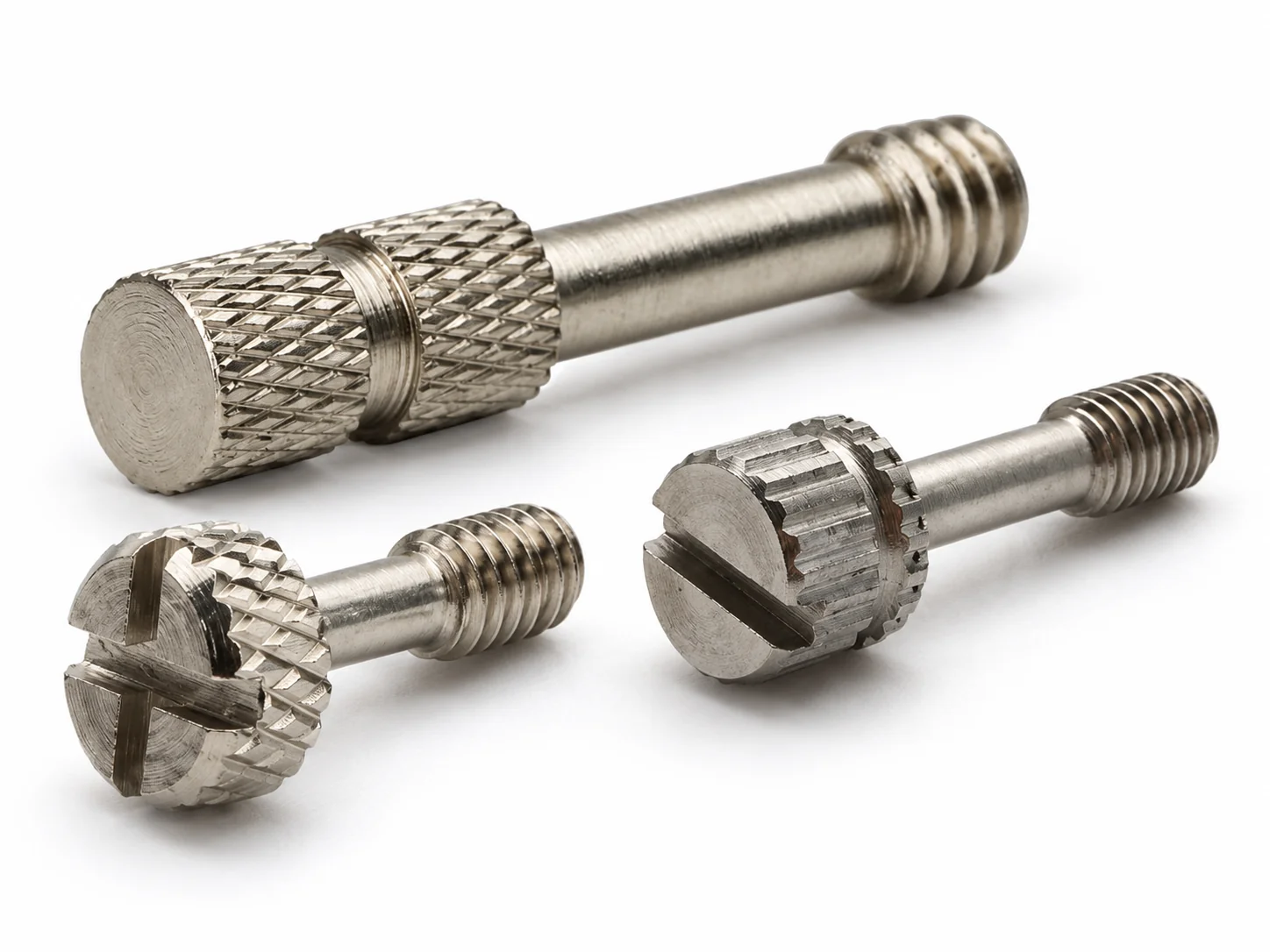
Knurled Captive Panel Screws
A knurled head provides a gripping surface where access and tightening requirements allow manual operation. Head diameter, profile and finger clearance are considered together with the separate panel retention feature.
Key choices: finger clearance and head profile.
Custom Captive Screws
Custom captive screws can combine grooved shanks, spring-loaded mechanisms, special head styles, reduced sections and dedicated retaining interfaces to match your assembly requirements. We manufacture to customer drawings and review the screw, retainer, spring, panel thickness and required travel as a complete assembly.
Captive Screw Design Considerations for the Complete Assembly
A captive screw should be specified as part of the complete assembly. Head geometry, shank design, retaining method, thread, panel stack, travel and material must work together to ensure reliable fastening, release and retention.
Illustrative retention principle. Final geometry follows the assembly drawing.
| Design factor | Available options | Engineering consideration |
|---|---|---|
| Head and access | Tool-driven or knurled-head options | Choose based on tool clearance and manual operation requirements. |
| Shank and retention | Reduced shank, groove or shoulder | Select based on the retaining interface and required travel. |
| Thread | Metric or inch threads | Select based on the receiver thread and required engagement. |
| Panel stack | Panel thickness, washers and coatings | Determine length based on the total assembly thickness. |
| Engagement and release | Thread length and retraction | Ensure full engagement when closed and complete disengagement when released. |
| Material and finish | Stainless steel, alloy or coatings | Select based on environment, wear, corrosion and fit requirements. |
Need help defining the complete assembly? Send us your drawing, panel thickness, retaining method and thread requirements for a manufacturability review.
Illustrative retention principle. Final geometry follows the assembly drawing.
Captive Screw Materials
Stainless steel captive screws are a starting point for custom panel designs. The exact grade is selected against the operating environment, load requirements, part geometry and manufacturing route.
| Material direction | What is reviewed for the project |
|---|---|
| Stainless steel | The specified grade, including 304 or 316/316L where appropriate, material condition, forming or machining route, and surface requirements |
| Carbon and alloy steel | The requested grade, strength and heat-treatment requirements, corrosion protection and final dimensional fit |
| Other specified metals | Feasibility assessed for the exact material, geometry, quantity and inspection requirements |
Surface Condition
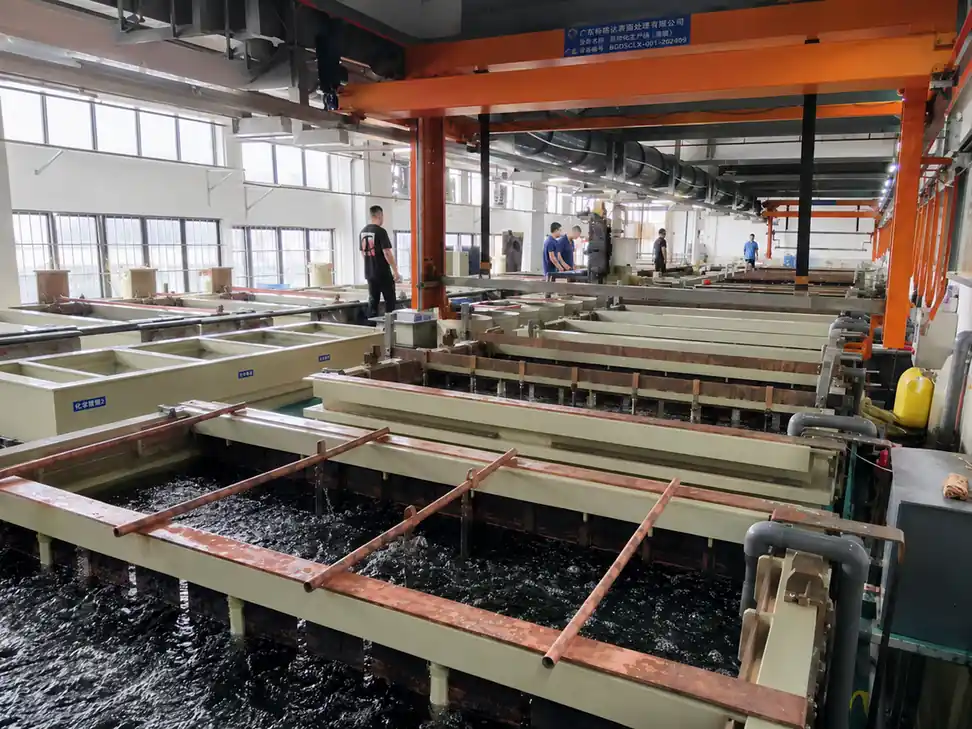
Passivation, electropolishing or other surface treatments are evaluated for the selected material and application. Finish thickness and treatment sequence can affect thread fit, groove dimensions and moving clearances.
Captive Screws for Removable Panels & Service Access
A removable cover needs clearance to open and a practical way to manage its fasteners. Captive retention reduces loose-part handling when the screw and panel interface are correctly matched.
Loose screws during servicing
A retained screw stays with the removable panel, reducing the chance of a loose fastener being misplaced or dropped into equipment.
A cover that cannot lift clear
If retained travel ends before the receiving thread disengages, the panel can remain obstructed. Shank length, threaded length and the panel stack should provide enough release movement.
Restricted tool or finger access
Head profile and operating space should suit the service position as well as the closed panel. A knurled head helps only where finger access and tightening requirements allow it.
Captive Screw Applications
Evaluate captive screws wherever a removable component should retain its fasteners during access. The appropriate configuration depends on the panel, receiver and service routine.
| Design context | Selection priority | Assembly condition to check |
|---|---|---|
| Electronic enclosures | Retained fastening for repeated cover access | Driver space, internal component clearance, panel coating and full release travel |
| Instrument housings | Controlled head profile and convenient service access | Head projection, finger access and the specified tightening method |
| Equipment access panels | Keeping screws with the removable panel | Panel stack, receiving thread location and retainer accessibility |
| Machinery covers | Matching retention to the opening movement | Clearance in the service position, joint requirements and any separately specified locking feature |
Custom Captive Screw Manufacturing Capabilities
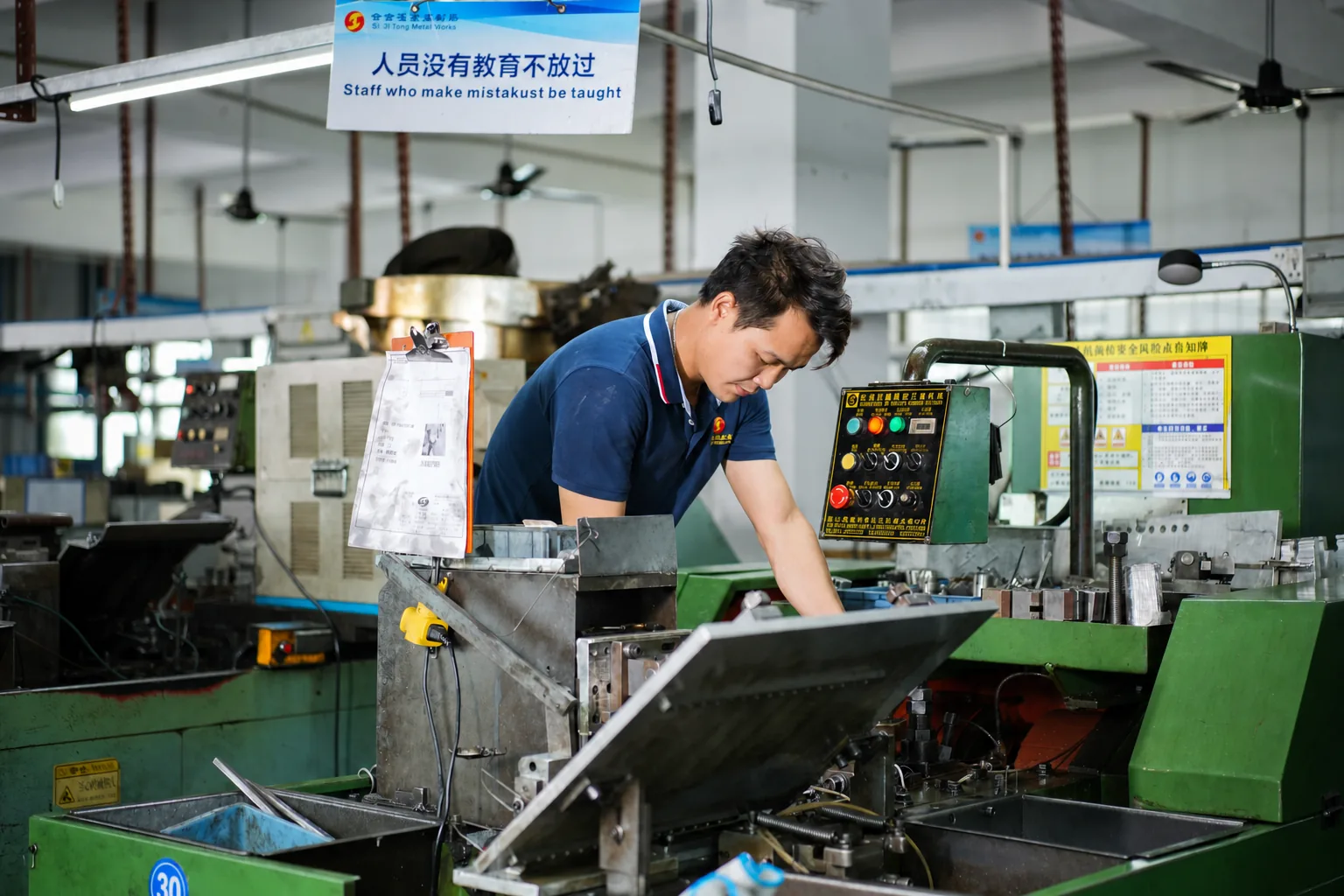
Manufacturing is planned around the material, geometry, quantity and acceptance requirements. Shi Shi Tong evaluates forming, turning, thread production and combined routes for the individual captive screw design.
| Manufacturing direction | Relevant part features |
|---|---|
| Cold heading or forming | Suitable head and screw-body geometry, subject to material and design review |
| Turning and machining | Reduced-diameter sections, local grooves, shoulders and geometry requiring material removal |
| Thread production | Drawing-defined threaded sections with the specified thread requirements |
| Forming with secondary machining | Features that combine a formed starting shape with additional machined details |
| Inspection planning | Dimensional and thread checks assigned to critical features |
The process route is selected for the part. Groove geometry, shank transitions and thread requirements help determine which features are formed, machined or produced in separate operations.
Captive Screws vs Regular Screws
| Comparison point | Captive screw | Regular screw |
|---|---|---|
| After thread disengagement | Remains with the panel through a compatible retaining interface | Is normally removable from the panel |
| Assembly design | Requires retaining geometry, panel compatibility and release travel | Requires the fastening joint, receiving thread and access to be defined |
| Service handling | Keeps the fastener with repeatedly opened covers | Requires loose fasteners to be managed during access |
| Joint requirements | Thread engagement, clamp requirements and locking needs still apply | Thread engagement, clamp requirements and locking needs still apply |
Conclusion: Captive retention changes how the screw is handled after release. It does not automatically increase joint strength or prevent loosening. Any vibration-locking requirement is evaluated separately.
Custom Captive Screws Made From Your Drawings
Your drawing defines the part and the interfaces it needs to match. A panel section or mating-component reference helps connect the screw dimensions to the intended fastening and release movement.
Review the design
Assess geometry, material, critical dimensions and manufacturing feasibility.
Define the manufacturing scope
Agree the part specification, process direction, inspection requirements and any included assembly components.
Establish the sample reference
Evaluate samples against the agreed drawing. Coordinate assembly-fit evaluation with the intended panel and mating parts.
Control repeat production
Use the agreed drawing revision, sample reference and inspection criteria for subsequent orders. Review changes against that reference.
How to Choose a Captive Screw
Start with the panel and receiving joint, then work outward to the retaining geometry, screw length and operating head. Check the assembled closed and released positions before finalizing the part.
Selection Questions
Which retaining configuration fits my panel?
Choose a retaining interface that can be fitted to the panel and serviced in the available space. A reduced-shank design needs a compatible interface around the relieved section; a grooved design needs a matched retainer and room to install it.
Check access to the rear of the panel, the permitted hole preparation and how the panel moves when opened. A spring-loaded configuration adds a retraction function and must be assessed with its mounting components.
How do I select the correct thread size?
Match the receiving thread specification: thread system, nominal diameter, pitch or threads per inch, thread form and tolerance class. Similar diameters do not make metric and inch threads interchangeable.
Engagement depends on the joint load, mating material and application. For custom metric captive screws, specify the complete thread callout rather than nominal diameter alone.
How much screw length and release travel are needed?
Evaluate the complete panel stack, including gaps, washers, coatings and mounting parts. The screw needs sufficient engagement when closed and enough axial movement to disengage fully before reaching its retaining limit.
Compare the closed and released positions on the assembly drawing. There is no universal length or engagement rule that fits every panel and receiver.
Should I choose a knurled head or a tool-driven head?
A knurled head or captive thumb screw design can suit manual access when finger clearance and permitted tightening torque allow it. A tool-driven head may suit controlled tightening or restricted finger access.
Review head diameter, projection, drive access and the maintenance position together. The head choice does not establish the retaining mechanism or eliminate any separate locking requirement.
Captive Screw Installation Process
Captive screw installation depends on the selected retaining method and panel design. The installation sequence should follow the approved assembly drawing and component specifications.
1. Prepare the panel
Confirm panel thickness, mounting hole dimensions, surface condition and access clearance.
2. Install the retaining component
Fit the specified clip, ring, sleeve, spring or other retaining element according to the assembly drawing.
3. Check screw movement
Verify that the screw moves freely through its required travel while remaining retained by the panel.
4. Verify final engagement and release
Confirm correct thread engagement with the receiver and make sure the panel can open or separate after the screw is fully disengaged.
Installation Note: Press-in, flared, swaged and sleeve-retained designs may require different hole tolerances and installation forces. Final installation requirements should follow the approved component drawing.
What Information Is Needed for a Quote?
A part drawing and intended quantity are useful starting points. Add the following details where available so the quote can reflect the manufacturing and inspection scope:
- Drawing revision, units, dimensions, tolerances and critical features.
- Thread specification, head and drive geometry, shank dimensions and retaining details.
- Panel thickness, mating-component information and the required release movement.
- Material grade, condition, surface treatment and any testing or documentation requirements.
- Whether springs, retainers or mounting parts are included in the requested supply scope.
- Sample, batch or annual quantities, requested delivery date and shipping destination.
If some details are undecided, identify the open points in your inquiry. Tooling, samples, inspection, packaging and production timing are agreed for the individual project.
Why Choose Shi Shi Tong

Screw manufacturing at Shi Shi Tong.
Custom fastener manufacturing experience
Screw manufacturing experience since 1998 supports drawing-based projects where head, shank and thread geometry need to be considered together.
Process planning for the actual part
Manufacturing feasibility is reviewed against material, dimensions, geometry and quantity. The selected route can combine forming and machining where the design calls for both.
Inspection linked to agreed requirements
Critical dimensions and threads guide the inspection plan. Appropriate checks can include dimensional measurement and GO/NO-GO thread gauging; additional testing is scoped by project. Drawing revisions and sample references support repeat-order control.
Captive Screw FAQs
More Questions
When is a spring-loaded captive screw useful?
Spring assistance can help the released screw retract from the receiving thread or stay in a convenient service position. Check spring travel, installed space and the mounting arrangement together. The spring assists movement; the retaining interface keeps the screw with the panel. Spring force does not establish clamp load or vibration resistance.
Can captive panel screws be installed flush?
A flush surface depends on the complete head and mounting design. Check any recess or countersink, remaining panel thickness, bearing support and clearance in the released position. A low-profile head alone does not establish a flush-mounted captive assembly. Mounting requirements follow the selected component specification.
Are captive screws the same as SEMS screws?
SEMS screws retain a washer on the screw. Captive panel screws retain the screw in a panel or component. A retained washer alone does not keep the screw attached to the panel after the receiving thread is released. Choose the construction according to which component needs to stay attached during assembly or servicing.
Can a captive screw be removed from its panel?
Normal servicing releases the screw from the receiver while leaving it attached to the panel. Removing it from the panel is a separate operation and may require removing a clip or following the mounting component's service procedure. If a panel does not release, check thread engagement and interference before applying force.
What determines minimum order quantity and lead time?
The drawing, material, process route, tooling, quantity, finish and validation needs determine the commercial scope. Shi Shi Tong agrees sample and production arrangements for each custom project. For urgent replacement needs, verify stock availability and dispatch with the supplier offering that specific part.
Request a Quote for Custom Captive Screws
Share your drawing or describe the panel fastening requirement. Include the intended quantity and any critical assembly conditions to start the custom manufacturing review.