Choose a titanium screw finish by the surface function you need: controlled appearance, wear behavior, cleanliness, or performance in a defined environment. Anodizing, micro-arc oxidation, and PVD create different surfaces. A finish that looks right on the head may still need review for thread fit, bearing contact, and tightening behavior.
Specify the titanium grade and geometry before choosing the treatment. The finished screw must satisfy both the appearance requirement and the assembly drawing.
Anodizing for a Controlled Titanium Appearance
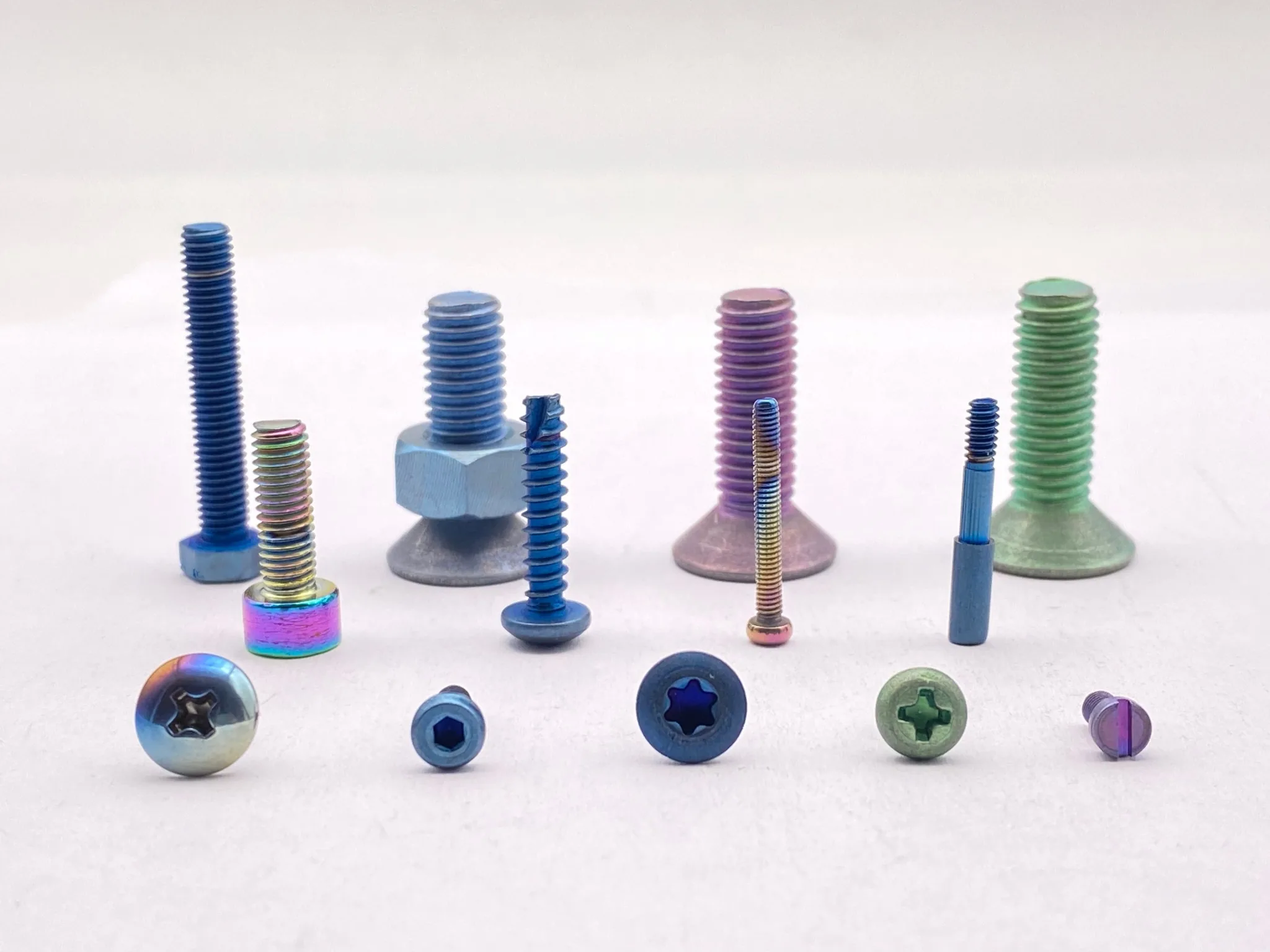
Titanium anodizing grows an oxide layer electrochemically. Common decorative colors arise from light interference in the oxide, rather than from treating titanium like dyed aluminum. Research on titanium oxide colors links the appearance to film thickness and optical effects.
Surface preparation, grade, geometry, lighting, and viewing conditions can affect the visible result. A color name or screen image is a starting point, not an adequate production acceptance standard. Approve a physical sample or an agreed range under defined viewing conditions. Identify any contact, masking, or cosmetic zones on the drawing.
Decorative anodizing should not be treated as proof that the bulk screw has a higher mechanical strength. Color acceptance and mechanical acceptance remain separate.
Micro-Arc Oxidation for an Engineered Oxide Surface
Micro-arc oxidation, also called plasma electrolytic oxidation, forms an oxide surface using electrical discharge conditions. The process can produce a different thickness, texture, and porous structure from decorative anodizing. Experimental work on titanium micro-arc oxidation shows that oxide morphology depends on the applied process conditions.
For a fastener, define the coating thickness and any required wear or corrosion test. Review whether the treated surface belongs on the thread, shoulder, drive, or bearing face. A thicker or rougher surface may change how the screw fits or tightens.
For a specified hardness or salt spray requirement, agree on the actual part, method, test condition, and acceptance criterion. Those conditions define what the finished treatment must achieve.
PVD for a Specified Deposited Coating
Physical vapor deposition deposits a selected coating onto a prepared surface in a vacuum process. The coating material, thickness, substrate support, adhesion, and process temperature determine its suitability. Oerlikon’s precision-component guidance describes why a PVD system must be matched to the component.
“PVD” alone does not specify a color, friction behavior, or service performance. A black appearance could come from different treatments with different properties. Identify the coating system and the functional reason for choosing it, then confirm its application to the actual titanium grade and screw geometry before quotation.
A hard surface coating also does not compensate for an inadequate bolt grade or an unsupported coating under the intended contact load.
Compare the Finishes Against the Drawing
| Finish direction | Main reason to review it | Acceptance points |
|---|---|---|
| Decorative anodizing | Titanium color and appearance control | Grade, preparation, approved color range, contact marks, viewing conditions |
| Micro-arc oxidation | Specified engineered oxide surface | Thickness, coverage, texture, fit, relevant performance test |
| PVD | Defined deposited coating with a decorative or functional purpose | Coating identity, adhesion, thickness, process compatibility, friction or wear requirement |
| Natural or cleaned surface | Appearance and cleanliness without an added decorative system | Surface condition, cleaning method, residue limits, handling and packaging |
Inspect the thread in its final treated condition. If a coating is masked from a shoulder or thread, show the boundary and acceptance requirement. For a load-bearing joint, reassess tightening if the finish changes friction beneath the head or in the thread.
Approve the Finish Before Batch Production
At Shi Shi Tong, we review titanium finish requirements with the grade, drawing, and assembly conditions. Anodizing and micro-arc oxidation are project review options; a PVD request needs confirmation of the specific coating route for the proposed part.
Send the drawing, finish specification, physical color reference where relevant, masked areas, functional tests, and quantity. Request a titanium screw finish review so the approved sample and final inspection criteria can be established before production.