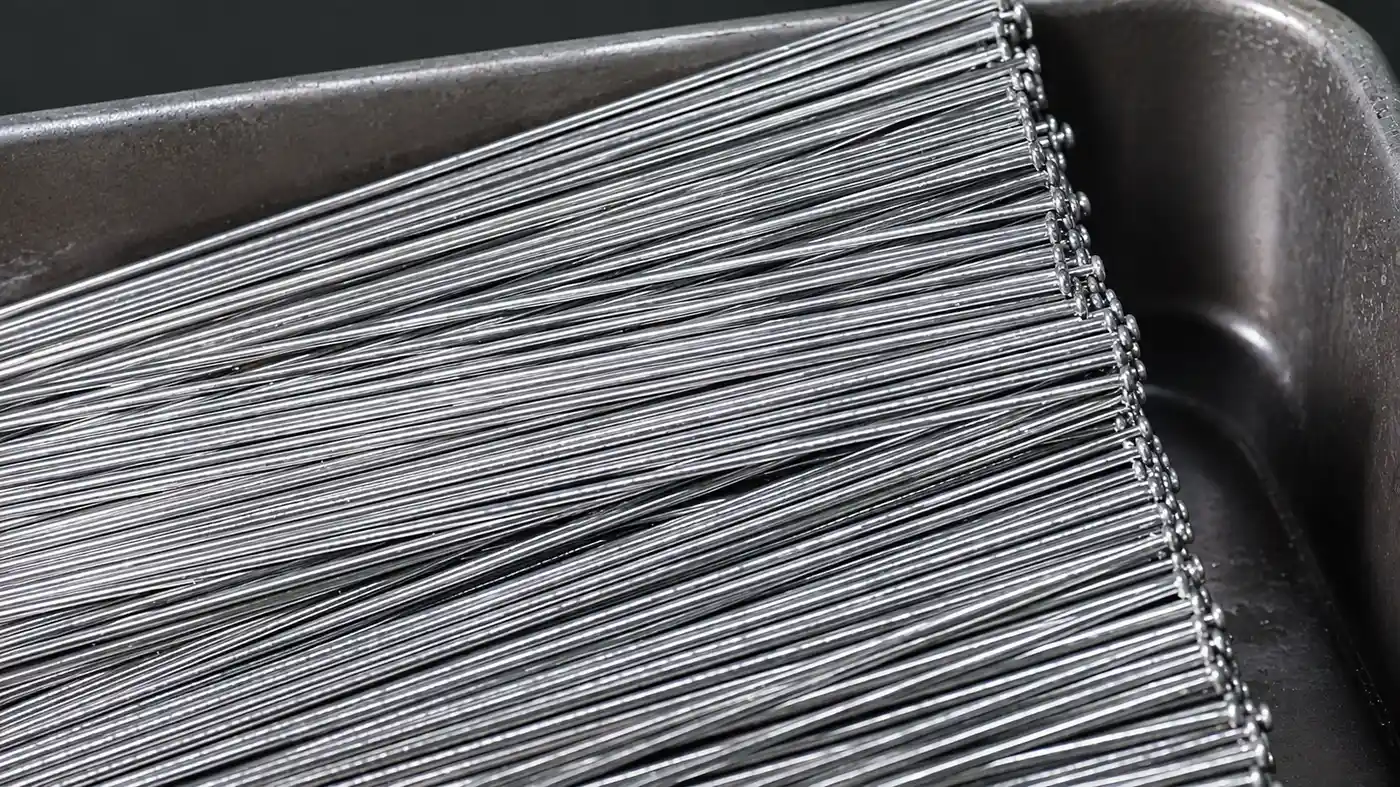
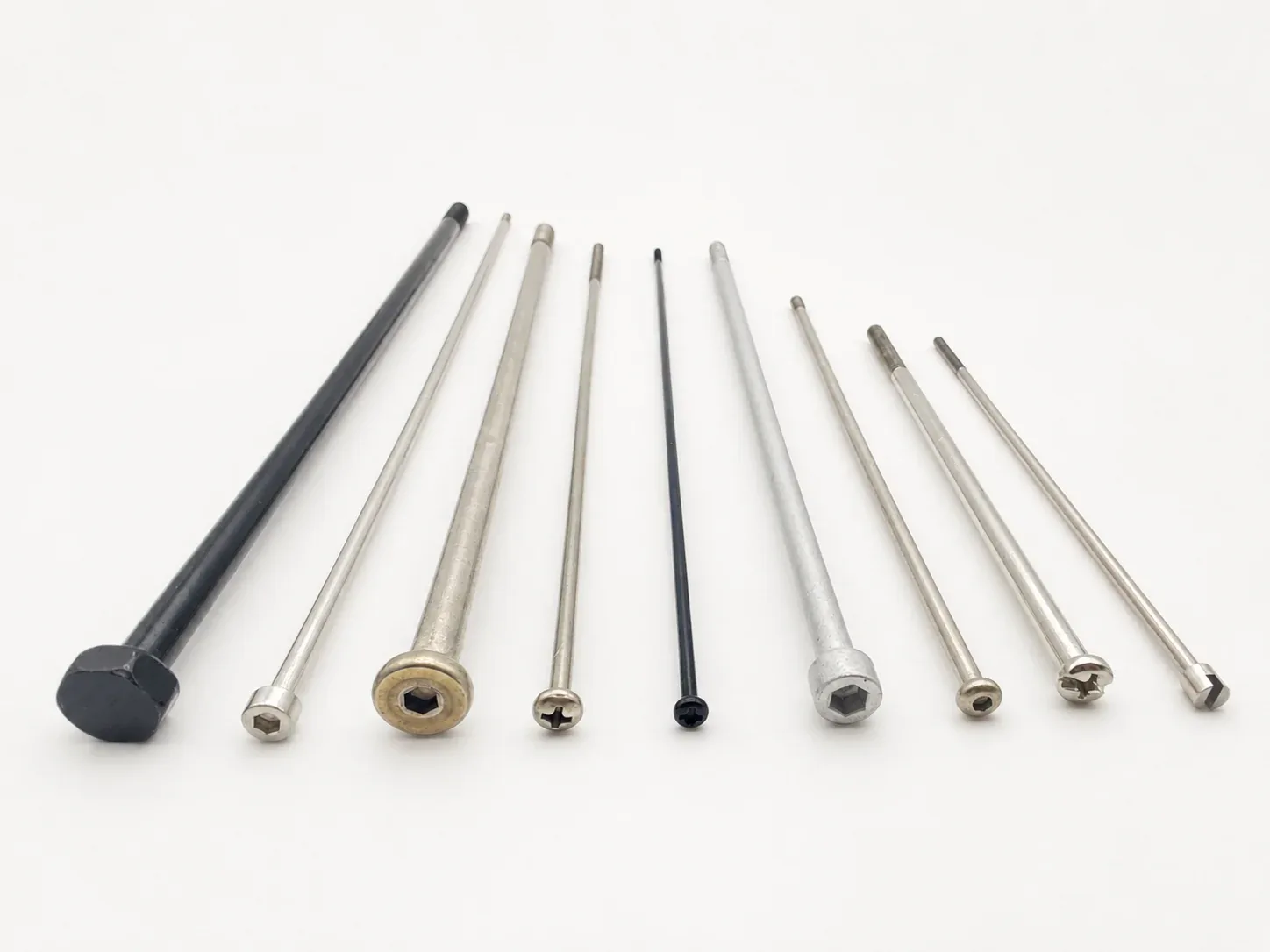
Outdoor screw life depends on exposure and the condition the joint must maintain, not on a single number of years for “stainless” or “zinc plated.” Rain, chloride, washdown chemicals, trapped moisture, damaged coating, and contact with another metal can make two installations of the same screw age very differently. Define the acceptable condition first: appearance, coating integrity, remaining section, or continued joint function.
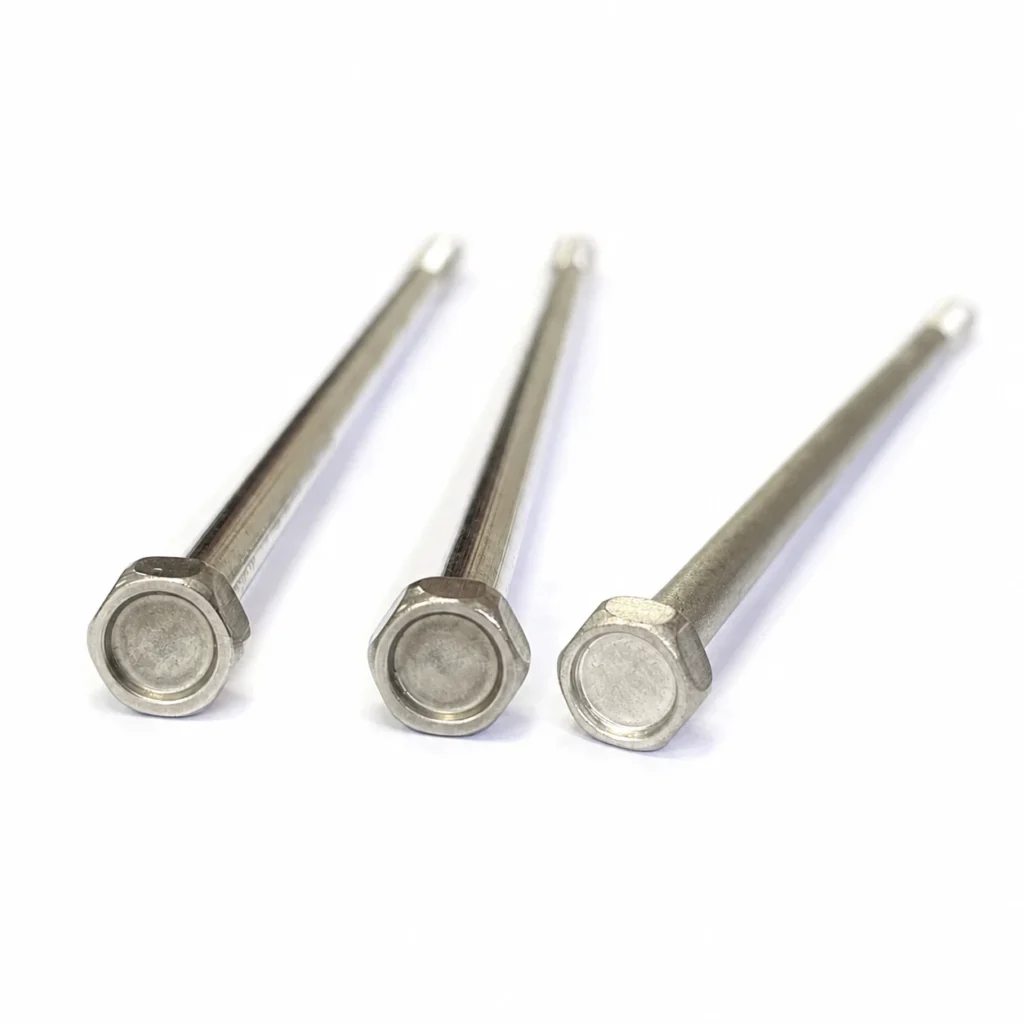
Match the Screw to the Actual Exposure
A sheltered inland enclosure, rain-washed equipment, coastal machinery, and a road-salt application need different corrosion strategies. Note where water can collect under the head, in a blind hole, or between clamped parts. Check whether the screw is accessible for inspection and whether it contacts a dissimilar metal.
Zinc electroplating alone does not specify an outdoor life. The coating type, thickness, passivation, exposed cut edges, and assembled geometry all matter. A Hilti corrosion handbook describes why finish selection follows the service environment.
Stainless steel also requires grade selection. Worldstainless grade guidance shows that 316 generally resists chloride pitting better than 304, while severe marine exposure can still challenge 316. Mechanical strength, thread behavior, and compatibility with the mating parts remain part of the selection.
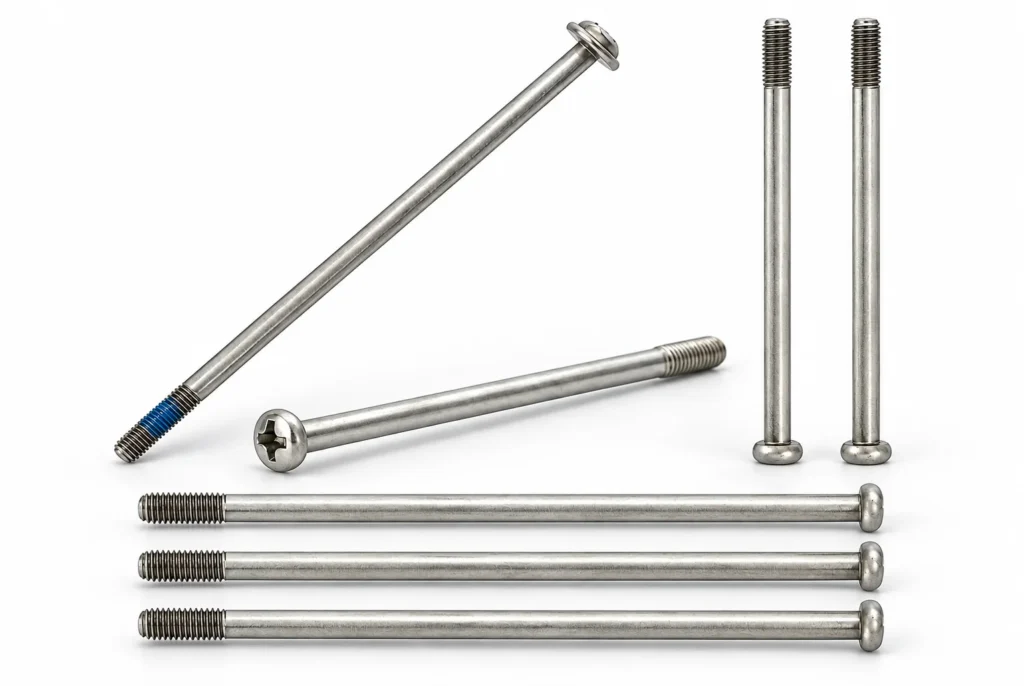
Compare Material and Finish Options
| Option to consider | Buyer’s key checks |
|---|---|
| Zinc-coated carbon or alloy steel | Coating system and thickness, exposure severity, cut-edge protection, finished thread fit |
| Zinc-nickel or zinc-flake system | Process requirements, coating thickness, assembly friction, approved corrosion test |
| 304 stainless steel | Chlorides, crevices, cleaning routine, required strength |
| 316 stainless steel | Chloride level, surface condition, cleaning access, mating metals |
| Titanium or another specialty alloy | Load, cost, galvanic interaction, thread behavior, manufacturing route |
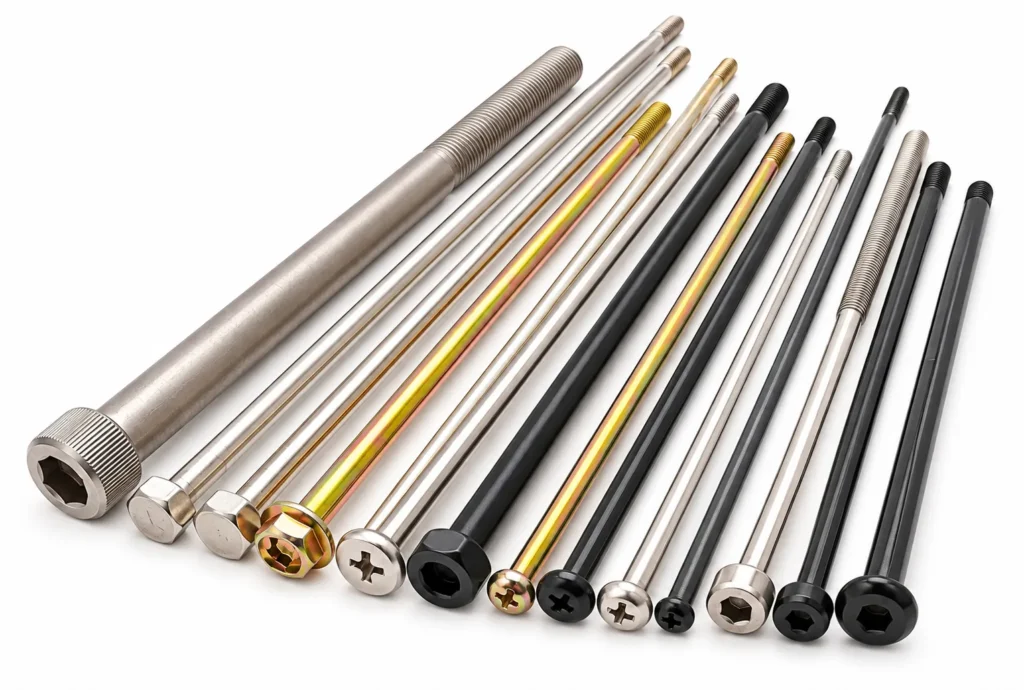
No material is best for every outdoor joint. We can review the base material and surface finish alongside the screw geometry, rather than selecting a finish from its color or a single test-hour figure.
What Do Salt Spray Hours Tell You?
A salt spray test can check whether a defined coating process meets a specified laboratory requirement. It does not convert directly into years outdoors. ISO 9227 states that its salt spray methods are not intended to predict long-term corrosion resistance in service or rank unlike materials for real environments. A “300-hour” result should therefore be read together with the test method, specimen, failure criterion, and actual exposure.
Set an inspection interval and replacement trigger for the installed joint. Depending on the application, the trigger may be coating damage, red rust, pitting, section loss, or loss of clamping function. Inspect concealed wet areas as well as the visible head where access permits.
For an outdoor long-screw project, send us the drawing, operating location, exposure to salts or chemicals, design-life target, first unacceptable condition, mating materials, strength requirement, and expected order quantity. At Shi Shi Tong, we can review a custom screw material and finish around those conditions. Share your requirements to start the specification review.