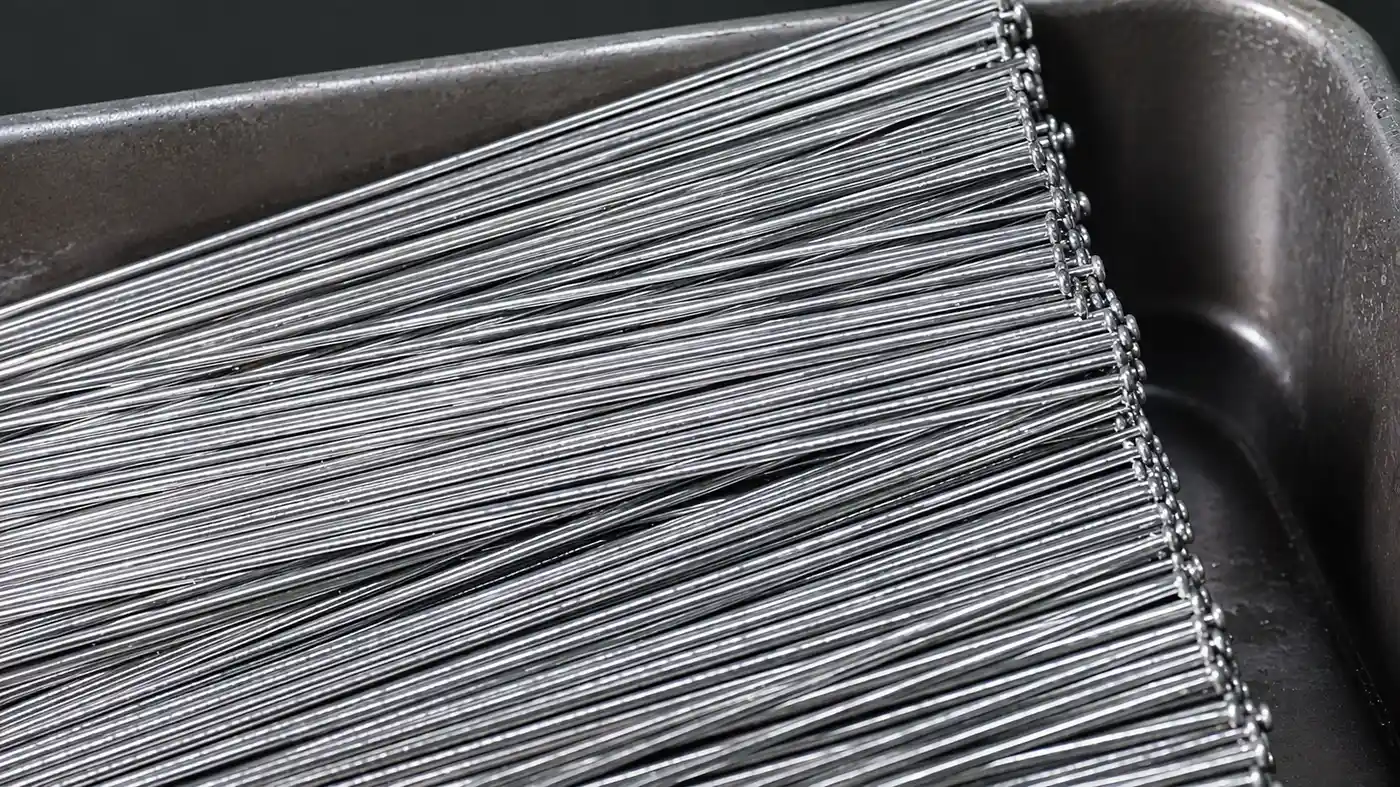
Titanium bolts and screws are made by shaping traceable titanium stock into the required head and shank, producing the thread, applying the specified finish, and inspecting the finished part. The route may use machining, forming, or a combination of both. Titanium grade, geometry, quantity, and acceptance requirements determine which route makes sense.
At Shi Shi Tong, we start a custom titanium screw project with your drawing or sample. That review establishes the material and functional dimensions before tooling or production begins.
1. Define the Material and Finished-Part Requirements
“Titanium” is not a complete material specification. Commercially pure grades and titanium alloys differ in strength, formability, and processing behavior. Identify the grade, governing standard, stock condition, and documentation required with the order. If the drawing uses TA2 or TC4, include the applicable national standard rather than assuming the designation alone establishes equivalence to another grade system.
Also separate the stock specification from the finished fastener specification. ASTM B348/B348M, for example, covers titanium bars and billets. Buying stock to that standard does not by itself establish the head dimensions, thread fit, or mechanical acceptance of a finished screw.
Before production, agree on which dimensions control the assembly: head seating, shoulder fit, thread engagement, recess depth, shank straightness, or a special tip. A tight tolerance on a functional shoulder can be worthwhile; the same tolerance on a nonfunctional surface may add cost without improving fit.
2. Select Forming, Machining, or a Combined Route
| Route | When it may fit | Main points to review |
|---|---|---|
| CNC turning and related machining | Special profiles, shoulders, holes, lower-volume development, or geometry that is difficult to form | Stock size, material removal, tool access, surface finish, cycle time |
| Cold forming | Suitable material conditions and head geometries in a repeat production program | Deformation demand, forming stock, tooling, cracking risk, quantity |
| Warm or hot forming | Designs and alloys needing an approved heated forming route | Process qualification, temperature control, surface condition, subsequent operations |
| Formed blank plus secondary machining | A repeatable head or blank with selected precision features | Datum transfer, machining allowance, dimensional control between stages |
Cold forming is not a default route for every titanium grade. A design that forms successfully in commercially pure titanium may need a different process in Ti-6Al-4V. Heated forming is another industrial route, but it must be developed for the actual alloy and component rather than copied from a generic temperature recipe.
Our manufacturing review considers forming and CNC operations together. For a machined Grade 5 screw, for instance, shoulder dimensions and drive access may determine the sequence. For a suitable formed design, production quantity and tooling can become more important to cost.
3. Produce the Thread and Functional Details
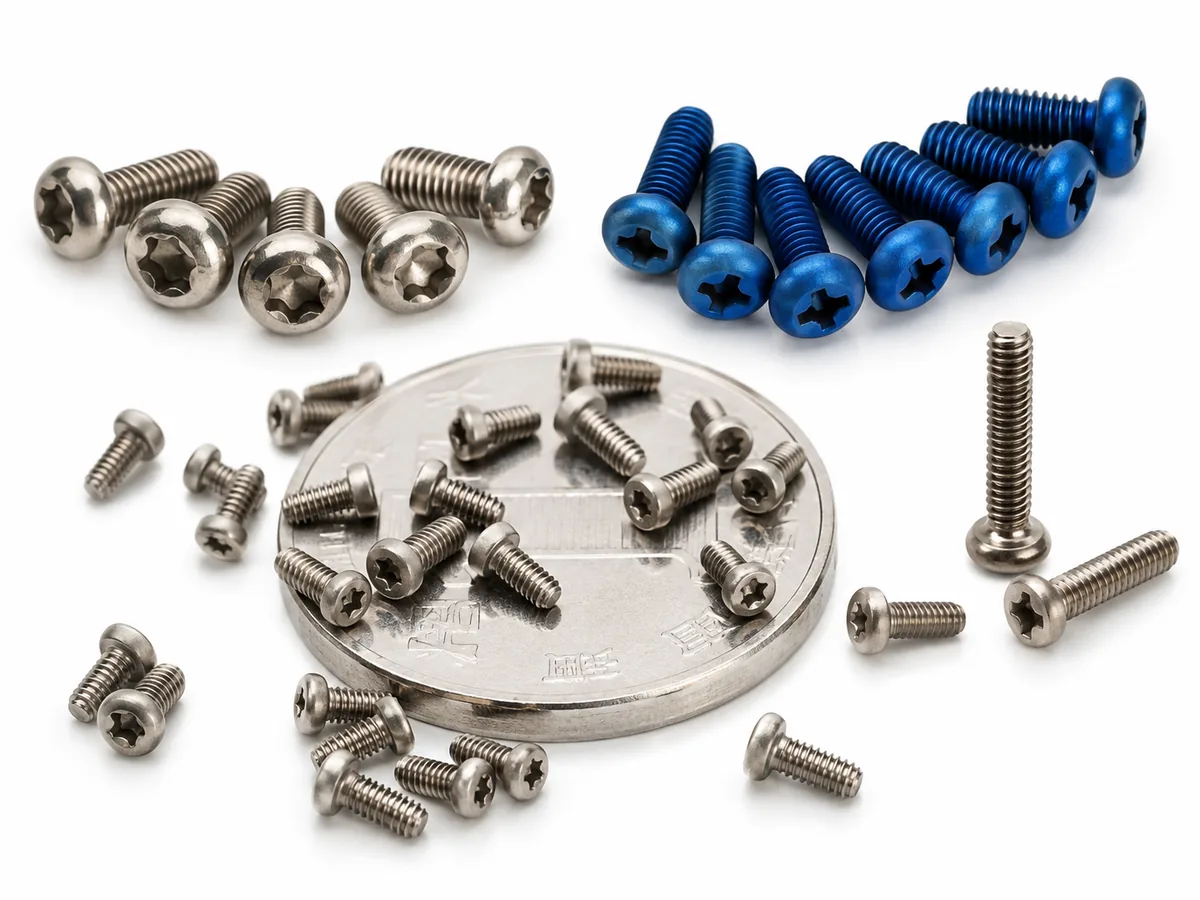
Threads can be cut or rolled where the material and geometry permit. The drawing should define thread form, pitch or TPI, tolerance class, usable thread length, and the location of thread runout. A long plain shank with an end thread needs different controls from a fully threaded screw.
Thread rolling displaces material; cutting removes it. Choosing between them involves tooling, stock preparation, thread access, material condition, and the required finished-part performance. If fatigue performance is a design requirement, agree on the thread process and validation rather than treating “rolled” as an automatic guarantee.
Recesses, cross holes, grooves, and shoulder transitions also need defined datums. Inspecting the first sample helps reveal whether a nominally correct feature is accessible to the assembly tool or compatible with the mating part.
4. Finish the Surface and Inspect the Finished Screw
Cleaning, anodizing, or another specified titanium finish follows the approved process plan. Define appearance separately from functional requirements such as thickness, cleanliness, fit, or assembly friction. Final thread acceptance should account for the treated surface.
The inspection plan can include dimensions, thread gauges, drive geometry, surface condition, and any mechanical or material tests required for the project. Agree on sampling, reports, and batch identification before production. Material paperwork and a dimensional report answer different acceptance questions.
Prepare the Drawing for Production
Send the current drawing revision, titanium grade and standard, mating part details, finish, critical dimensions, sample quantity, production demand, and inspection requirements. At Shi Shi Tong, we use those inputs to review the route and sample plan for your part. Submit your titanium screw drawing for a manufacturing assessment.