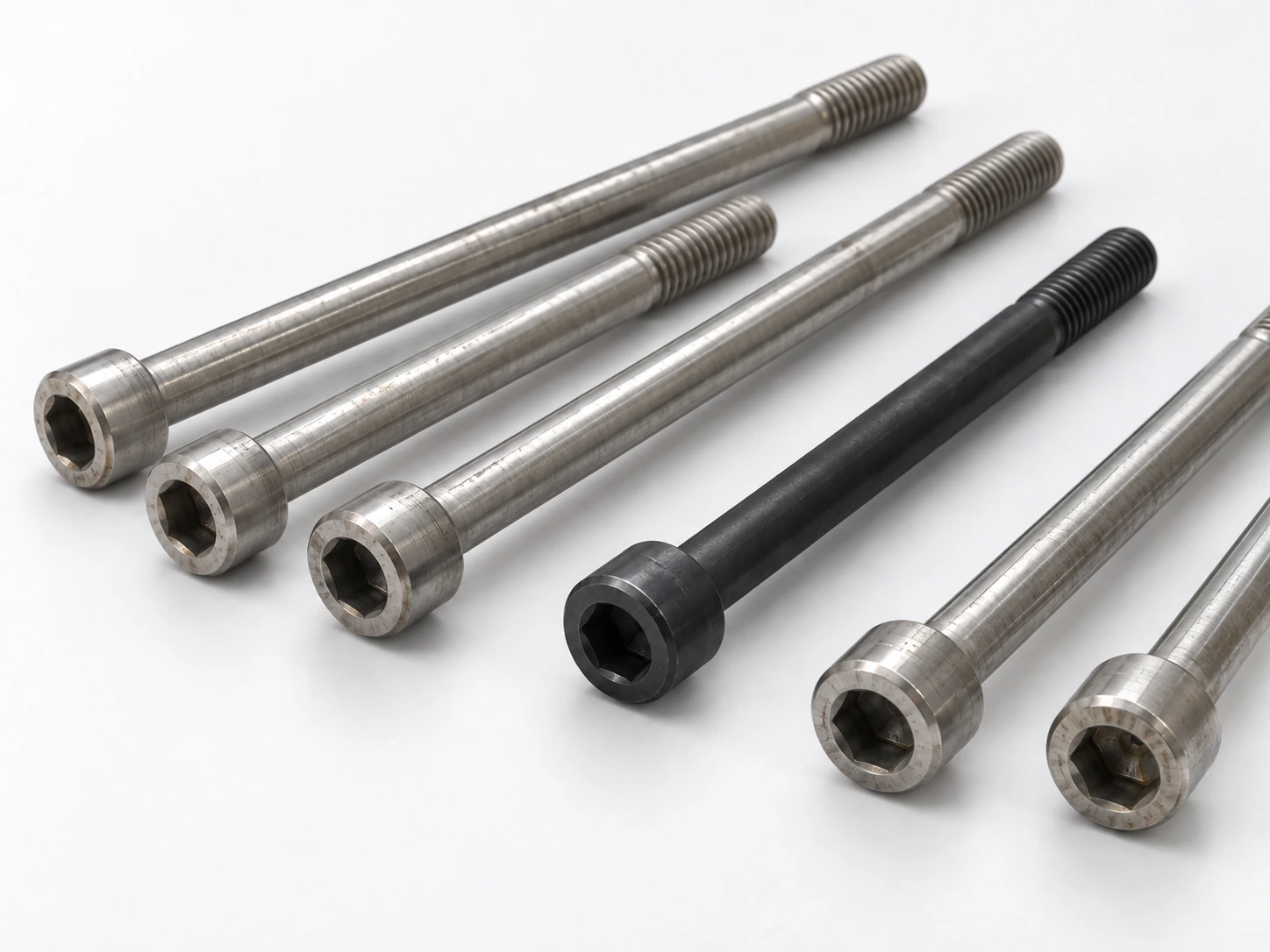
Choose machine screw length from the complete joint: the thickness of everything under the head, the usable mating thread, and the space available for the tip. A screw that is too short can leave too little thread engaged. One that is too long can bottom in a blind hole or strike a component beyond the joint.
Measure the Full Clamped Stack
Add every part under the screw head, including washers, spacers, gaskets, and any coating that changes the seated thickness. Use the maximum and minimum stack dimensions from the drawing, not only the nominal dimension. Confirm whether the screw enters a nut, a through tapped component, or a blind tapped hole.
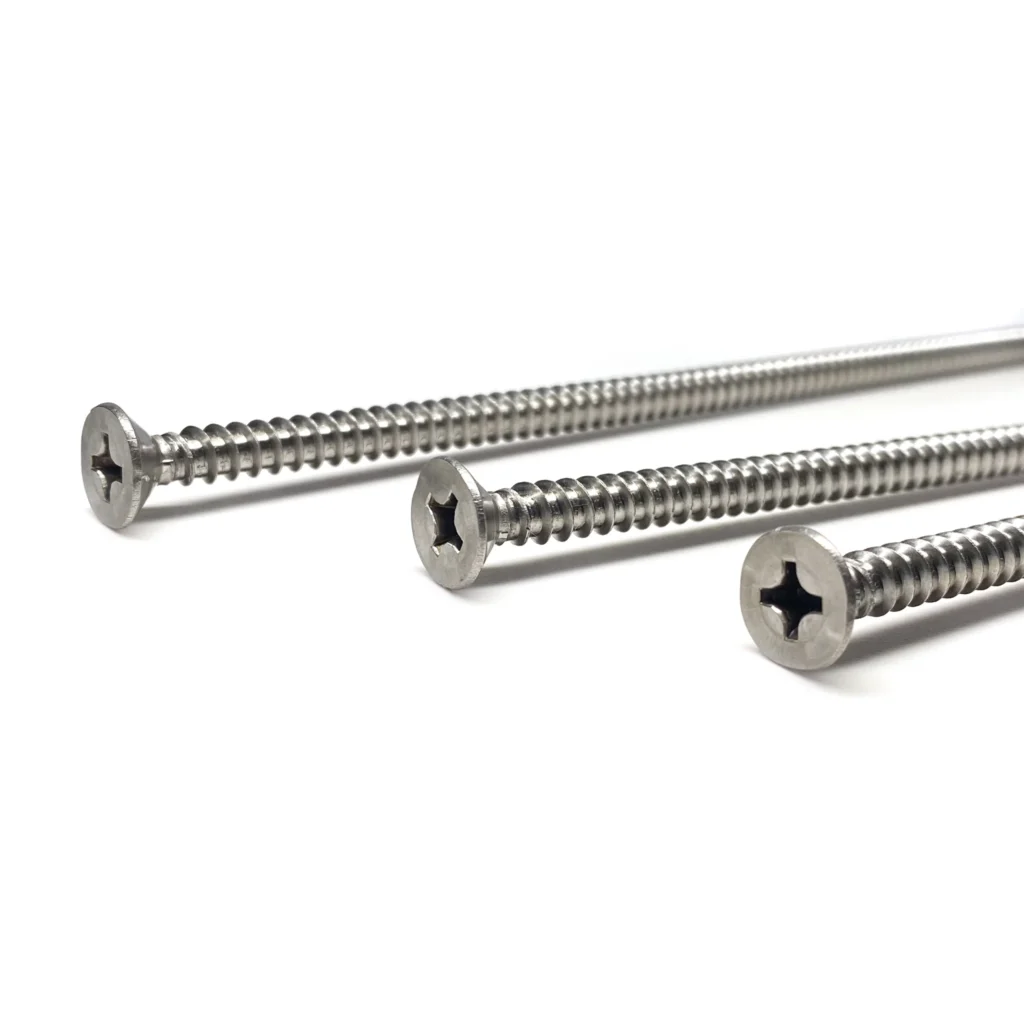
Mark the length reference before ordering. Most protruding heads are measured from beneath the head to the tip. Many flat countersunk screws are measured from the top of the head, so an equal nominal length does not necessarily produce an equal reach in the assembly.
Add the Required Thread Engagement
The joint designer should define how much complete mating thread must engage. The appropriate length depends on screw strength, female thread material, thread size, and load. Chamfers, incomplete threads, and thread runout do not contribute the same engagement as full threads. Bossard’s thread engagement guidance explains why the requirement changes with the materials in the joint.
For a non-countersunk screw entering a tapped part, use this starting relationship:
Candidate under-head length = maximum clamped stack + required effective engagement + any specified allowance.
For example, if the approved joint design calls for a 20 mm maximum stack and 10 mm of effective engagement, start at 30 mm under the head. Then check the actual thread start, screw length tolerance, tapped depth, and tip clearance. The 10 mm in this example is a design input, not a rule for every screw size.
| Joint type | Length check | Condition to confirm |
|---|---|---|
| Nut connection | Stack thickness plus required nut engagement and permitted protrusion | Full thread reaches through the nut without the nut landing on thread runout |
| Through tapped part | Stack thickness plus required effective engagement | The tip has enough clearance on the far side |
| Blind tapped part | Stack thickness plus required effective engagement | At minimum stack and maximum screw length, the tip cannot bottom before the head clamps |
Check the Short and Long Limits
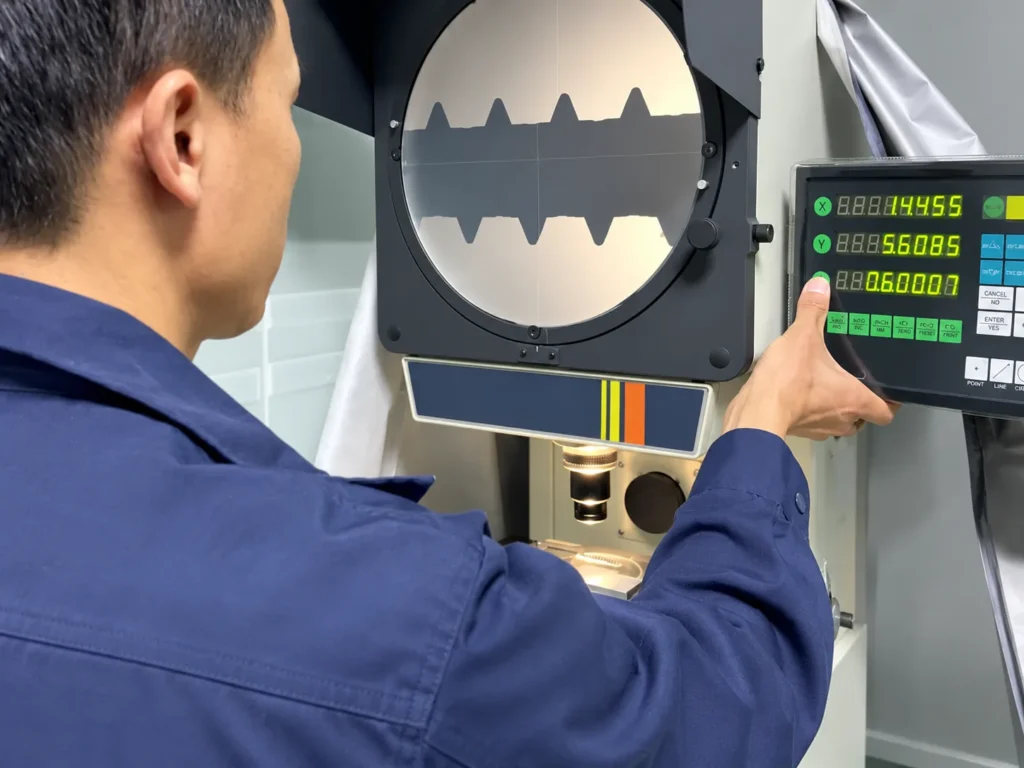
At the short limit, use the maximum stack and minimum screw length to confirm enough usable thread remains engaged. At the long limit, use the minimum stack and maximum screw length to confirm the tip clears a blind-hole bottom, moving part, seal, or cover. This tolerance check is especially important when several parts and washers contribute to the stack.
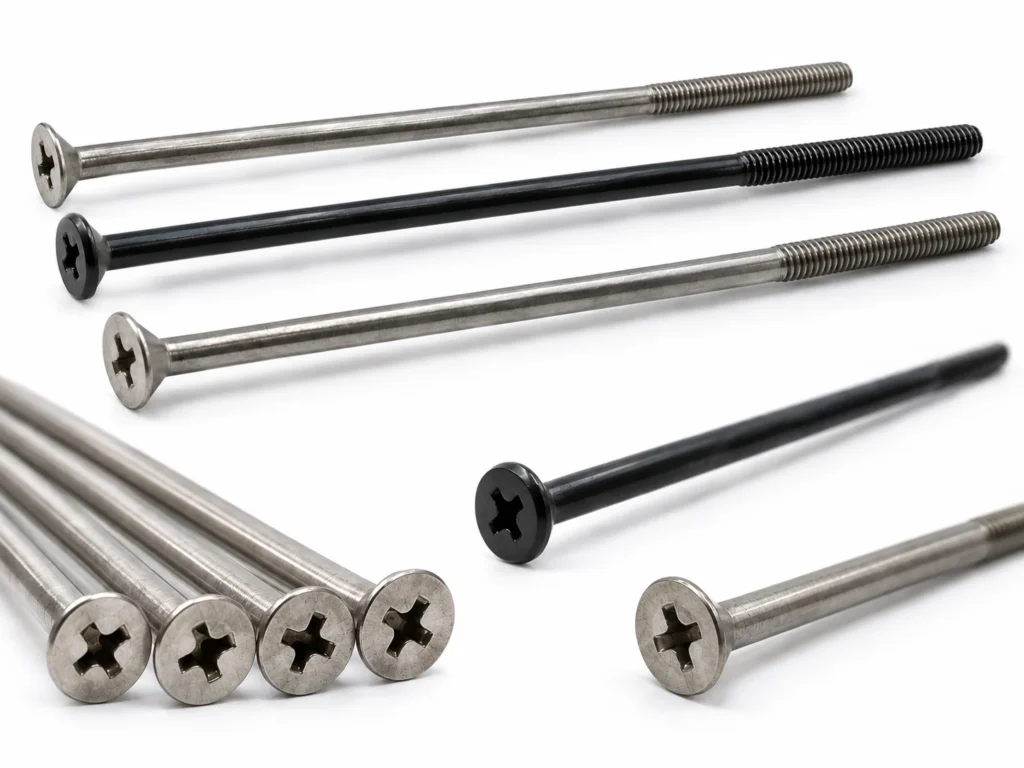
Also compare the threaded zone with the mating part. A long plain shank may give the correct overall length but prevent the thread from reaching the tapped hole. Conversely, unnecessary thread under the head may run through a bearing or locating area that needs a smooth shank. Confirm diameter and pitch separately from length; thread size notation identifies the mating thread, not the distance the screw reaches.
When a Standard Length Will Not Fit

If no readily available length works across the tolerance range, specify the required length datum, shank, thread start, tip, and finish on a drawing. A custom length can solve the fit while keeping the lead thread and finished surface intact.
At Shi Shi Tong, we review made-to-drawing long machine screws for assemblies with unusual reach or thread placement. Send us the joint section view and screw drawing, including stack tolerances, mating material, hole depth, and expected quantity, for a length and manufacturability review.